by Marilee Aufdenkamp
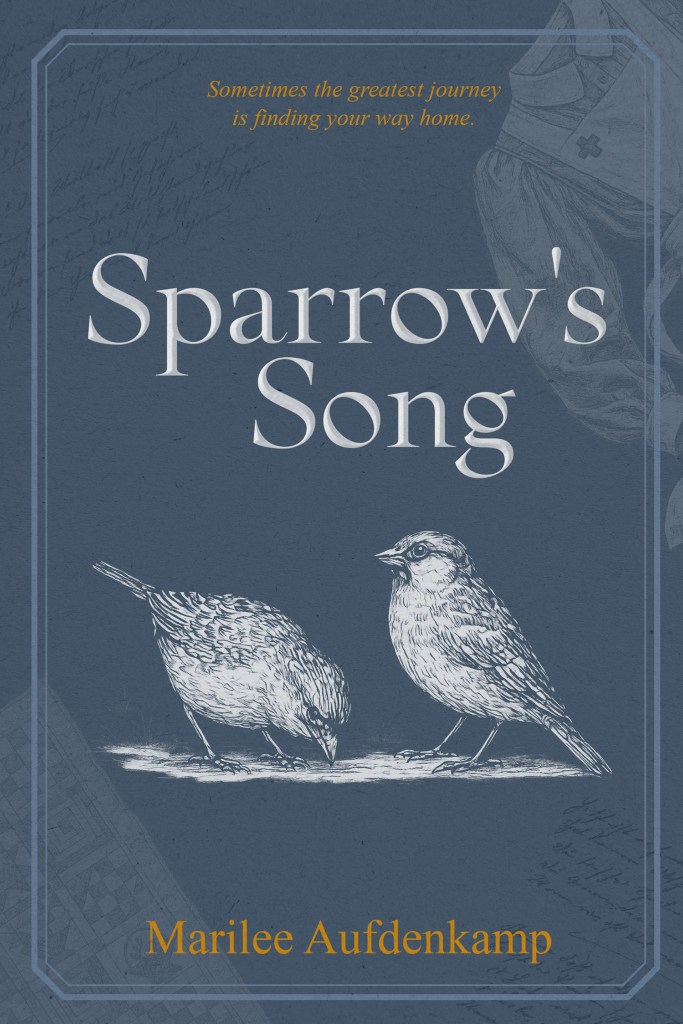
Universal Buy Link: https://books2read.com/u/3GyLvO
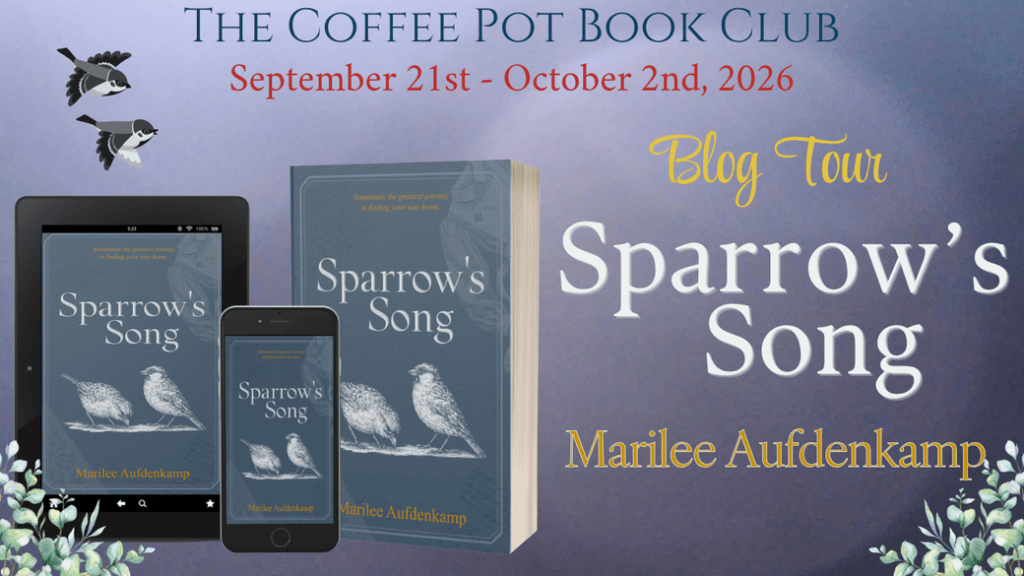
Come with me, and step back into the world as it once was with an excerpt from Sparrow’s Song by Marilee Aufdenkamp. This is the story of a young woman who steps out of the noise and grime of factory life in 1917 and into a new world. She entered a fledgling nursing school, hoping only for a chance to breathe, yet soon found herself rising through its ranks.
With her new authority brings strain, and every lesson she teaches carried its own quiet weight. Her journey stretches from the first great war into the second, shaped by courage, longing, and the quiet battles fought behind hospital doors.
Blurb:
Shortly after Kathryn Scheibel leaves her cigar‑making job in 1917, she enters the Army School of Nursing, a pioneering WWI nurse‑training program that offers the education she’s longed for but couldn’t afford. More than two decades later, her career carries her, as an instructor, into the Cadet Nurse Corps, the federal WWII nursing‑education initiative created to support the war effort. There she sees the same pressures she once felt now directed at students with even fewer protections. When two Black students are treated unfairly, Kathryn must decide how to respond.
Sparrow’s Song is a sweeping, intimate novel about resilience and belonging, rooted in the real history of wartime federal nursing education and the evolving landscape of modern American nursing. At its heart is a young immigrant woman pushing herself toward the advantages she’s convinced education will unlock, even as that drive pulls her away from the people and heritage she loves.
An excerpt from Sparrow’s Song:
Getting ready for the yellow party was a source of anxiety and excitement. “A little shorter, please, Mutti. I don’t want Mrs. Abbott’s friends thinking I’m old-fashioned.” Kathryn stood in the living room on the wooden box that Mutter used to reach her sausage grinder and other seldom-used items stored on the highest shelf in the kitchen.
Kathryn’s mother lifted the hem, so it fell just at the point where Kathryn’s lower leg began its steepest taper toward her sturdy ankles. She worked quickly, circling Kathryn on her knees, straight pins held captive by her pursed lips. Großmutter, who scowled at length as the dress was being made, came over to inspect the sleeves and flatten the collar. Broad stripes in alternating shades of pale and bright white ran up and down the cotton voile overlay.
“Oh, Großmutter,” Kathryn said. “Your handiwork is the nicest there is. Some pale-yellow trimming, even the tiniest bit of tatting on the sleeves and collar, would make me feel like the grandest lady at Mrs. Abbott’s party.”
“Okay. I’ll do it,” Großmutter said, “but don’t get your head full of fancy ideas about being something other than what Gott intended. As much as you paid for this little bit of nothing, you could’ve had a nice swath of blue serge, enough to make three skirts and some left over. It’s pert near like you’ve lost your head since you got over there with that Abbott woman.”
While Kathryn’s mother finished pinning the hem, Großmutter brought out her tatting supplies. “No yellow,” she said, “but this should be nice against that sheer white.” She picked up a ball of ivory thread and began winding one of her wooden tatting shuttles.
Kathryn motioned for her mother to stop pinning. She jumped off the box and hurried to Großmutter. “That would be beautiful, Großmutter, but for this party the trim on my dress has to be yellow.”
“This Mrs. Abbott tells you what color you have to make your clothes to wear to a party?”
“It’s because it’s a yellow party. For suffrage.”
“What is this suffrage? I never heard of it.”
“It’s the right to vote. For women. Yellow represents the light. Mrs. Abbott says that when we wear yellow—only she says when we don yellow. The closest in our language, I think, means to put on. Mrs. Abbott says that when we don yellow for suffrage, we are like sunflowers turning our faces to the light. She said we’re going to decorate the whole house yellow for the party. She’s even going to pay Mutti to help with the decorating.”
Großmutter shook her head. “What kind of foolishness are you speaking about? This is what happens when a woman has too much money so that she doesn’t have to spend any time taking care of her family. She starts talking nonsense.” Großmutter went back to her chair. She stared out the window and continued muttering under her breath. She spoke at length, shaking her head from time to time, but it was impossible to hear what she was saying. Kathryn’s jaw tightened. It seemed Großmutter liked nothing more than being in control and making people miserable. In Russia, she had been the head of the family. Here, Kathryn knew, she felt of little value. Her crossness was understandable, but lately it seemed she was more critical than usual, and at times Kathryn tried to avoid her.
Kathryn turned to her mother. “I brought the measurements for the porch. Mrs. Abbott said she called the dry goods store and told the proprietor you’d come by next week to get some fabric for the bunting and that he is to put it on her account. She’s leaving it to you to buy the pattern and choose the fabric. I told her you won’t need to buy a pattern at all. That you just have to look at the picture in the store and you’ll be able to come home and make your own pattern.”
“I guess you can buy me some yellow tatting thread while you’re at the dry goods,” Großmutter said. “Maybe that Mrs. Abbott should be buying the thread for the dress, too, if she’s taking it upon herself to decide what can be worn at one of her fancy doings.”
Trigger Warnings:
- Two off‑page suicides
- One short scene involving sexual harassment / coercion
- One brief scene of non‑graphic violence

Author Bio:
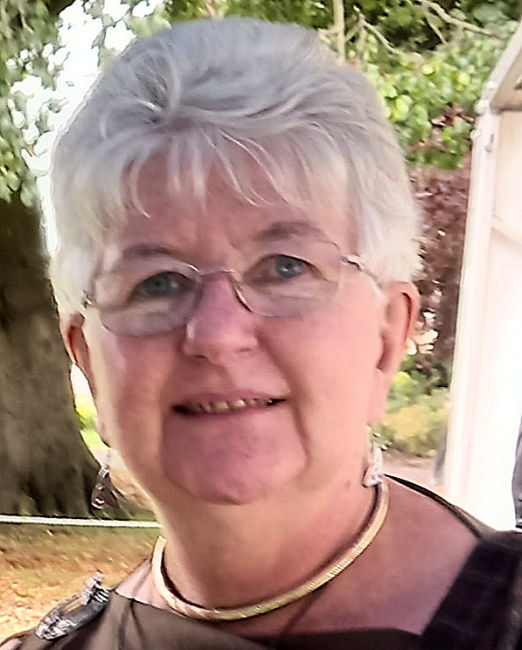
Marilee Aufdenkamp is a retired nurse educator who taught undergraduate nursing for twenty‑six years before turning her full‑time focus to historical fiction. She writes early to mid‑twentieth‑century stories grounded in immigrant experience and working‑class life.
Her debut novel, Sparrow’s Song, was inspired by her early nursing career in Nebraska, where she came to admire the Germans from Russia she cared for at the end of their lives.
Originally from Southern California, she has spent her adult life in Nebraska.
Author Links:
Website: https://marileeaufdenkamp.com
Facebook: https://www.facebook.com/MarileeAufdenkampWriting/
Instagram: https://www.instagram.com/marileeaufdenkampwriting/
Goodreads: https://www.goodreads.com/author/show/55952096.Marilee_Aufdenkamp
oOo