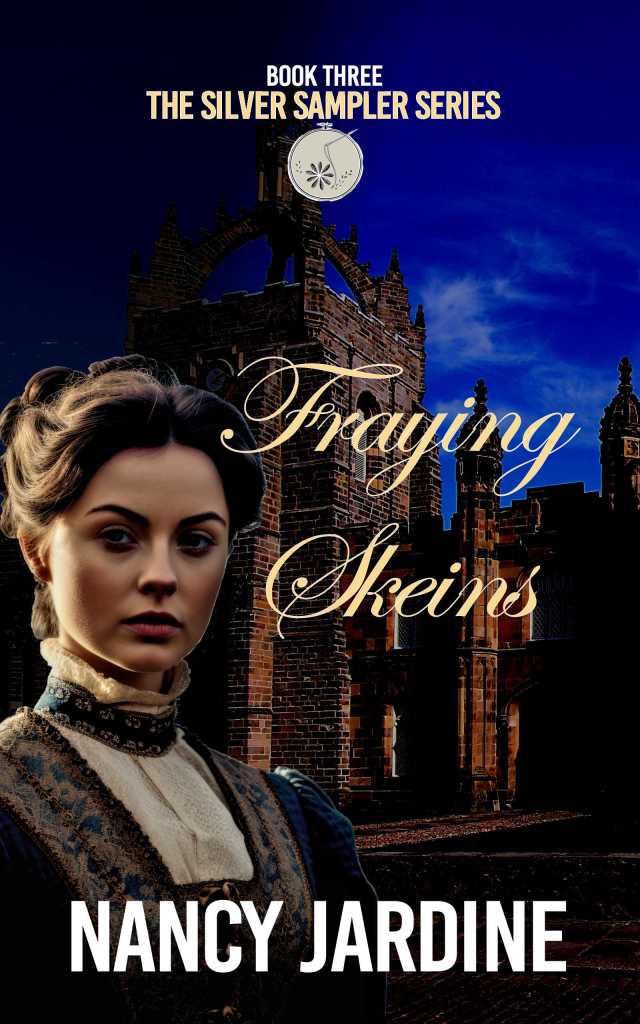
This title/series is available to read on Kindle Unlimited.
Margaret’s story continues in this third instalment of Nancy Jardine’s Victorian Scottish saga, carrying her north to Aberdeen and along the rugged coastline beyond. This third novel follows her search for honest work and the quiet determination that drives her to use her skills well, wherever the road takes her. It’s a new stage in her journey and a fresh adventure for us to share with Nancy’s readers.
Escape In Paradise: Evasion
1870 Scotland
Fleeing from Peterhead, Margaret Law makes Aberdeen her refuge. Menial jobs keep her and her toddler son fed– till an unusual tutoring task boosts her finances, and self-worth. Letters to best friend Jessie contain the absolute truth, especially when Johnny Fraser re-enters her life. Is he the man for Margaret to grow old with? When better employment emerges in St. Andrews, Margaret is torn. Will the move mean losing Johnny?
When Johnny follows Margaret to St. Andrews, their life together is idyllic. But when menacing secrets unfold, will Johnny’s past indiscretions be their undoing? Will he lose the cherished family he is establishing with Margaret?
Praise for Fraying Skeins:
“Jardine has once again brought nineteenth-century Scotland vividly to life while keeping Margaret and the people around her firmly at the heart of the story. Watching the determined little girl I first met in Novice Threads grow into this resourceful and courageous woman has been immensely rewarding, and there are more than enough intriguing threads left to make me eager to continue Margaret’s journey in the next instalment.“
Nancy Jardine writes historical adventure fiction, historical saga, time travel historical adventure and contemporary mysteries. Research gobbles up lots of time but it’s a delight, and never a chore. Her garden wouldn’t win any prizes but tending it is a great way to unwind and gives her some lovely plants to post on Instagram!
When not creating her novels, or promoting her writing, she loves to interact with readers at Book and Craft Fairs where she signs/sells paperback versions of her novels. Recently she’s taken part in author panels at Book Festivals.
Memberships include: Historical Novel Society; Society of Authors; Scottish Association of Writers; Federation of Writers Scotland; Romantic Novelists’ Association; and Alliance of Independent Authors. She’s self-published with Ocelot Press.
I have an absolute treat for you today: an excerpt from the long‑awaited sequel to the global bestseller Leonardo’s Swans by screenwriter and award‑winning journalist Karen Essex.
The novel unfolds in Renaissance Italy, where Lucrezia Borgia and Isabella d’Este collide in a sumptuous story of intrigue, ambition, and buried secrets. It’s everything you could want from historical fiction—rich, dangerous, and irresistibly compelling.
About the novel:
Renaissance Rivals, the long-awaited sequel to the global bestseller Leonardo’s Swans, tells the story of the brutal rivalry between two of history’s most fascinating power women: Isabella d’Este, Marchesa of Mantua, celebrated in her own lifetime as “The First Lady of the World,” and Lucrezia Borgia, Duchess of Ferrara, daughter of the infamous Pope Alexander VI and one of the most maligned women in history.
Before Maggie O’Farrell’s doomed duchess in The Marriage Portrait, there were the women who built the courts, forged alliances, and commanded works of artistic genius. In both Renaissance Rivals and Leonardo’s Swans, Essex invites readers to step back one generation into the glittering courts of Renaissance Italy, where beauty, intellect, marriage, and ambition could determine the fate of nations.
The excerpt:
In the city of Rome, the Vatican, 1501
Lucrezia fell face up upon the gold brocade spread covering the bed, her spine sinking listlessly into the mattress while the room spun around her. Dust from the road still clung to her skirts, and her bodice reeked from days of travel. Her ladies tugged at her clothing, trying to free her from the fetid garments, but she waved them away.
She was weary. Weary from the jolting journey by horse, mule, and litter that had carried her home, but even more exhausted by the resistance her entire being had mounted against every mile traveled toward Rome.
Her arm failed her and dropped heavily onto the bed.
“Draw me a bath,” she murmured.
Once they had gone, she raised her hand and let it fall again upon the lavish coverlet, noticing that no dust rose from it. The extravagant decorations in her Vatican apartments were so new there had scarcely been time for dust to settle. She could still smell the dyes upon the rich velvets, tapestries, and brocades draped throughout the room and see the fresh-polished gleam of the newly crafted furnishings.
How beautiful it all was, this hastily assembled opulence, a whirl of deep colors and sumptuous textures arranged to please her and erase the memory of her final days within these very rooms, from which she had fled so suddenly only months before at the command of her father, His Holiness, Pope Alexander Borgia.
“I cannot tolerate your tears, Lucrezia,” he had said, never mind the reason for them. “Do you not trust us to know what is best for you?”
For the first time in her life, she had not immediately bent to his will, and he had sent her away to grieve behind the thick fortified walls of the fortress at Nepi in Lazio, north of Rome.
Even Cesare had neither stopped him nor wished to.
“You are not behaving like a Borgia,” Cesare had told her before turning his back as the litter carried her away.
The memory still stung now, despite that weeks later he had appeared at Nepi to reveal his plans and reassure her of his love.
Why had they not simply left her there?
Just as she had recovered her strength and begun to enjoy a life of solitude and reflection, the dreaded letter demanding her return had arrived. She had feared coming back to this Vatican chamber where she had suffered the greatest anguish of her life, but her father had anticipated this and assumed that fresh surroundings would erase the horrifying past.
Not a trace of the former décor remained. Everything had been swept away like yesterday’s gossip and remade into a setting for her future.
From her position upon the bed, she felt as though she were gazing upon a magnificent theatrical stage newly assembled for a grand production. Indeed, she suspected she was about to become a player in some new drama for which she had not yet been given her lines.
The spectacular painting of Venus, nude and reclining within a gilded frame upon an easel facing the bed, strongly suggested the nature of the role she was expected to perform. The goddess’s slightly parted pink lips seemed meant to lure the viewer into enchantment, yet to Lucrezia they appeared mocking.
Curled beneath knowing blue eyes, those lips looked on the verge of laughter. What did they know that she herself had yet to discover?
The pope had offered no explanation for summoning her back to Rome beyond claiming that he missed her and that it was time for her return. Perhaps he intended to travel and required her once again to oversee his secular affairs within the Vatican.
She had fulfilled those duties before, even before her twenty-first birthday, astonishing cardinals who wondered aloud what madness possessed the pope to leave a mere girl in charge while he traveled. When he announced that Lucrezia would govern in his stead and that her signature would carry his authority on legal documents, one of the more malicious old cardinals had risen and exclaimed: “But Your Holiness, she possesses no pen!”
The entire congregation had roared with laughter at the crude and overused euphemism for the male organ.
Regardless of gender, the cardinals remained perpetually enraged by the pope’s determination to elevate his children to greatness. Yet after months of performing administrative duties with the ease and grace of a seasoned magistrate, they had come to respect her, or at least those particular abilities.
The rest they neither respected nor ever would. And for that she could not entirely blame them, for she knew much of what she had done was sinful and shameful. Still, she took the sacraments daily and knew what must be done to repent.
She confessed directly to God, of course, for she could never tell the truth to her earthly confessors, who knew perfectly well who she was despite the chain metal and muslin curtain separating sinner from cleric within the confessional booths.
If she told the truth, she would be punished. Not directly. No, they punished her in subtler ways, by taking from her whatever she most cherished while showering her with luxuries and splendid things until she became too intoxicated by beauty to protest what had been done.
This last crime, however, had been different.
She had refused to be placated by silver and gold, by entertainments and distractions, by promises of a radiant future if only she obeyed. She had refused, and for that she had been banished. Then mysteriously she had been summoned back.
Before leaving Nepi, she had consulted the fortress astrologer in hopes of discovering why she was being recalled. The old seer had charted the movement of the stars and declared, Jupiter will soon shine favorably upon you, bestowing honors beyond your dreams within mere months of your return.
How much had Father paid for such a prophecy? she wondered.
Triggers: Child loss; miscarriages.
Karen Essex
Author Bio:
Karen Essex is the national and international bestselling author of RUN, DARLING, KLEOPATRA, PHARAOH, LEONARDO’S SWANS, STEALING ATHENA, DRACULA IN LOVE, AND BETTIE PAGE: LIFE OF A PINUP LEGEND. All feature iconic women—powerful women who seduced the world and ruled it.
Essex is also an active screenwriter and speaker, and an award-winning journalist. She divides her time between Los Angeles, New Orleans, and Europe. Her novels are published in twenty-nine languages.
Leonardo’s Swans, the prequel to Renaissance Rivals, was a runaway bestseller in Italy and won the prestigious Premio Roma for Foreign Fiction.
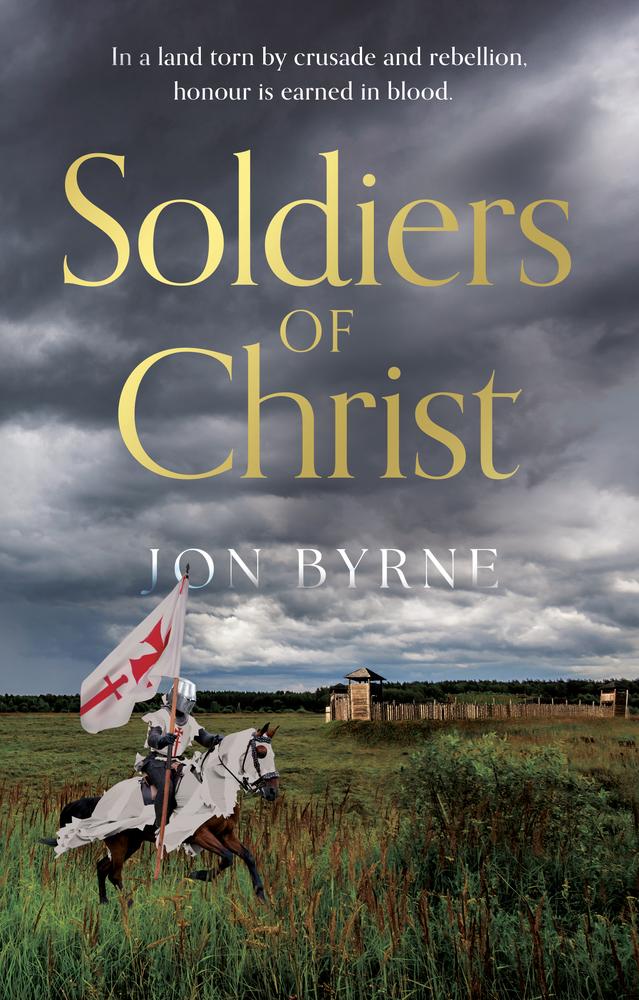
I would like to thank Jon Byrne, the Book Guild, and the Coffee Pot Book Club for providing me with a review copy of Soldiers of Christ. As always, this is an entirely honest assessment, regardless of the complimentary copy. This review contains no spoilers.
This is a rip roaring read following the life of Richard Fitz Simon, an exiled Norman noble who flees England to join a German brotherhood of warrior monks. It is a well researched novel and an exciting, full‑blooded story.
I loved the fight scenes, the rivalry and jealousy among the brothers, the flashes of humour, and Richard’s deadly enemies. I loved to hate Bishop Albert and Richard’s master and Knight‑brother Rudolf, and don’t get me started on the sneaky, treacherous Wolfgang. So much of this felt real as I read it, especially the squabbles, revenge, and corruption. It was all so human and gritty, which is what I enjoy in a novel.
The descriptions of battles and hand‑to‑hand combat made me feel the exhaustion and the pain the characters would have endured. There is plenty of tension, romance, and adventure throughout. It is well written, clearly researched, and full of energy.
I’ve given it four stars because it’s a strong, well researched novel that’s full of action and dark. Which I love.
Blurb:
In a land torn by crusade and rebellion, honour is earned in blood.
1205. Richard Fitz Simon has fled England after his title was usurped, joining the Livonian Order of Swordbrothers – a German brotherhood of warrior-monks fighting to bring the word of God to the pagan frontier. After slaying the Lithuanian champion at the Battle of Rodenpois, Richard is celebrated by the Order and their Semigallian allies.
Yet his position remains precarious. Jealous rivals question his right to stand among the brotherhood, and his master, Knight-brother Rudolf, is enraged by Richard’s disobedience. When dark secrets from Lübeck resurface, Richard also finds himself at odds with Bishop Albert, head of the Christian mission in Livonia. As he struggles to reconcile faith, duty and identity, he is drawn into a brutal world of suspicion and bloodshed.
Sent on an expedition to build a castle deep in the wilderness, Richard soon sees tensions erupt – and the path he has chosen threatens to destroy everything he has fought to become.
Jon Byrne
Author Bio:
Jon Byrne, originally from London, now lives with his German family by a lake in Bavaria with stunning views of the Alps. As well as writing, he works as a translator for a local IT company and occasionally as a lumberjack. He has studied the medieval world for over twenty years, building up a comprehensive personal library and a particular interest in the often-overlooked Northern Crusades.
Soldiers of Christ is Book Two of The Northern Crusader Chronicles, a gritty, historically grounded series focused on realism, moral ambiguity, and the brutal realities of medieval warfare.
Written for readers who value authenticity and atmosphere over romanticised adventure, the novel explores a largely forgotten crusading frontier, culminating in the first of many confrontations in a harsh wilderness of forest and swamp.
Readers who enjoy the historical detail of authors such as Bernard Cornwell, Conn Iggulden, or Ben Kane may find familiar ground here.
I’m delighted to have Tony Riches on the site today with his latest novel, Queen Anna, the first in his Stuart Queen series. It’s a book I’ve been quietly looking forward to: the story of a young woman navigating storms, suspicion and the uneasy politics of two kingdoms. Riches has a gift for bringing overlooked figures into clear focus, and Anna of Denmark is a fascinating choice. It promises to be a thoughtful, atmospheric beginning to the series, and I’m very pleased to share it here today.
A crown won in the eye of a storm.
A queen who refuses to be broken…
Princess Anna of Denmark sails for Scotland to marry King James VI, but storms ravage her fleet, igniting a deadly obsession with witchcraft in her new home. Arriving in a strange and paranoid court, Anna finds her new husband’s bed is a treacherous place.
Surrounded by whispering courtiers and shifting alliances, Anna refuses to remain a passive pawn. When the court takes her children to raise them away from her, the young queen draws her line in the sand.
From the windswept castles of Scotland to the glittering, dangerous English court, Anna is restored to her rightful place in history.
Author Bio:
Tony Riches is a full-time UK author of historical fiction. He lives with his wife in Pembrokeshire, West Wales and is a specialist in the lives of the early Tudors. As well as his Elizabethan series, Tony’s historical fiction novels include the best-selling Tudor trilogy and his Brandon trilogy, (about Charles Brandon and his wives). For more information about Tony’s books please visit his website tonyriches.com and his blog, The Writing Desk and find him on Facebook, Instagram, Bluesky and Twitter/X @tonyriches.
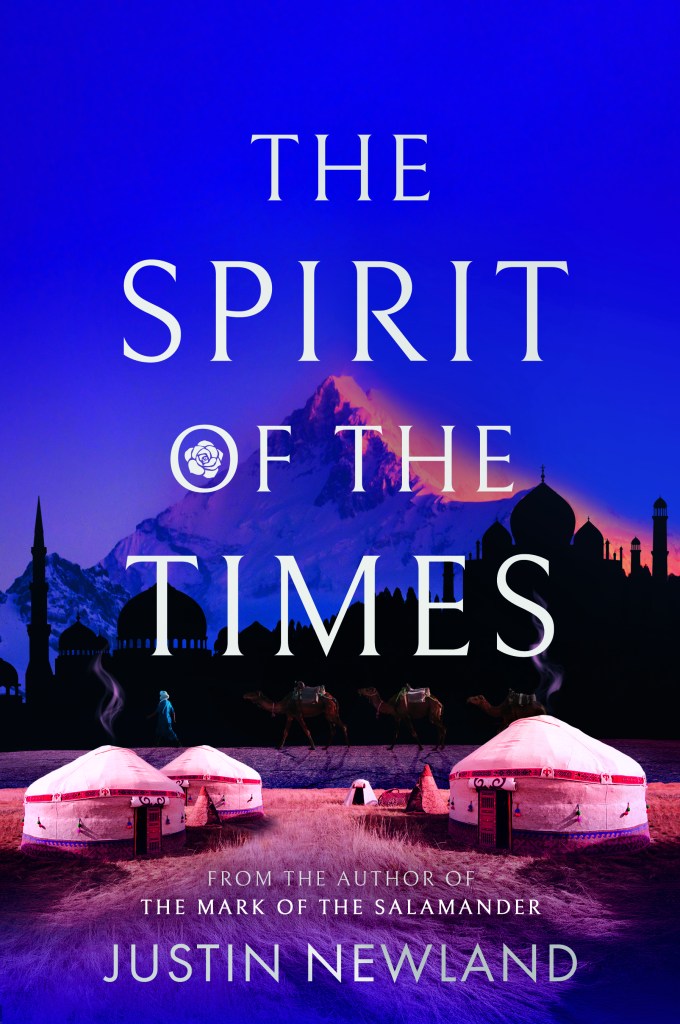
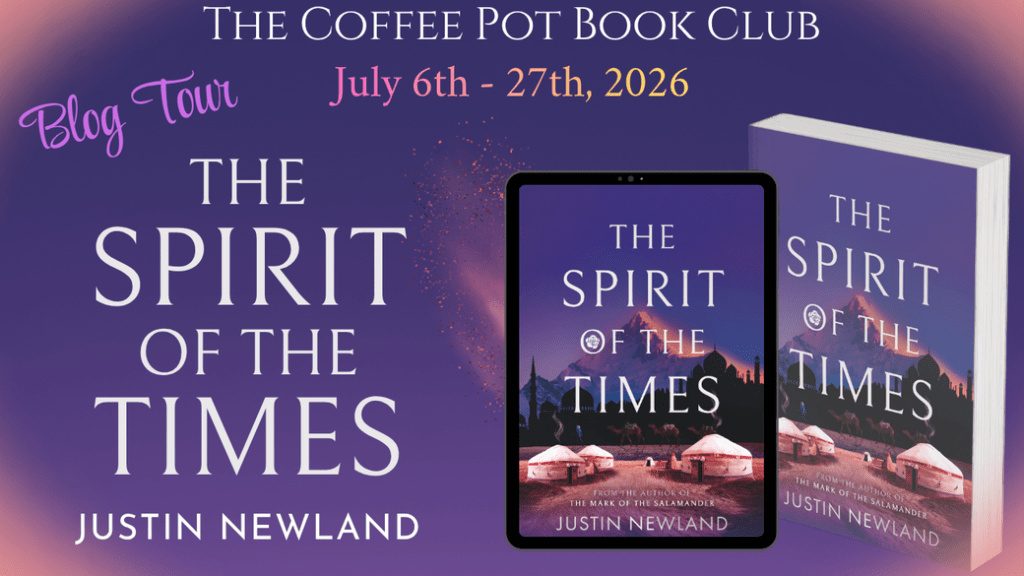
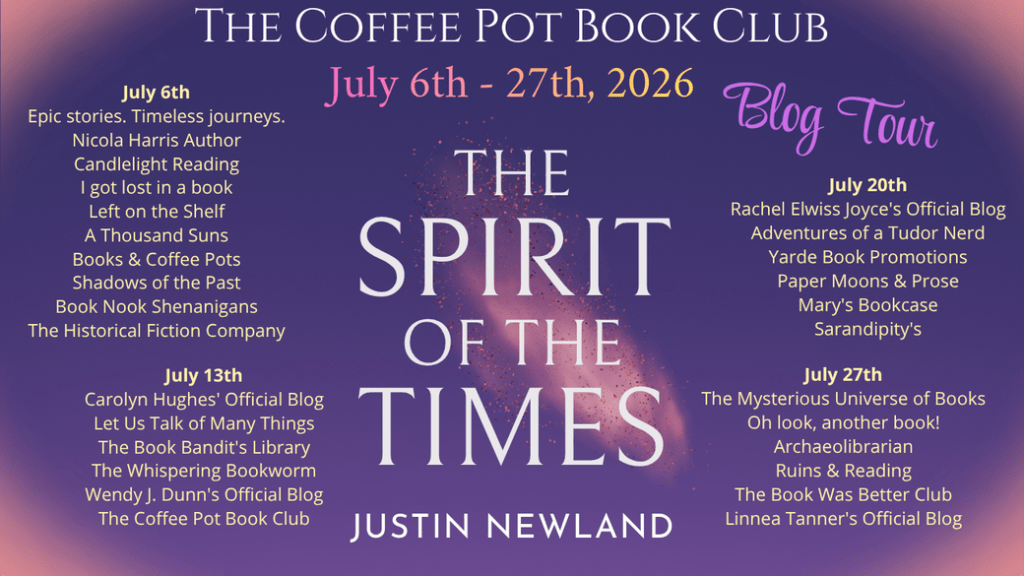
I would like to welcome my guest, Justin Newland, to my website. I’m delighted to be interviewing him about his novel. Before we begin, here is what the book is about:
From a land of milk,
And a Road of Silk,
To a ring of roses,
And a dance of posies,
Comes the tale of the spirit of the times!
In fourteenth-century Central Asia, Karia is a young woman living under the yoke of Mongol occupation. But she’s different. She’s a fighter with supernatural powers. She could use them to keep the Black Plague at bay and solve the mystery of the purple skies at dawn – if only she could overcome her self-doubt.
Travelling in caravans on the Silk Road, she faces dangers seen and unseen – from sandstorms and slave traders to the desert djinn and folk who believe she’s a witch. She fears losing Abi, her little cousin, who’s fascinated by roses and the dance of the Whirling Dervishes of Bukhara.
When Karia falls in love with an English sailor fleeing the Knights Hospitaller, they sail to England with Abi to unravel the meaning of the purple skies, a dance, a posy tree, and a ring of roses.
The Spirit of the Times is part history, part fiction and part speculation: on the origin of disease; the power of innocence; the unfortunate aspects of custom and dogma; and humanity’s ability to respond to the governing influence or spirit of the times.
During your research for The Spirit of the Times, did you come across anything that surprised you?’
Yes, many things. As I’m sure you know yourself, history is a table of plenty that’s packed with surprises.
Here’s one of them, a story about how karma works its way through the events of history – karma to mean the rebalancing of what is out of balance.
When they invaded the lands of Asia and Europe in the 13th century, the Mongol Empire had a strategy. A nomadic people, they prized gold, silver, precious jewels, silk and any other material plunder they would take back to their capital at Karakorum in Central Mongolia.
However, when they pushed into Europe, and defeated the Hungarian army at the Battle of Mohi in 1241, they found an impoverished people, with little carry-away riches to steal. As compensation, they enslaved the rump of the Hungarian army and sold them to the Venetians, who were one of the major slave traders of the time.
The Venetians then sold the Hungarian soldiers to the Sultan of Egypt. Then, in 1260 the Sultan’s army fought and beat the Mongols at the Battle of Ain Jalut. This victory permanently halted the Mongol advance into the Islamic world.
So, the same soldiers that the Mongols had enslaved returned to defeat their enslavers, yielding a surprising example of karma in history.
The Spirit of the Times takes readers across the Silk Road. What first sparked your interest in this period and place?
My novels have focused on periods of history when ‘after’ is substantially different to ‘before’, such as the Ming Dynasty in China, the Tudor Age in England, and the Great Enlightenment in Europe.
The 14th century was one such transitional time, when the great Chinese Empire had, through its own internal weakness, split into two and when Europe was dominated by famine and war, plague and social change.
As a novelist, I wanted to explore the mechanisms for this transition in the 14th Century, by asking and trying to answer questions like: How did it happen? Why did it happen? Was it meant to happen in the way that it did? Were there other possibilities at the time and, if so, what were they, and why weren’t they taken?
The Silk Road played a huge role in this transition. For their time, the Mongols were remarkably tolerant both religiously and socially, and they opened up the Silk Road to trade and most importantly, to ideas. It was travelled by camels and mules, as well as spies and emissaries, priests and Sufis, imams and monks. This was a road of silk, a road of ideas, of silken ideas that crossed from east to west, breathing the winds of change, some of which are still blowing today.
Your novels often weave history with the supernatural. This story touches on the mystery of the purple dawn skies and the coming of the Black Death. How did that idea find its way into the book?
I am always intrigued by coincidences in history and otherwise. Because a coincidence is really a combination of facts for which the connections have yet to be revealed. It’s a bit like fairy tales, myths, folk tales and nursery rhymes. Never accept them at face value. They are all intended to conceal a deeper truth. Somehow, we must peer through the glass darkly, and perceive and uncover the greater mystery.
One coincidence I discovered was that the Black Plague arrived in Melcombe Regis, near Weymouth, around 24th June 1348. Only two months before, on 23rd April, King Edward III instituted England’s ancient and most prestigious chivalric order. That was no coincidence. The English royal family, like most of the English population, knew that the plague was rampaging through France and that it was only a matter of time before it broached England’s shores. The King knew it was coming. So, why institute the Order of the Garter when he did?
That’s the joy of a historical fiction writer, because you can speculate on what those connections are.
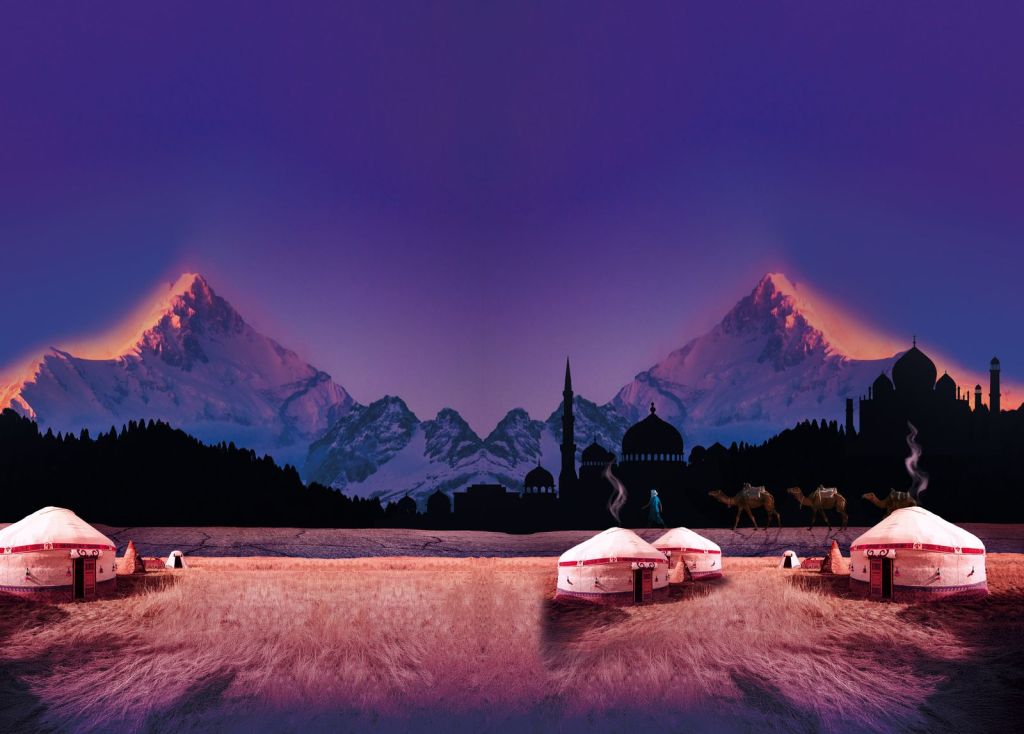
It was the same with the purple skies at dawn. I read in a history book that the onset of the plague in the 14th century was preceded – or presaged – by this uncanny phenomenon, that features on the cover of the novel. So, what did that mean? Why purple? Why at dawn? Was there a connection between the plague and the purple skies at dawn. And if so, what was it?
Justin Newland
Author Bio:
Justin Newland’s novels represent an innovative blend of genres, from historical adventure to supernatural thriller and magical realism.
Undeterred by the award of a doctorate in mathematics from Imperial College, London, he conceived his debut novel, The Genes of Isis (Matador, 2018), an epic fantasy set under Ancient Egyptian skies. Next came The Old Dragon’s Head (Matador, 2018), set in Ming Dynasty China in the shadows of the Great Wall.
The Coronation (Matador, 2019) features the Great Enlightenment and speculates on the genesis of the most important event in the modern world – the Industrial Revolution. The Abdication (Matador, 2021) is a mystery thriller in which a young woman confronts her faith in a higher purpose and what it means to abdicate that faith.
At this point in his writing career, after four self-published books, Justin was offered a part-funded contract with the Book Guild.
The Mark of the Salamander (Book Guild, 2023) is the first in a two-book ‘The Island of Angels’ series. It tells the epic tale of England’s coming of age during the Elizabethan era. The second in the series, The Midnight of Eights (Book Guild, 2024), charts the uncanny coincidences of time and tide that culminated in the repulse of the Spanish Armada.
His latest novel, The Spirit of the Times (Matador, 2026), is to be published in July. It tells the story of a young Kyrgyz woman’s journey westwards along the Silk Road. With purple skies at dawn, and a supporting cast of Genghis Khan, the Black Plague, a perplexing rhyme, a ring of roses, it explores the greatest mystery of all – the spirit of the times.
Justin’s enduring passion is to explore the origins of our current time. This prompted a broad research into what we’ve inherited from history – encompassing Egypt, China, Prussia and Tudor England. He also writes entertaining talks which he gives to the WI, U3A, Probus, Rotary and local historical associations. Please visit his website for a current list of the talks.
Alongside the talks, Justin promotes his work with regular book signings at TG Jones (ex. WH Smith) high street stores, selling over 3,500 books since 2019. He has sponsored over 40 UK and US blog tours, given frequent radio interviews and penned many guest posts.
His current book signing motto is: Enjoy, Imagine, Discover.
As a member of the Society of Authors, he has Public and Products Liability Insurance.
Born in Essex, England, three days before the end of 1953, he lives with his lady in plain sight of the Mendip Hills in Somerset, England.
Triggers: The story touches on the thorny and controversial subject of slavery. I felt it needed to be included, mainly because I wanted the story to be authentic, and slavery was a common feature in the 14th Century.
This title is available to read on Kindle Unlimited.
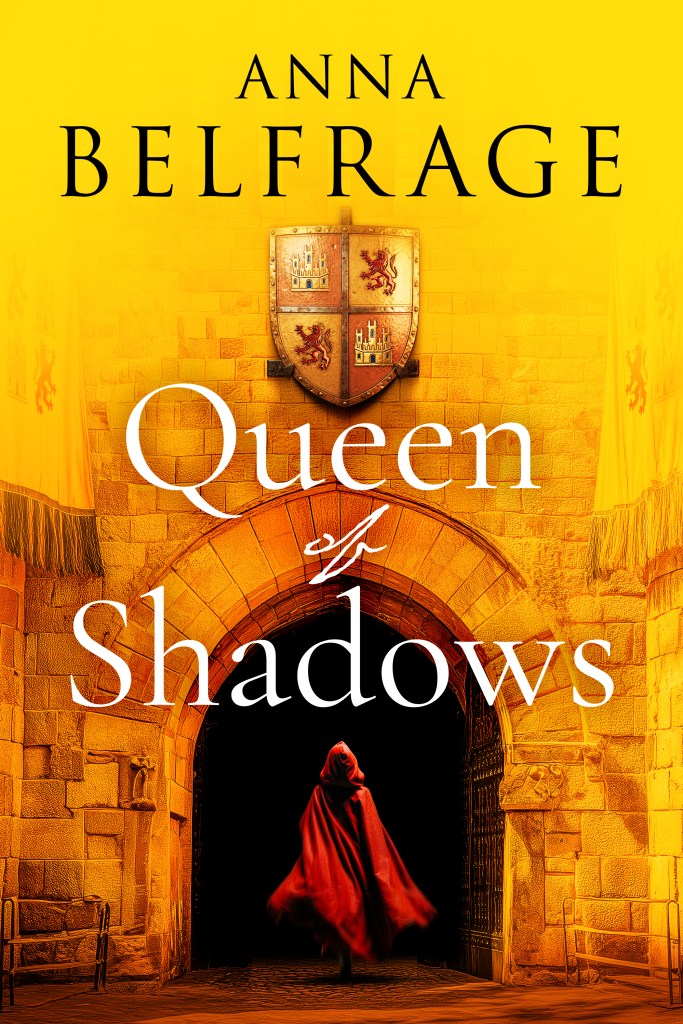
I would like to thank Anna Belfrage, Timelight Press, and the Coffee Pot Book Club for providing me with early access to Queen of Shadows for review. I received this novel for free, but my review is entirely honest
Blurb:
She should have stayed in the shadows—but Leonor de Guzmán yearned for the sun
Castile in the 1330s is a place of constant turmoil. King Alfonso must contend with the incursions from the Muslim Marinids eager to reclaim Al-Andalus while struggling with repeated rebellions against his firm rule.
When Alfonso needs respite, he finds it in the arms of his Leonor—the most beautiful woman in the realm. But while he may love Leonor over all others, his lawful wife, Maria of Portugal, is tired of being constantly displaced by the fair Leonor.
Leonor loves her man. She gives him healthy sons, a place to be himself. But she is only a mistress, even if Alfonso treats her like a queen. Leonor’s enemies watch and hate.
Flying too close to the sun comes at a high price. How much will Leonor’s love cost her?
Based on the true story of Alfonso XI and his complicated relationships to wife and life-long mistress.
My Review:
Leonor de Guzmán is a woman that history has attempted to sideline. Thanks to the author Anna Belfrage, the mistress of King Alfonso XI and fourteenth-century Castile become very much alive in this rich and exceptional novel.
Leonor is not the king’s passing favourite, but the love of his life and the woman he treated as his true partner. She bore him ten children, many of them sons, and held a place in his life that looked very much like queenship.
The difficulty was that Alfonso already had a wife. Maria of Portugal was the lawful queen, the political match, the woman with the crown, but she did not hold the king’s heart.
Alma, a young woman of mixed Castilian and Moorish heritage who serves Leonor, becomes the thread that reveals the deeper tensions of the kingdom. Through her, we see the uneasy coexistence of cultures and faiths, the contradictions people carry, and the quiet strength required simply to endure.
The author is equally skilled at evoking place. She gives us the stark northern plateau and the shimmering southern landscapes, the grandeur of palaces and the small, intimate details of daily life. Food, herbs, travel, the textures of work, and ritual all feel close enough to touch.
This is a story about power and love, about the cost of loyalty, about joy that sits beside fear. It is not a soft or romantic past. At times, it can be difficult to read, but it is an extremely rewarding one. These were people with familiar longings and sorrows, yet shaped by a world whose values can feel utterly foreign to us. The pacing, the tension and the vivid descriptions make this a rich and compelling read. I became utterly engrossed. This is a five-star review.
Anna Belfrage
Author Bio:
Had Anna been allowed to choose, she’d have become a time-traveller. As this was impossible, she became a financial professional with three absorbing interests: history, romance and writing. Anna has authored the acclaimed time travelling series The Graham Saga, set in 17th century Scotland and Maryland, as well as two equally acclaimed medieval series; The King’s Greatest Enemy which is set in 14th century England, and The Castilian Saga ,which is set against the medieval conquest of Wales. She has also published a time travel romance, The Whirlpools of Time, and its sequel Times of Turmoil, and is now considering just how to wiggle out of setting the next book in that series in Peter the Great’s Russia, as her characters are demanding. . .
All of Anna’s books have been awarded the IndieBRAG Medallion, she has several Historical Novel Society Editor’s Choices, and one of her books won the HNS Indie Award in 2015. She is also the proud recipient of various Reader’s Favorite medals as well as having won various Gold, Silver and Bronze Coffee Pot Book Club awards.
“A master storyteller” “This is what all historical fiction should be like. Superb.”
Find out more about Anna, her books and enjoy her eclectic historical blog on her website, www.annabelfrage.com where you will also find her post about Alfonso and Leonor:
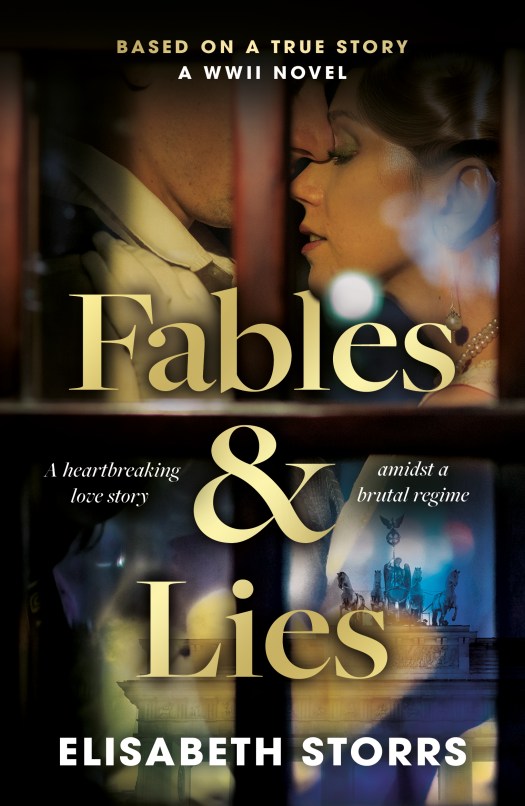
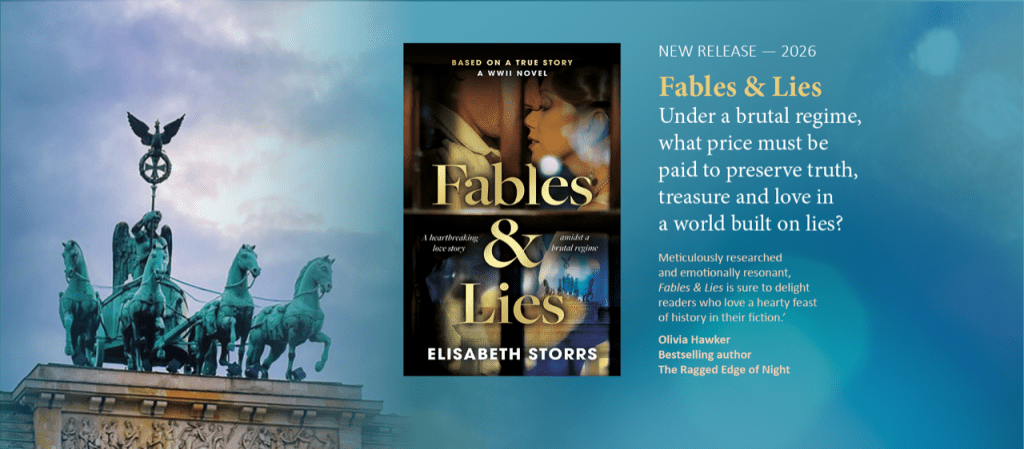
Under a brutal regime, what price must be paid to preserve truth, treasure and love in a world built on lies?
WWII Berlin. Freyja Bremer, a patriotic museum assistant, marries Kaspar Voigt, an ambitious SS scholar, to protect her father. Yet she is unaware her husband is instrumental in Himmler’s twisted quest for Aryan supremacy.
As she strives to safeguard the priceless Priam’s Treasure from air raids, Freyja falls in love with Darien Lessing, an archaeologist who exposes the moral decay beneath the Regime’s myths. Her awakening drives her into perilous resistance — aiding a Jewish doctor and his wife, Darien’s sister — while uncovering Kaspar’s role in the SS’s darkest programs, which subvert history to justify invasion, abduction and murder.
As Berlin collapses into chaos and bloodshed, Freyja, caught between duty, deception and desire, must risk everything to preserve truth in a world built on lies.
A heartbreaking yet triumphant love story, Fables & Lies shines light on lesser-known aspects of the Nazi Regime. It gives voice to the complex moral struggles of German women, the forgotten resistance of Gentiles married to Jews, the dangers of contested history, the evils of Himmler’s racial studies program and the unsung bravery of German museum curators who saved their nation’s treasures.
Perfect for readers of Kelly Rimmer, Anthony Doer and Laura Morelli.
Praise for Fables & Lies:
“A heartrending story of a young woman caught in the machinations of the Third Reich and in the web of a regime-compliant family. The novel is meticulously researched and emotionally resonant, sure to delight readers who love a hearty feast of history in their fiction.”~ Olivia Hawker, bestselling author of The Ragged Edge of Night
“A powerful and heartbreaking story set in war-torn Berlin, FABLES & LIES charts the slow dawning horror of a young woman as she realises all she has been taught about Hitler and the Third Reich is a lie. Impeccably researched and sensitively rendered, Elisabeth Storrs has shone a light on little-known aspects of life in Germany under the Nazi regime.”
~ Kate Forsyth, bestselling author of Bitter Greens
“Written from the little explored German viewpoint, FABLES & LIES is a gripping account of the quest to save the world’s great antiquities during WW2 and an ode to those women and men who risked all for freedom. A beautifully written novel. I’ve never read anything like it.”
~ Nicole Alexander, author of The Limestone Road
“Elisabeth Storrs has indeed broken the mould by writing ‘from the other side’. Evocative, detailed and heart-rending as the heroine journeys through disillusion and danger in the Third Reich.”
~ Alison Morton, author ofthe Roma Nova series
“A chilling and meticulously researched journey into the shadow world of the Ahnenerbe. Blending historical rigor with gripping fiction, FABLES & LIES reminds us of the devastating consequences when history is twisted to serve power.”
~ Leah Kaminsky, author of The Hollow Bones
Elisabeth Storrs
Author Bio:
Elisabeth Storrs has a great love for history and myths. She is the award-winning author of A Tale of Ancient Rome trilogy which was endorsed by Ursula Le Guin, Kate Quinn and Ben Kane.
Now her obsession lies with Trojan treasure and twisted Germanic prehistory in her new release, Fables & Lies: A World War II Novel.
Elisabeth is also the founder of the Historical Novel Society Australasia and the $155,000 ARA Historical Novel Prize. She lives in Sydney with her husband in a house surrounded by jacarandas.
Triggers: The book contains offensive Nazi ideology together with graphic war imagery (including rape), stillbirth and bereavement. Audiobook Narrator: Lucy Tregear.
Thank you to Carol McGrath, Headline Accent and the Coffee Pot Book Club for my advanced copy of this novel. I received it at no cost, but my review is entirely honest.
This novel follows the life of Elizabeth, the sister of Queen Jane Seymour. It opens in the Yorkshire countryside, where the recently widowed Elizabeth, only nineteen, is already a mother, the manager of Kexby Manor and is becoming an enterprising cloth merchant and employer.
The story gives a vivid sense of what the religious upheavals of the sixteenth century must have felt like for ordinary people and how easy it was to be swept up in the changes and to fall into danger. I also felt the slower rhythm of Tudor life very clearly. Gossip travelled slowly, and the seasons and the church shaped every part of daily existence.
Elizabeth is still reeling from the news of the sudden arrest of Anne Boleyn when news arrives of the queen’s execution. Elizabeth was once Anne’s maid of honour, and the moral injustice of her former mistress’s fall feels very real. The shock of that moment is powerfully drawn. We know it is coming, reading in the comfort of the twenty‑first century, but Elizabeth has no such luxury. For her, it is a seismic event, made even more astonishing when she learns that her sister Jane will be the next queen of England.
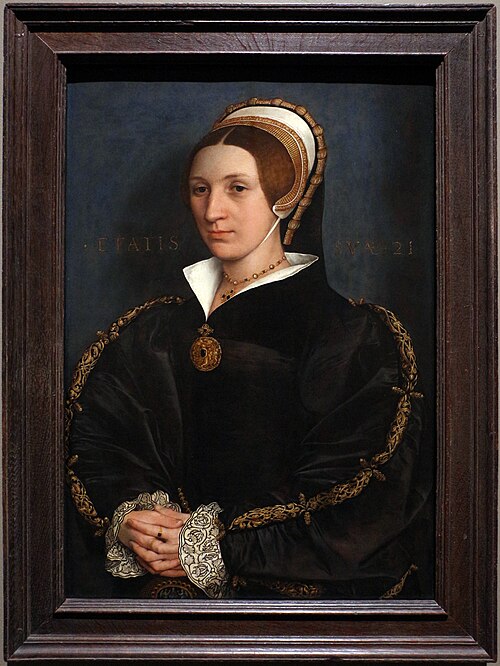
Soon, news comes from her brother, Edward Symour, who encourages her second marriage to the son of Thomas Cromwell Gregory. It is a delicious second marriage for Elizabeth, and the joy she shares with her new husband shines through every scene. She sits for a painting with Hans Holbein, a moment that underlines just how elite her new family is.
But her marriage brings her into the shadows of courtly plots and secrecy, at the same time as religious change across the country threatens the traditions and values she has always lived by.
This is an exceptionally well written and well researched novel, and it stands out as a work worth reading. This is a five Star novel.
Portrait of a lady, probably a Member of the Cromwell Family, perhaps Elizabeth Seymour. c. 1535-40, Hans Holbein the Younger
Blurb:
A mother, a wife, a woman of substance… At nineteen, Elizabeth Seymour is already a mother, has been recently widowed, and seen her Queen, Anne Boleyn, lose her life. Against the wishes of her father, she heads North, away from Wulf Hall and the court in London to Yorkshire, determined to establish a new beginning as a landowner and business woman. As her family in Wiltshire curry favour with King Henry, aided by Thomas Cromwell, Elizabeth makes Kexby Manor her home, finding loyalty among her people there.
Soon, news comes to Elizabeth of the King’s desires for her sister, Jane and while her brother, Edward, encourages her own betrothal to Gregory Cromwell, son of Thomas. It is a happy second marriage for Elizabeth, but it brings unwanted involvement in the dark plots and secrecy of the court, while in the wider country, changes in religious practice threaten to alter the traditions and values of all she has known…
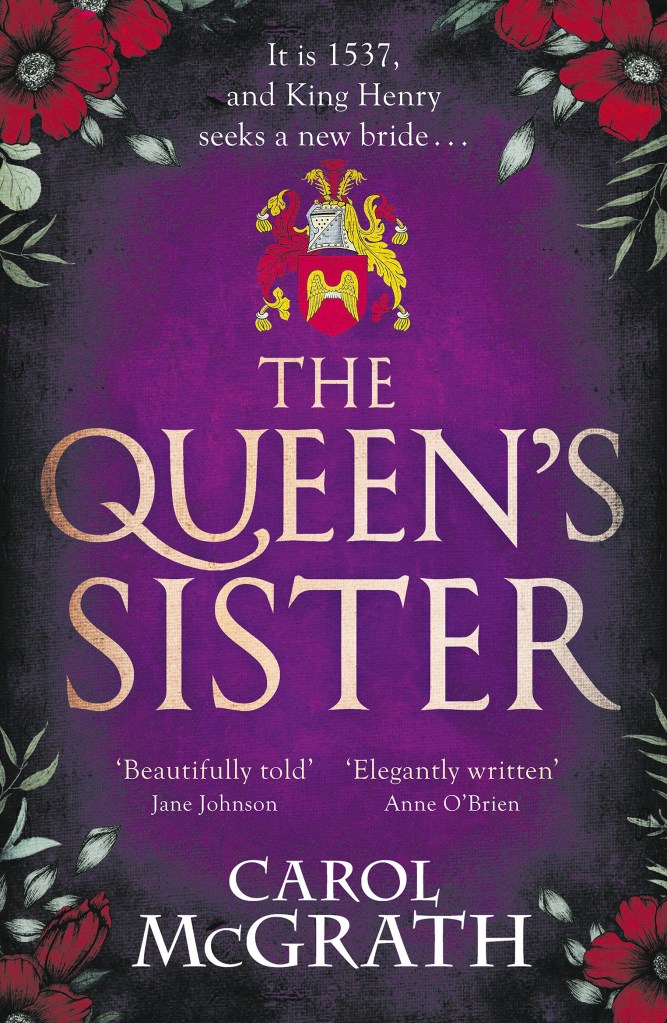
THE QUEEN’S SISTER vividly imagines the story of the woman possibly portrayed in Hans Holbein’s beautiful painting ‘Portrait of a Lady,’ and is a colourful, meticulously researched novel of Tudor life behind the scenes.
What readers say about Carol McGrath’s novels:
‘Another beautifully crafted, well-researched work of historical fiction from Carol McGrath’
‘Brimming with intrigue, tension and adventure, The Lost Queen is a powerful Medieval tale full of atmosphere, danger and emotion and transports the reader to another world’
Carol McGrath
Author Bio:
Following a first degree in English and History at QUB, Carol McGrath completed an MA in Creative Writing from The Seamus Heaney Centre, Queens University Belfast, followed by an MPhil in English from University of London. She is published by Headline.
The Handfasted Wife, first in a trilogy about the royal women of 1066 was shortlisted for the RoNAs in 2014. The Swan-Daughter and The Betrothed Sister complete this highly acclaimed trilogy. Mistress Cromwell, a best-selling historical novel about Elizabeth Cromwell, wife of Henry VIII’s statesman, Thomas Cromwell, was republished by Headline in 2020. The Silken Rose, first in a Medieval She-Wolf Queens Trilogy, featuring Ailenor of Provence, saw publication in April 2020. This was followed by The Damask Rose. The Stone Rose was published April 2022. The Stolen Crown 2023 and July 2024 The Lost Queen about Berengaria of Navarre and The Third Crusade. The Queen’s Sister, sequel to Mistress Cromwell sees publication in June 2026.
Carol writes historical non-fiction as well as fiction. Sex and Sexuality in Tudor England was published in February 2022 by Pen & Sword. She speaks at Conferences and gives interviews.
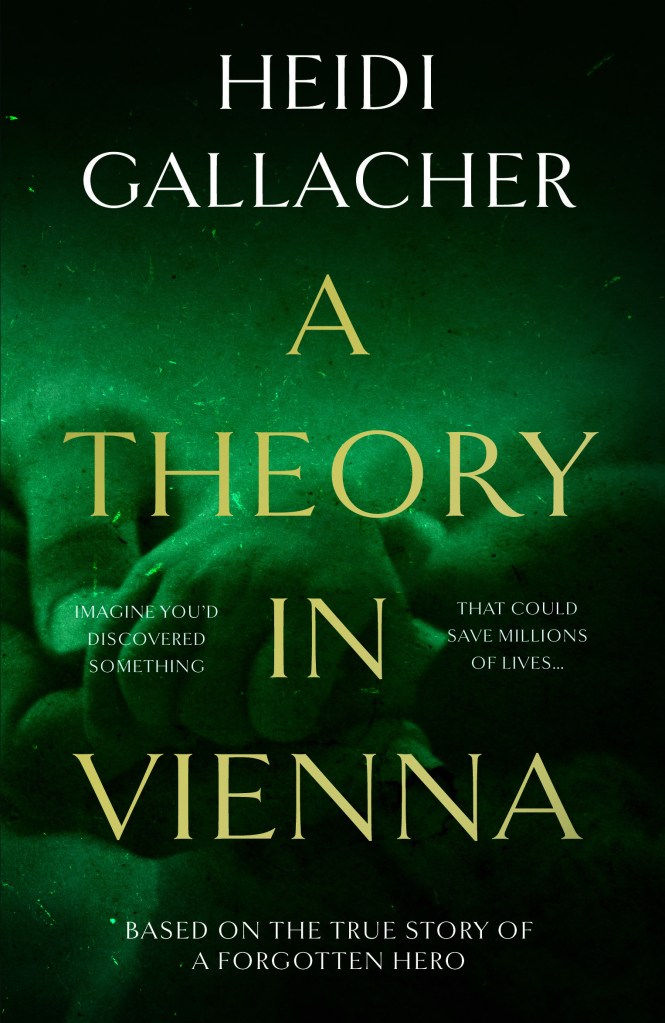
It’s my great pleasure to welcome Heidi Gallacher to my website to answer questions about her novel, A Theory in Vennia:
Tell us about your novel:
The novel tells the story of Ignaz Semmelweis, a 19th-century doctor whose simple, lifesaving discovery was ignored in his own lifetime. My interest was piqued when I came across him during my research for a previous historical novel.
So, set against the emergence of modern medicine, A Theory in Vienna follows a man who proves something undeniable, yet who lacks the language, authority and cultural awareness needed to be believed. At its heart, the book isn’t just about medical history; it’s about what happens when the truth arrives too early. It explores obsession, resistance, and the quiet loneliness of being right in a world that isn’t ready to listen. Semmelweis’s story is tragic, but it’s also urgently human – a reminder that progress often depends as much on humility and courage as it does on evidence.
Was there a part of Semmelweis’s struggle that resonated with you on a personal level? Did that connection change the way you wrote about him?
Yes – what resonated most with me was the experience of not being heard, even when the evidence is clear. It’s probably happened to each one of us, at some time of our lives. Semmelweis’s struggle isn’t only about science; it’s about communication, timing, and the pain of watching something urgent fail to land. That connection shaped the way I wrote about him. I became less interested in presenting him as a flawless hero and more focused on his inner world – his frustration, his rigidity, and the ways his certainty both sustained and damaged him.
Semmelweis is often portrayed as a tragic figure. How did you approach writing a man whose brilliance and frustration shaped both his legacy and his downfall?
I tried to resist the temptation to turn Semmelweis into either a martyr or a warning. His tragedy lies in the fact that his brilliance and his frustration were inseparable; the same intensity that allowed him to see what others missed also made it difficult for him to persuade them. He isn’t undone by ignorance alone, but by the way repeated resistance hardens him and isolates him. His discovery endures, but the human price he paid gives the story its emotional weight.
Semmelweis fought for a truth no one wanted to hear. Have you ever had a moment in life where you’ve had to hold your ground in the face of doubt or resistance?
Yes – though on a far smaller scale. What I recognised in Semmelweis was the quiet determination it takes to stay with an idea when external validation doesn’t arrive. There were moments while writing this book when I had to trust the story despite uncertainty and resist the urge to soften it to make it more palatable.
Three centuries passed from the first epidemic of childbed fever until the early 1900s. More lives were lost across the world from this fever than lives were lost in all of the wars during that time.
If you could sit with Semmelweis for five minutes, as a woman and a writer, what would you want to ask him or tell him?
I would want to tell him that the women he fought for are no longer invisible – that their tragic lives are now understood as the true measure of his work. As a writer, I’d ask whether he ever sensed the cost of being right, and whether he would still have chosen that path knowing where it led.
What do you hope modern readers will take away from A Theory in Vienna, especially in a world that still debates science, evidence and public health?
I hope readers come away with a renewed sense of attentiveness – to small actions, to overlooked voices, and to the quiet ways care can save lives. Semmelweis’s insistence on something as simple as handwashing reminds us that progress often arrives through everyday acts of responsibility and compassion. More than anything, I hope the book leaves readers feeling that change is possible – and that listening, humility, and care still matter.
Blurb: Imagine you’d discovered something. Something that could save hundreds of thousands of lives. But they wouldn’t let you tell anyone. Wouldn’t it drive you mad?
Young Hungarian doctor Ignaz Semmelweis uncovers the real reason thousands of young women are dying after childbirth. Yet, in mid-19th-century Europe, his simple methods are ridiculed. Semmelweis faces the battle of his life to convince others that the cause is simple…
Based on the true story of a forgotten hero, A Theory in Vienna brings the remarkable story of this man to life.
‘I bring to light a truth, which was unknown for many centuries with direful results for the human race.’ – Ignaz Philipp Semmelweis.
Heidi Gallacher
Author Bio:
Heidi was born in London in the Sixties. She grew up in South Wales, UK and moved to Paris as a young adult where she taught English for two years. She currently lives in Switzerland and recently completed an MA in Creative Writing.
Her first short story was published in Prima magazine (UK) in 2018. Heidi now writes historical fiction. Her first novel, Rebecca’s Choice is set in Tredelerch– an old house in Wales that belonged to her family generations ago. This novel won an award from The Coffee Pot Book Club in 2020, Debut Novel Bronze Medal.
Her second novel, A Theory in Vienna, is set in 19th century Vienna and Budapest. It tells the incredible story of unsung hero Ignaz Semmelweis, whose life-saving discovery was ridiculed at the time.
Heidi enjoys travelling (the further North the better!), singing and writing songs, and spending time reading and writing at her Swiss chalet where the views are amazing.
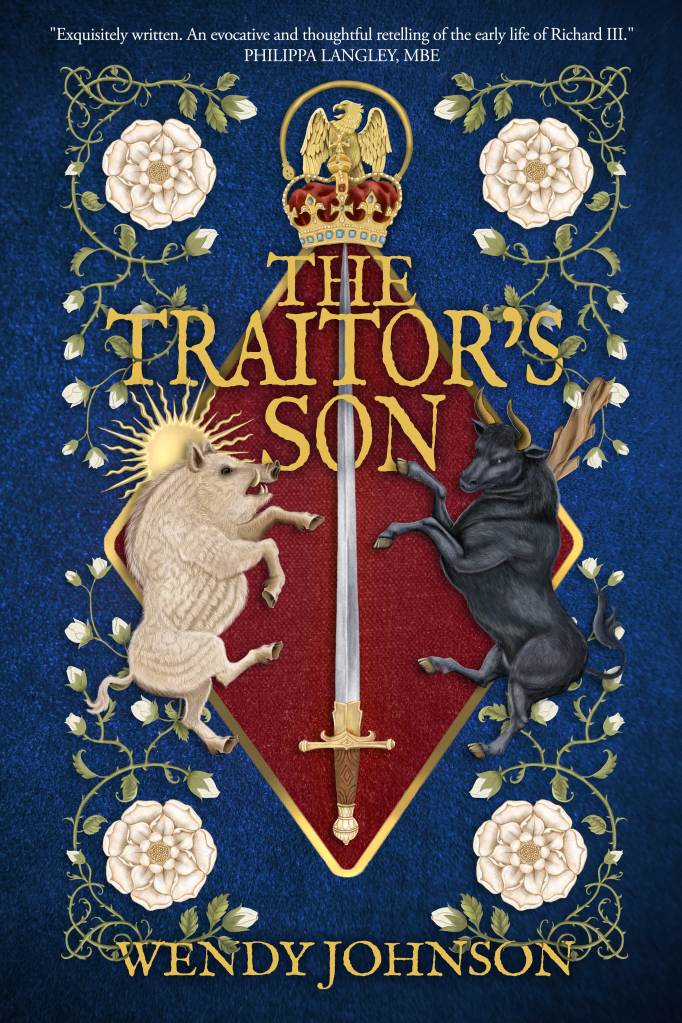
I am excited to welcome Wendy Johnson to my blog to answer questions about her novel, ‘The Traitor’s Son.’
Tell us about your latest book:
‘The Traitor’s Son’ is my debut novel, and the first in a proposed trilogy reimagining the life of Richard III. This first instalment covers Richard’s ten formative years between 1461 and 1471 and tells of how a grieving, fatherless boy grows into a courageous warrior of eighteen. It is a story of inner conflict, of love, loyalty, sacrifice, and treachery within the House of York. It culminates in a heart-wrenching dilemma, when Richard finds himself forced to choose between Edward, his blood brother and king, and Richard Neville, earl of Warwick, the man he has come to look upon as a second father.
What is your preferred writing routine?
I try to write every day, on average for around two hours. My habit is to continually edit my work as I go, so that only when I’m happy with what I’ve written do I carry on with the next scene. This can make for slow progress, but in my experience, it makes the final edit much easier, because most of the hard work has already been done. I enjoy listening to music as I write: sometimes I’ll find authentic medieval music on YouTube, as this helps to set the scene, but mostly I listen to the Wolf Hall soundtrack by composer Debbie Wiseman. Of course, Wolf Hall is set at a later date, but the music is very stirring, and I find it helps galvanise my writing. I’ve recently discovered the soundtrack for The Lord of the Rings, too, and find that really emotive.
What advice do you have for new writers?
Two things in particular really helped me improve as a writer. The first was advancing my knowledge of how to write — the Writers and Artists Guide to How to Write by Harry Bingham was invaluable. It helped me hone the craft, teaching me such a lot and opening my eyes as to what was required of an aspiring author. The second thing was to constantly read the novels of award winning authors and try to learn from them. Both of these things helped me no end, and if new writers are serious about their work, I would recommend trying something similar. I think the third piece of advice I would give would be to never give up — it’s a hard road, but if you really want to write and are determined to succeed, then you will. Have faith in your work and just keep going!
Tell us something unexpected you discovered during your research.
As someone who has been fascinated by the Wars of the Roses for most of my life, I was already very familiar with the history, so I wouldn’t say I was too surprised by anything thrown up by my research. However, while I was writing this first volume, concentrating on the childhood and youth of Richard III, something did occur to me which I decided to incorporate as the major theme of the novel. Richard’s father, the Duke of York, was slain in battle when Richard was only eight years old.
We know from the contemporary record, and from the evidence of his later life, that Richard greatly venerated his father’s memory, and it’s clear he’d felt very close to him. It has often been suggested that this void in young Richard’s life was filled by his elder brother, Edward (later Edward IV), but this has never rung true to me.
At the time of their father’s demise Edward himself was only eighteen years of age, and although Richard must have admired his brothe r’s military prowess and may even have considered him in heroic terms, I believe the ideal candidate for the role of father figure would have been his thirty – seven – year old cousin, Richard Neville, earl of Warwick. Edward assigned to Warwick the tutelage of his young brother, and Richard underwent his knightly training in the earl’s household. Warwick must undoubtedly have been an influence on the youth, and between the ages of twelve and sixteen, Richard must have surely sought the paternal guidance of his cousin, as well as the affection of a father figure.
The more I thought about this, the more I felt I had to introduce the theme to the novel as I had begun to wonder how Richard must have felt when Warwick rebelled against the king. Should he pledge his allegiance to Edward, his blood brother as well as his king, or did he support Warwick, a man who had become a second father to him? Of course, we know from history that he supported his king, but was that an easy choice to make?
In ‘The Traitor’s Son’, Ric hard sees both options as a betrayal, and this heart-wrenching dilemma forms the main thrust of the novel.
What was the hardest scene you remember writing?
By far, the hardest scene to write was that which described the battle of Barnet. For most of the other scenes in the book, I felt I had at least some point of reference, but a battle was something I found extremely difficult to imagine. The historical events were easy to research, but the emotions involved are something the vast majority of people will never have to face. At times, it almost felt as though I couldn’t bring myself to write it, but I knew I had to, as this forms the climax of the novel. I got there in the end, and I’m pleased with the scene, but I didn’t relish having to picture it in my mind’s eye.
What are you planning to write next?
‘The Traitor’s Son’ is the first in a proposed trilogy, and I’m currently working on the sequel. The second volume will take Richard up to the age of thirty and will cover the events of 1471 through to the early weeks of 1483. The story will be a rollercoaster ride for my protagonist and will once again focus on the trials and tribulations of the three York brothers – what I like to call the ‘fraternal triangle.’
As with ‘The Traitor’s Son’, I want historical fact to be the backbone of the novel, and so, as well as having to place myself as far as is conceivably possible in Richard’s shoes, I also need to ensure the storyline is as accurate as it can be and that the characters ring true to their real-life counterparts. The trilogy will end with a final book covering Richard’s all too brief reign, and there is a possibility that sometime in the future, I may choose to write about his brother, George, Duke of Clarence, a man equally maligned and caricatured by history, but that will be some time in the future.
Wendy Johnson
Author Bio:
Wendy Johnson has a lifelong passion for medieval history, its people, and for bringing their
incredible stories to life. Her specific areas of interest are the fifteenth century, the Wars of the Roses, and Richard III in particular. She enjoys narratives which immerse the reader in the past and tries faithfully to recreate the later Middle Ages within her own writing. She has contributed to a number of historical anthologies and was a runner-up in the Woman and Home Short Story Competition 2008.
Praise for The Traitor’s Son:
“I loved this novel, it was beautifully written, extremely atmospheric, the characters’
personalities came through perfectly, can’t wait for the next instalment.” ~ Linda Hayward, 5* AmazonReview.
“Exquisitely written. An evocative and thoughtful retelling of the early life of Richard III.” ~ Philippa Langley, MBE.
“Sometimes the perfect use of the written word takes my breath away. Not very often, but this book is it. A wonderful story written so beautifully that I shall not forget it for a long time. Everything to my mind is perfect. The language, the story, the pacing. Just wonderful.”~ Kindle Customer, 5* Amazon Review.
“Wonderfully woven story of a young Richard III. Woven with a sure knowledge of the
history and a realistic telling of a story about a young boy finding his way through tragedy
and triumph, uncertainty and a legacy he cannot escape.Brilliant debut which promises more and
more.” ~ Cris, 5* Amazon Review
“I loved this novel, it was beautifully written, extremely atmospheric, the characters’
personalities came through perfectly, can’t wait for the next instalment.” ~ Linda Hayward, 5* Amazon Review.
“Really enjoyed this book. Holds the reader enthralled from the first paragraph to the last.
The next volume can’t be released soon enough.” ~ J.M. Henderson, 5* Amazon Review
Perfect for fans of Hilary Mantel, Annie Garth Waite and Sharon K. Penman.