This title is available to read on Kindle Unlimited.
I would like to thank Anna Belfrage, Timelight Press, and the Coffee Pot Book Club for providing me with early access to Queen of Shadows for review. I received this novel for free, but my review is entirely honest
Blurb:
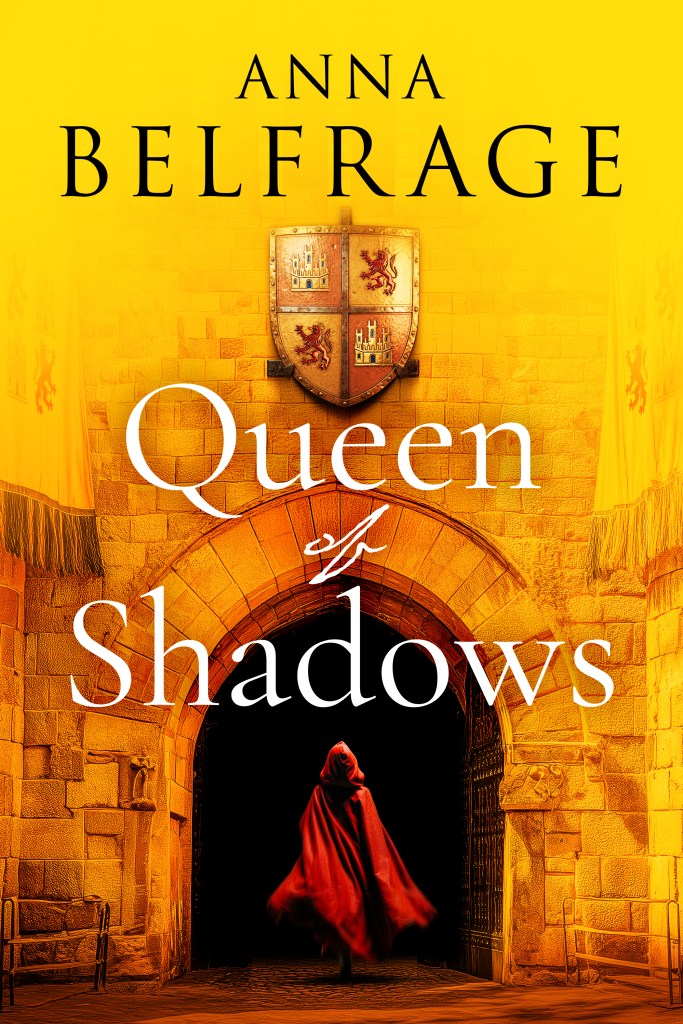
She should have stayed in the shadows—but Leonor de Guzmán yearned for the sun
Castile in the 1330s is a place of constant turmoil. King Alfonso must contend with the incursions from the Muslim Marinids eager to reclaim Al-Andalus while struggling with repeated rebellions against his firm rule.
When Alfonso needs respite, he finds it in the arms of his Leonor—the most beautiful woman in the realm. But while he may love Leonor over all others, his lawful wife, Maria of Portugal, is tired of being constantly displaced by the fair Leonor.
Leonor loves her man. She gives him healthy sons, a place to be himself. But she is only a mistress, even if Alfonso treats her like a queen. Leonor’s enemies watch and hate.
Flying too close to the sun comes at a high price. How much will Leonor’s love cost her?
Based on the true story of Alfonso XI and his complicated relationships to wife and life-long mistress.
My Review:
Leonor de Guzmán is a woman that history has attempted to sideline. Thanks to the author Anna Belfrage, the mistress of King Alfonso XI and fourteenth-century Castile become very much alive in this rich and exceptional novel.
Leonor is not the king’s passing favourite, but the love of his life and the woman he treated as his true partner. She bore him ten children, many of them sons, and held a place in his life that looked very much like queenship.
The difficulty was that Alfonso already had a wife. Maria of Portugal was the lawful queen, the political match, the woman with the crown, but she did not hold the king’s heart.
Alma, a young woman of mixed Castilian and Moorish heritage who serves Leonor, becomes the thread that reveals the deeper tensions of the kingdom. Through her, we see the uneasy coexistence of cultures and faiths, the contradictions people carry, and the quiet strength required simply to endure.
The author is equally skilled at evoking place. She gives us the stark northern plateau and the shimmering southern landscapes, the grandeur of palaces and the small, intimate details of daily life. Food, herbs, travel, the textures of work, and ritual all feel close enough to touch.
This is a story about power and love, about the cost of loyalty, about joy that sits beside fear. It is not a soft or romantic past. At times, it can be difficult to read, but it is an extremely rewarding one. These were people with familiar longings and sorrows, yet shaped by a world whose values can feel utterly foreign to us. The pacing, the tension and the vivid descriptions make this a rich and compelling read. I became utterly engrossed. This is a five-star review.
Anna Belfrage
Author Bio:
Had Anna been allowed to choose, she’d have become a time-traveller. As this was impossible, she became a financial professional with three absorbing interests: history, romance and writing. Anna has authored the acclaimed time travelling series The Graham Saga, set in 17th century Scotland and Maryland, as well as two equally acclaimed medieval series; The King’s Greatest Enemy which is set in 14th century England, and The Castilian Saga ,which is set against the medieval conquest of Wales. She has also published a time travel romance, The Whirlpools of Time, and its sequel Times of Turmoil, and is now considering just how to wiggle out of setting the next book in that series in Peter the Great’s Russia, as her characters are demanding. . .
All of Anna’s books have been awarded the IndieBRAG Medallion, she has several Historical Novel Society Editor’s Choices, and one of her books won the HNS Indie Award in 2015. She is also the proud recipient of various Reader’s Favorite medals as well as having won various Gold, Silver and Bronze Coffee Pot Book Club awards.
“A master storyteller” “This is what all historical fiction should be like. Superb.”
Find out more about Anna, her books and enjoy her eclectic historical blog on her website, www.annabelfrage.com where you will also find her post about Alfonso and Leonor:
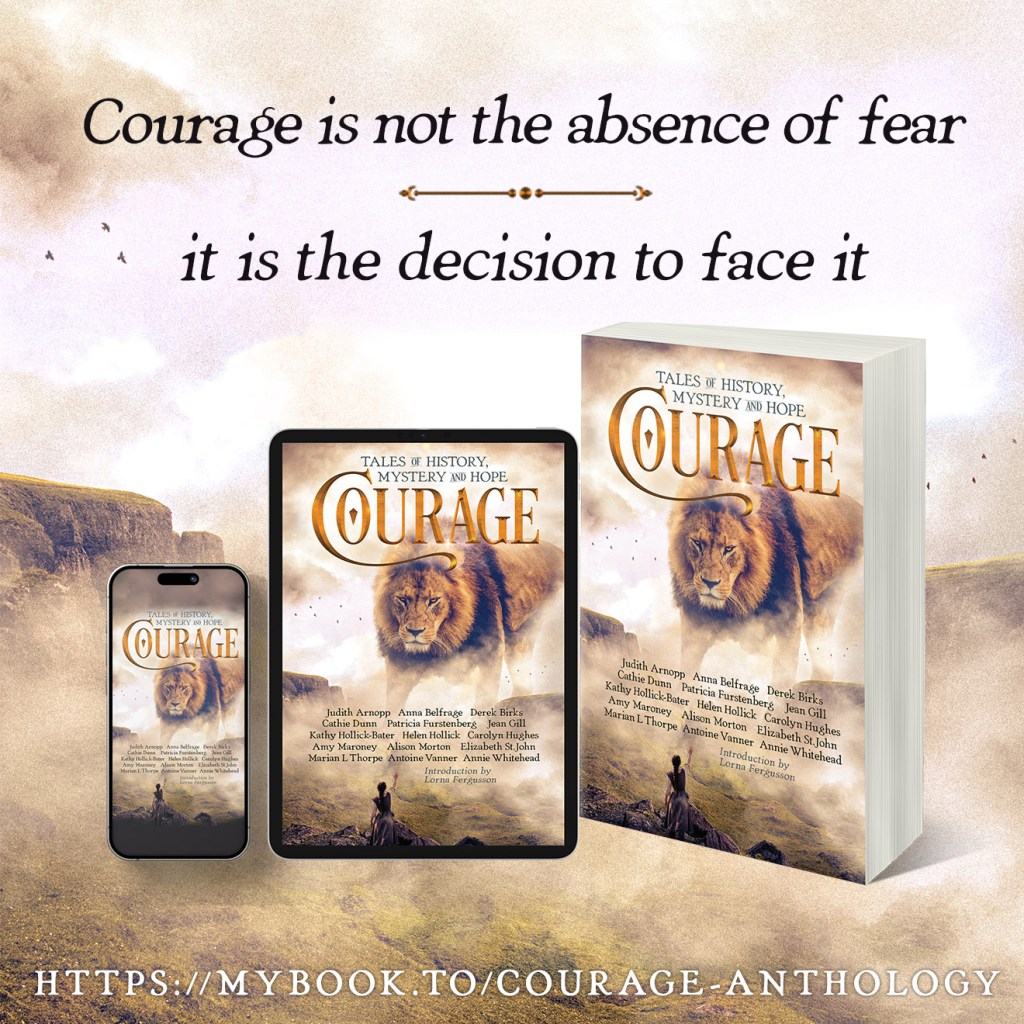
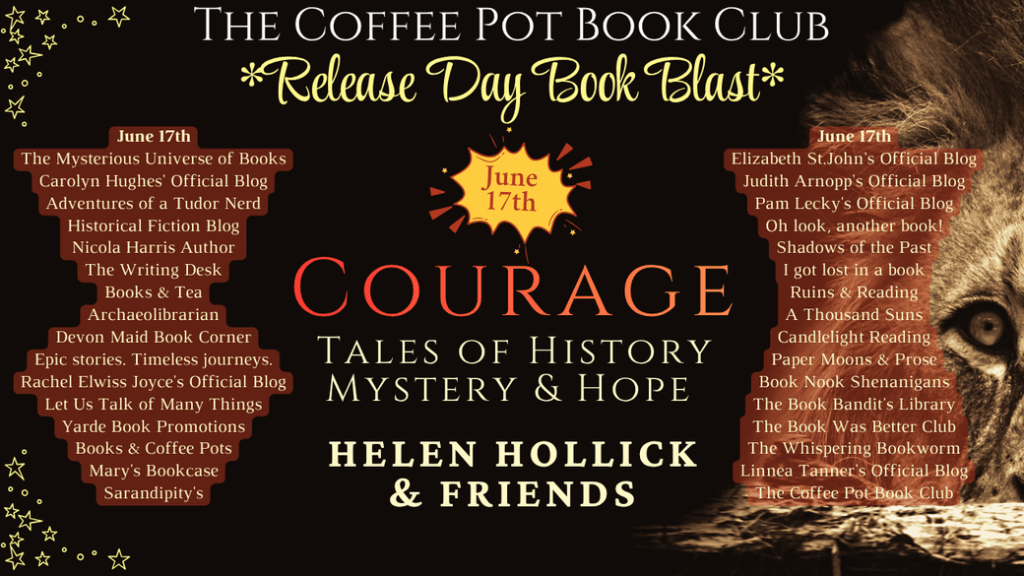
The lion has long been a symbol of courage, loyalty, and hope. A creature of power and, in some traditions, of the divine. We imagine it unflinching, unafraid. Yet the truest bravery is not found in the open, but within, where the lion lies hidden, waiting to be called upon. In moments of uncertainty or grief. Courage is not the absence of fear, but the decision to face it. It is the moment when we would rather flee, but instead, find a strength we did not know we possessed.
These powerful and often emotional stories follow men, women, and children as they face profound adversity, the resilience to endure, cling to hope for the future, and the courage to change their lives forever.
Join these ordinary people as they uncover extraordinary strength and emerge, in their own way, lion-hearted.
Triggers: adult content: some violence, rape, difficult personal circumstances.
The Stories – in appearance order: (collated by Helen Hollick)
THE SENTRY by Alison Morton
Roman province of Noricum, AD 395
When danger strikes and you are on your own with only fear as a companion
THE SAXON by Derek Birks
Southern Britain, the frontier between the Belgae and the Atrebates. AD 471
When escape means more than just running for your life
THE PHOENIX by Marian L Thorpe
Ésparias, a fictional country bordering the western sea circa AD 900
A mother’s dilemma? To keep them safe – or let them go?
SIFLEDE by Judith Arnopp
London, October 1066
When the Normans come, Southwark’s residents need to fight, flee, hide or die
DAISY CHAIN by Annie Whitehead
England, 1141
A mother’s love. A mother’s grief
STEPPING BETWEEN by Anna Belfrage
Ludlow Castle, England, 1308
When all you can do is to endure
CONFRONTING PLAGUE by Carolyn Hughes
England, 1361
When courage must survive in the face of history’s cruellest plague
KATE’S LETTER by Patricia Furstenberg
Transylvania, Kingdom of Hungary, 1478
One letter, sealed in dragon’s wax
THE PORTRAIT’S SECRET by Amy Maroney
Paris, 1536
When a woman holds a secret, does she keep it, or share it?
LEGACY by Jean Gill
Tudor England, 1558
When a man loses everything, what is his legacy?
A TALETELLER’S TALE by Helen Hollick
Somewhere in the Caribbean, 1709
When the only sound is the song of the sea, do you listen? Or do you drown in the embrace of a mermaid?
THE GATE by Elizabeth St.John
London, 1900
When courage costs everything
DARKNESS RISING by Cathie Dunn
Venezia, June 1923
Can the mystery of a secluded island, and a murder, be solved before
time runs out?
A SACK OF POTATOES by Antoine Vanner
Groenhorst, outskirts of Amersvoort, The Netherlands
November 11th, 1954
Courage meant survival for many – but others relied on greed
This title is available to read on #KindleUnlimited.
Author Bios:
Helen Hollick: About Helen – (anthology compiler)
Originally first published in 1993, and now known for her captivating storytelling and attention to historical detail, Helen’s historical fiction, nautical adventures, cosy mysteries and short stories, invite readers to step into worlds where the boundaries between fiction and history blend together. Her historical novels span a variety of periods, with a particular focus on the Early Medieval. Her Pendragon’s Banner series offers a vivid portrayal of the King Arthur story set against a plausible reality setting, while the events that led to the 1066 Battle of Hastings shows her ability to bring historical figures and settings to life. Her novel about Queen Emma (The Forever Queen – USA title) became a USA Today best-seller.
In the Sea Witch Voyages, she subtly weaves in elements of supernatural fantasy against the Golden Age of Piracy, creating an immersive and addictive nautical adventure experience.
Her Jan Christopher cosy mystery series is set during the 1970s, based around her, sometimes hilarious, years of working as a North London library assistant. Her 2025 release of Ghost Encounters, co-produced with her adult daughter, Kathy, reveals some benign ghosts of North Devon where the family moved to in 2013. Helen has written several short stories, further exploring the echoes of the past, all with her compelling and convincing signature style.
Cathie Dunn: About Cathie – Cathie is an award-winning, Amazon-bestselling author of historical fiction, mystery, dual-timeline, and romance set in Scotland, England, and France. Her latest release, Ascent – the story of Poppa of Bayeux, handfasted wife of Rollo the Viking – is her sixth novel, and she is currently working on the sequel, Treachery. In her House of Normandy series, Cathie seeks to showcase the forgotten women behind the famous warriors who forged early medieval Normandy. Cathie lives in the south of France with her husband and two rescue pets, enjoying the Mediterranean sunshine and visiting the many historic sites whenever she can. Find her across social media and on http://www.cathiedunn.com Amazon author page: https://author.to/CathieDunn
Judith Arnopp: About Judith – Multi award-winning author, Judith Arnopp’s novels are set in the late medieval and Tudor period. Her main focus is on the women of the era, her meticulous research offering deep psychological analysis of well-known figures such as Margaret Beaufort, Marguerite of Anjou, Anne Boleyn and Henry VIII himself. She has also written non-fiction How to Dress like a Tudor.
Anna Belfrage: About Anna – Had Anna been allowed to choose, she’d have become a time-traveller. As this was impossible, she became a financial professional with three absorbing interests: history, romance and writing. Anna has authored the acclaimed time travelling series The Graham Saga, set in 17th century Scotland and Maryland, as well as the equally acclaimed medieval series The King’s Greatest Enemy which is set in 14th century England, and The Castilian Saga, which is set against the medieval conquest of Wales. She has also published a time travel romance, The Whirlpools of Time, and its sequel Times of Turmoil, and is now considering how to wiggle out of setting the next book in that series in Peter the Great’s Russia, as her characters are demanding.
Derek Birks: About Derek – Derek writes character-driven, action-packed fiction. His debut historical novel, Feud, is the first of a series of eight books and one novella, entitled The Wars of the Roses. which follows the fortunes of the fictional Elder family. He has also written the Amazon bestselling series, The Last of The Romans, which focuses on the real fifth century Romano-British character of Ambrosius Aurelianus. His first non-fiction book is: A Guide to the Wars of the Roses. Under the pen name Tom Hadley, he has also written the Liv Fisher modern thriller series, which begins with Eyes Like Blades.
Derek has written and produced over 40 podcasts on the Wars of the Roses, and now co-hosts the podcast series, A Slice of Medieval, with historian, Sharon Bennett Connolly.
Cathie Dunn: About Cathie – Cathie is an award-winning, Amazon-bestselling author of historical fiction, mystery, dual-timeline, and romance set in Scotland, England, and France. Her latest release, Ascent – the story of Poppa of Bayeux, handfasted wife of Rollo the Viking – is her sixth novel, and she is currently working on the sequel, Treachery. In her House of Normandy series, Cathie seeks to showcase the forgotten women behind the famous warriors who forged early medieval Normandy.
Cathie lives in the south of France with her husband and two rescue pets, enjoying the Mediterranean sunshine and visiting the many historic sites whenever she can.
Patricia Furstenberg: About Patricia – Patricia is a Romanian-born, South Africa-based author of character-driven historical fiction set in medieval Eastern Europe. Her latest novel, When Secrets Bloom, part of the Blood of Kings, Heart of Shadows saga, explores the turbulent world of Vlad the Impaler, weaving meticulous research with moral complexity, faith, and the quiet resilience of women navigating power and peril. Her short stories, poetry, and travel features have appeared in anthologies and online publications. Patricia blogs about overlooked corners of history and cultural heritage on her
Jean Gill: About Jean – Award-winning Welsh author and photographer Jean Gill lives in Provence with the best scent-hound in the world, a Nikon D750 and a man. Best known for writing epic medieval adventures in The Troubadours and The Midwinter Dragon series, Jean has published twenty-seven multi-genre books since 1988, including the dog bestseller Someone To Look Up To.
For many years, she taught English, and was the first woman to be a secondary headteacher in the Welsh county of Dyfed. She is mother or stepmother to five children so life is hectic. With Scottish parents, Welsh and French residence and an English birthplace, she can usually shout for the winning team in sporting events.
Kathy Hollick-Bater: About Kathy – Kathy is severely dyslexic and struggles with her reading and writing. Her passion is horses and mental well-being. She started riding at the age of three, had her own pony at thirteen, and discovered showjumping soon after. Kathy is now a Devon farmer’s wife, runs Taw River Equine Events, and coaches riders of any age or experience, specialising in positive mindset and overcoming confidence issues via her Centre10 accreditation and Emotional Freedom Technique training. EFT, or ‘tapping’, uses the body’s pressure points to aid calm relaxation and to promote gentle healing around emotional, mental or physical issues. She hopes to extend her training in order to help ex-servicemen overcome PTSD.
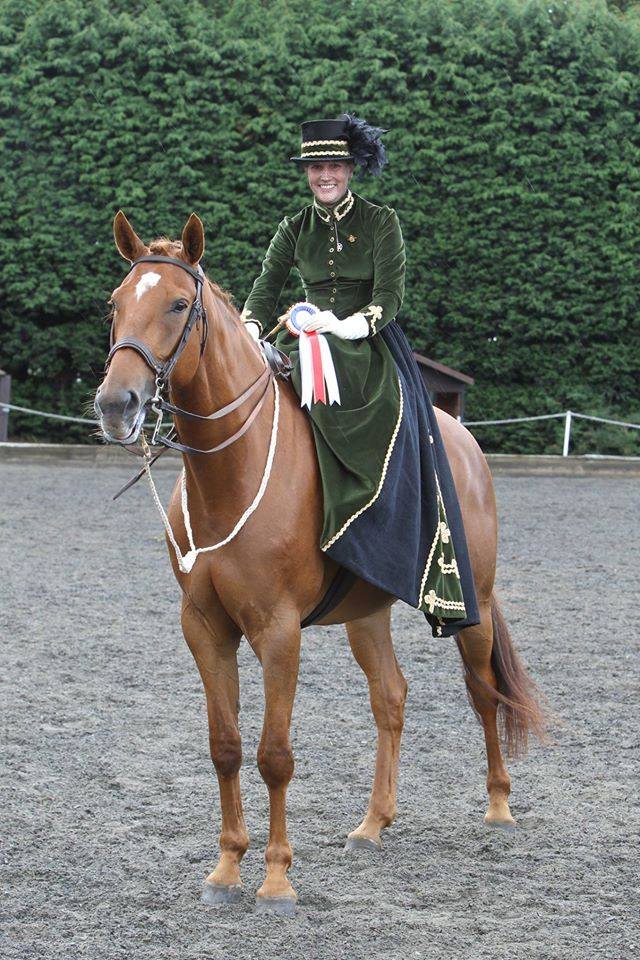
Kathy regularly competes at British Showjumping, and rides side-saddle (‘aside’) when she has the opportunity. She produces her own horses, several from home-bred foals. She also has the ability to see, hear and talk to friendly ghosts, several of whom share our 1769 farmhouse.
Carolyn Hughes: About Carolyn – Carolyn is the author of The Meonbridge Chronicles series, historical fiction set in fourteenth century England. The first Chronicle, Fortune’s Wheel, is set in the immediate aftermath of what we call The Black Death. Times of social change are always fascinating, and trying to depict the great upheaval in society brought about by the plague was the inspiration for the book. In the subsequent novels, Carolyn has sought to reveal the lives of mostly ordinary medieval folk through stories that tell of experiences especially pertinent to the time but which also resonate today. The stories focus particularly on the lives of women, if only because women in history often have not had much opportunity to “speak”.
There are now eight books in the series. More will follow.
Amy Maroney: About Amy – Amy lives in Oregon, U.S.A., and spent many years as a writer and editor of nonfiction before turning her hand to historical fiction. Amy is the author of the Miramonde Series, a trilogy about a Renaissance-era female artist and the modern-day scholar on her trail; and the Sea and Stone Chronicles, which features strong, talented women seeking their fortunes in the medieval Mediterranean. To receive a free prequel novella to the Miramonde Series, join Amy Maroney’s community of readers on her website: https://www.amymaroney.com/
Alison Morton: About Alison – Alison writes the thrillers she always wanted to read – ones featuring tough but compassionate heroines. Her eleven-book Roma Nova thriller series is set in an imaginary European country where a remnant of the ancient Roman Empire has survived into the 21st century and is ruled by women who face conspiracy, revolution and heartache but with a sharp line in dialogue.
All six full-length Roma Nova novels have won the BRAG Medallion, the prestigious award for indie fiction. SUCCESSIO, AURELIA, INSURRECTIO and JULIA PRIMA have been selected as Historical Novel Society’s Editor’s Choices. AURELIA was a finalist in the 2016 HNS Indie Award. The Bookseller selected SUCCESSIO as Editor’s Choice in its inaugural indie review.
Six years’ military service, a fascination with ancient Rome and a life of reading crime, historical and thriller fiction have inspired her writing. She lives in Poitou in France, the home of Mélisende, the heroine of her contemporary thrillers, Double Identity, Double Pursuit and Double Stakes.
Elizabeth St.John: About Elizabeth – Elizabeth’s critically acclaimed historical fiction brings to life the stories of her ancestors—extraordinary women whose close connections to England’s kings and queens offer an intimate perspective on Medieval, Tudor, and Stuart times. Inspired by family archives and historic residences from Lydiard Park to the Tower of London, she explores ancestral portraits, diaries, and lost gardens—and occasionally encounters a ghost. Discovering a whole different family history in The Gate, Elizabeth expands her storytelling into the early 20th century, adding a new era to her repertoire.
Living between California, England, and the past, Elizabeth is International Ambassador for The Friends of Lydiard Park and curator of The Lydiard Archives, where she is always searching for inspiration for her next novel. Her works include The Lydiard Chronicles, set during the English Civil War, and The Godmother’s Secret, exploring the mystery of the princes in the Tower. In The King’s Intelligencer, set in the court of Charles II, a young woman must decide what she is willing to risk to reveal the whereabouts of the missing princes.
Marian L Thorpe: About Marian – Marian’s novels are historical fiction of an imagined world, one that is close to Britain, Northern Europe, and Rome, but isn’t any of them. Her short stories, either in multiple-author anthologies or her own collections range from urban fantasy to historical fiction, slice-of-life to climate fiction.
After two careers as a research scientist and an educator, she decided it was time to do what she’d always wanted, and be a writer. Her first book was published when she was in her mid-50s. Her life-long interest in Roman and post-Roman European history provided the inspiration for her first series, while her other interests in landscape archaeology and birding provide background.
Antoine Vanner: About Antoine – Antoine spent four decades in international business, latterly at senior executive level, and lectured in academia afterwards. He lived through military coups, a guerrilla war, negotiations with governments, storms at sea and life in mangrove swamps, tropical forest, offshore oil-platforms, and the boardroom. He has lived and worked long-term in eight countries, has travelled widely in all continents except Antarctica and is fluent in three languages.
He has a passion for nineteenth-century political and military history and has a deep understanding of what was the cutting-edge technology of the time. His knowledge of human nature and his first-hand experience of the locales – often surprising – of the most important conflicts of the period provide the impetus for his chronicling of the lives of Royal Navy officer Nicholas Dawlish and his magnificent wife, Florence. There are thirteen volumes so far in the Dawlish Chronicles series, the actions set in the period 1858 to 1915.
Vanner now lives in Britain with his wife, Eva Lagassé (a journalist by background), their dog and five horses.
Annie Whitehead: About Annie – is a prize-winning writer, historian, and Fellow of the Royal Historical Society, and has written four award-winning novels set in ‘Anglo-Saxon’ Mercia. She has contributed to fiction and nonfiction anthologies and written for various magazines. She has twice been a prize winner in the Mail on Sunday Novel Writing Competition, and won First Prize in the 2012 New Writer Magazine’s Prose and Poetry Competition, a finalist in the Tom Howard Prize for nonfiction and shortlisted for the Exeter Story Prize and Trisha Ashley Award 2021. She was the winner of the inaugural Historical Writers’ Association HWA/Dorothy Dunnett Prize 2017 and subsequently a judge for that same competition. She has also been a judge for the HNS (Historical Novel Society) Short Story Competition, and was a 2024 judge for the HWA Crown Nonfiction Award and chaired the same panel in 2025.
Her nonfiction books are Mercia: The Rise and Fall of a Kingdom (a #1 Amazon Best-seller, published by Amberley books) and Women of Power in Anglo-Saxon England (Pen & Sword Books). In 2023 she contributed to a new history of English monarchs, published by Hodder & Stoughton, and in 2025 Murder in Anglo-Saxon England was published by Amberley Books.
In February 2026 she signed a contract for a new nonfiction book about the Anglo-Saxons, to be published by The History Press in 2027.
With an introduction by Lorna Fergusson: About Lorna – Lorna Fergusson is an award-winning short story writer and novelist. Founder of Fictionfire Literary Consultancy, she is an experienced editor, writing coach and speaker. She has taught on various Oxford University writing programmes since 2002. Her stories have won an Ian St James Award, the Historical Novel Society’s Short Story Award, and been shortlisted for the Bridport Prize, Pan Macmillan’s Write Now prize and the Historical Novel Society’s First Chapters prize. She was twice runner-up for the Mogford Prize. Author of The Chase and An Oxford Vengeance, her latest book is a collection of stories set in France, One Morning in Provence. She is currently developing one of the Mogford stories as a novel, as well as working on poetry and a book on mindset for writers. Born in Scotland, she is married with two sons and lives in Oxford, England.
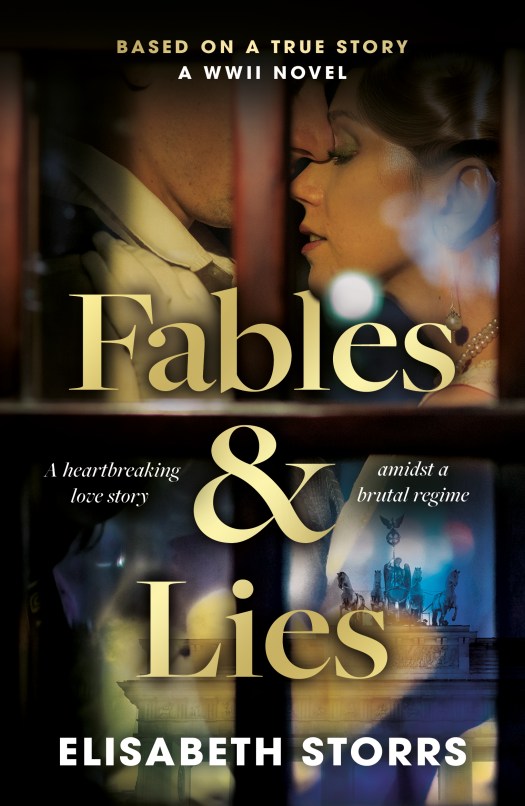
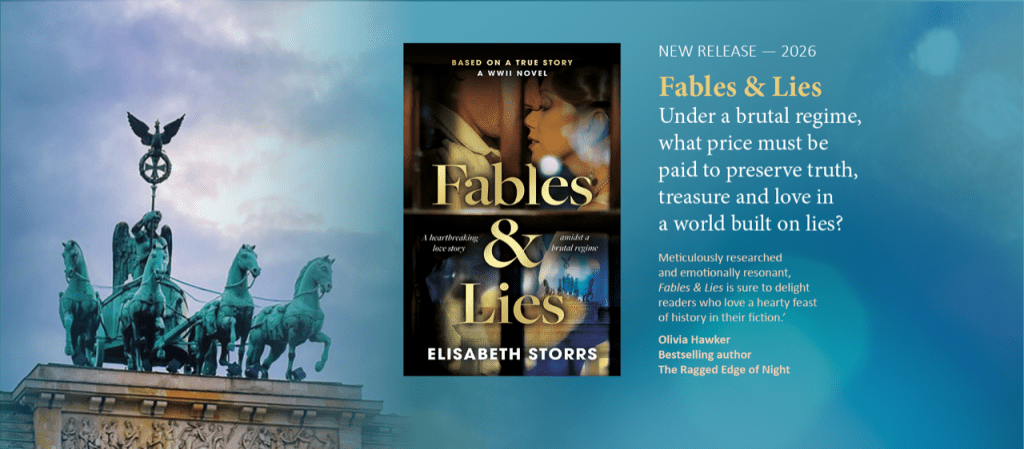
Under a brutal regime, what price must be paid to preserve truth, treasure and love in a world built on lies?
WWII Berlin. Freyja Bremer, a patriotic museum assistant, marries Kaspar Voigt, an ambitious SS scholar, to protect her father. Yet she is unaware her husband is instrumental in Himmler’s twisted quest for Aryan supremacy.
As she strives to safeguard the priceless Priam’s Treasure from air raids, Freyja falls in love with Darien Lessing, an archaeologist who exposes the moral decay beneath the Regime’s myths. Her awakening drives her into perilous resistance — aiding a Jewish doctor and his wife, Darien’s sister — while uncovering Kaspar’s role in the SS’s darkest programs, which subvert history to justify invasion, abduction and murder.
As Berlin collapses into chaos and bloodshed, Freyja, caught between duty, deception and desire, must risk everything to preserve truth in a world built on lies.
A heartbreaking yet triumphant love story, Fables & Lies shines light on lesser-known aspects of the Nazi Regime. It gives voice to the complex moral struggles of German women, the forgotten resistance of Gentiles married to Jews, the dangers of contested history, the evils of Himmler’s racial studies program and the unsung bravery of German museum curators who saved their nation’s treasures.
Perfect for readers of Kelly Rimmer, Anthony Doer and Laura Morelli.
Praise for Fables & Lies:
“A heartrending story of a young woman caught in the machinations of the Third Reich and in the web of a regime-compliant family. The novel is meticulously researched and emotionally resonant, sure to delight readers who love a hearty feast of history in their fiction.”~ Olivia Hawker, bestselling author of The Ragged Edge of Night
“A powerful and heartbreaking story set in war-torn Berlin, FABLES & LIES charts the slow dawning horror of a young woman as she realises all she has been taught about Hitler and the Third Reich is a lie. Impeccably researched and sensitively rendered, Elisabeth Storrs has shone a light on little-known aspects of life in Germany under the Nazi regime.”
~ Kate Forsyth, bestselling author of Bitter Greens
“Written from the little explored German viewpoint, FABLES & LIES is a gripping account of the quest to save the world’s great antiquities during WW2 and an ode to those women and men who risked all for freedom. A beautifully written novel. I’ve never read anything like it.”
~ Nicole Alexander, author of The Limestone Road
“Elisabeth Storrs has indeed broken the mould by writing ‘from the other side’. Evocative, detailed and heart-rending as the heroine journeys through disillusion and danger in the Third Reich.”
~ Alison Morton, author ofthe Roma Nova series
“A chilling and meticulously researched journey into the shadow world of the Ahnenerbe. Blending historical rigor with gripping fiction, FABLES & LIES reminds us of the devastating consequences when history is twisted to serve power.”
~ Leah Kaminsky, author of The Hollow Bones
Elisabeth Storrs
Author Bio:
Elisabeth Storrs has a great love for history and myths. She is the award-winning author of A Tale of Ancient Rome trilogy which was endorsed by Ursula Le Guin, Kate Quinn and Ben Kane.
Now her obsession lies with Trojan treasure and twisted Germanic prehistory in her new release, Fables & Lies: A World War II Novel.
Elisabeth is also the founder of the Historical Novel Society Australasia and the $155,000 ARA Historical Novel Prize. She lives in Sydney with her husband in a house surrounded by jacarandas.
Triggers: The book contains offensive Nazi ideology together with graphic war imagery (including rape), stillbirth and bereavement. Audiobook Narrator: Lucy Tregear.
Thank you to Carol McGrath, Headline Accent and the Coffee Pot Book Club for my advanced copy of this novel. I received it at no cost, but my review is entirely honest.
This novel follows the life of Elizabeth, the sister of Queen Jane Seymour. It opens in the Yorkshire countryside, where the recently widowed Elizabeth, only nineteen, is already a mother, the manager of Kexby Manor and is becoming an enterprising cloth merchant and employer.
The story gives a vivid sense of what the religious upheavals of the sixteenth century must have felt like for ordinary people and how easy it was to be swept up in the changes and to fall into danger. I also felt the slower rhythm of Tudor life very clearly. Gossip travelled slowly, and the seasons and the church shaped every part of daily existence.
Elizabeth is still reeling from the news of the sudden arrest of Anne Boleyn when news arrives of the queen’s execution. Elizabeth was once Anne’s maid of honour, and the moral injustice of her former mistress’s fall feels very real. The shock of that moment is powerfully drawn. We know it is coming, reading in the comfort of the twenty‑first century, but Elizabeth has no such luxury. For her, it is a seismic event, made even more astonishing when she learns that her sister Jane will be the next queen of England.
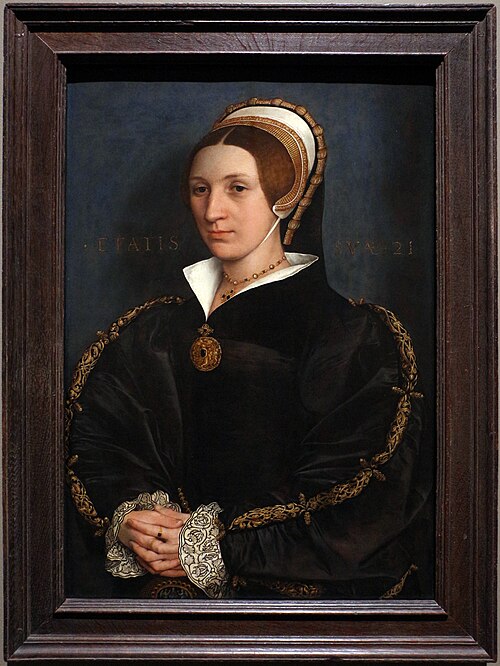
Soon, news comes from her brother, Edward Symour, who encourages her second marriage to the son of Thomas Cromwell Gregory. It is a delicious second marriage for Elizabeth, and the joy she shares with her new husband shines through every scene. She sits for a painting with Hans Holbein, a moment that underlines just how elite her new family is.
But her marriage brings her into the shadows of courtly plots and secrecy, at the same time as religious change across the country threatens the traditions and values she has always lived by.
This is an exceptionally well written and well researched novel, and it stands out as a work worth reading. This is a five Star novel.
Portrait of a lady, probably a Member of the Cromwell Family, perhaps Elizabeth Seymour. c. 1535-40, Hans Holbein the Younger
Blurb:
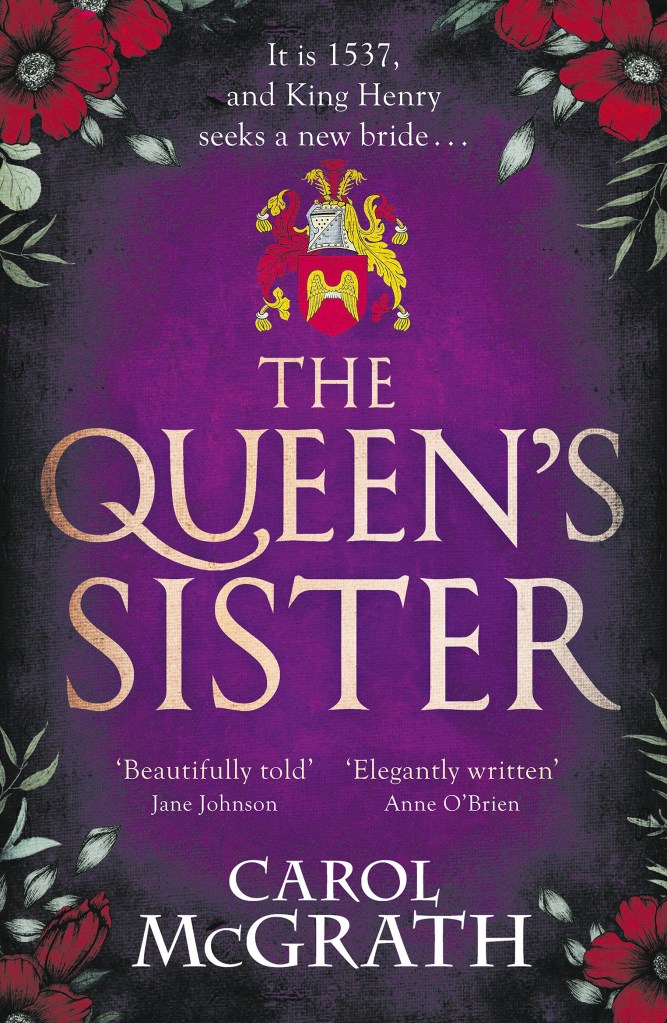
A mother, a wife, a woman of substance… At nineteen, Elizabeth Seymour is already a mother, has been recently widowed, and seen her Queen, Anne Boleyn, lose her life. Against the wishes of her father, she heads North, away from Wulf Hall and the court in London to Yorkshire, determined to establish a new beginning as a landowner and business woman. As her family in Wiltshire curry favour with King Henry, aided by Thomas Cromwell, Elizabeth makes Kexby Manor her home, finding loyalty among her people there.
Soon, news comes to Elizabeth of the King’s desires for her sister, Jane and while her brother, Edward, encourages her own betrothal to Gregory Cromwell, son of Thomas. It is a happy second marriage for Elizabeth, but it brings unwanted involvement in the dark plots and secrecy of the court, while in the wider country, changes in religious practice threaten to alter the traditions and values of all she has known…
THE QUEEN’S SISTER vividly imagines the story of the woman possibly portrayed in Hans Holbein’s beautiful painting ‘Portrait of a Lady,’ and is a colourful, meticulously researched novel of Tudor life behind the scenes.
What readers say about Carol McGrath’s novels:
‘Another beautifully crafted, well-researched work of historical fiction from Carol McGrath’
‘Brimming with intrigue, tension and adventure, The Lost Queen is a powerful Medieval tale full of atmosphere, danger and emotion and transports the reader to another world’
Carol McGrath
Author Bio:
Following a first degree in English and History at QUB, Carol McGrath completed an MA in Creative Writing from The Seamus Heaney Centre, Queens University Belfast, followed by an MPhil in English from University of London. She is published by Headline.
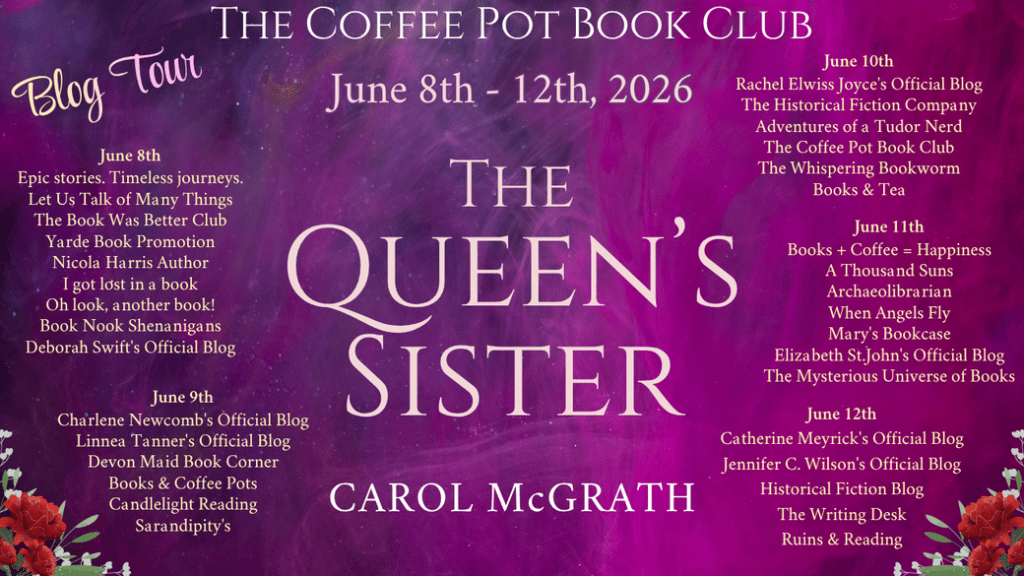
The Handfasted Wife, first in a trilogy about the royal women of 1066 was shortlisted for the RoNAs in 2014. The Swan-Daughter and The Betrothed Sister complete this highly acclaimed trilogy. Mistress Cromwell, a best-selling historical novel about Elizabeth Cromwell, wife of Henry VIII’s statesman, Thomas Cromwell, was republished by Headline in 2020. The Silken Rose, first in a Medieval She-Wolf Queens Trilogy, featuring Ailenor of Provence, saw publication in April 2020. This was followed by The Damask Rose. The Stone Rose was published April 2022. The Stolen Crown 2023 and July 2024 The Lost Queen about Berengaria of Navarre and The Third Crusade. The Queen’s Sister, sequel to Mistress Cromwell sees publication in June 2026.
Carol writes historical non-fiction as well as fiction. Sex and Sexuality in Tudor England was published in February 2022 by Pen & Sword. She speaks at Conferences and gives interviews.
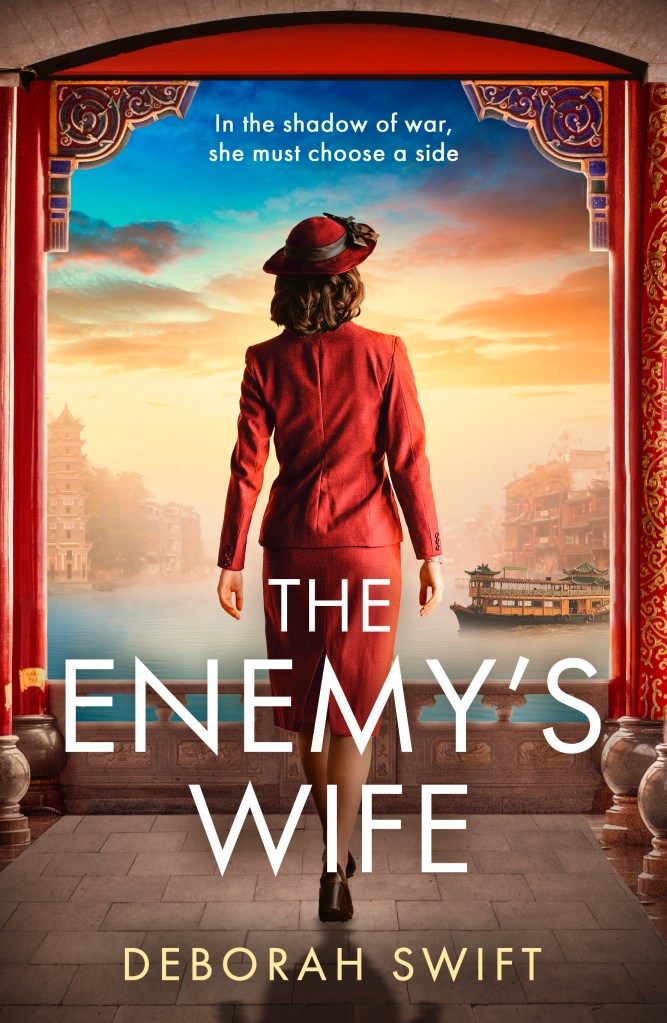
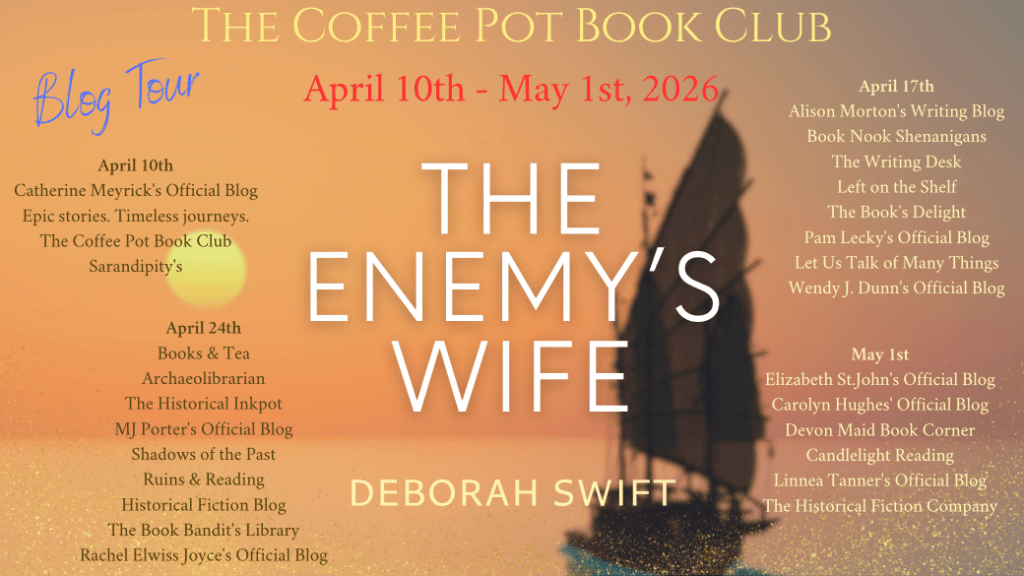
I’m pleased to host Deborah Swift today for a discussion about her new novel, The Enemy’s Wife.
Welcome Deborah, tell me what first drew you to this particular historical moment and the real events that underpin the story?
In my previous book, Jewish refugees who arrived from Eastern Europe, ended up in Japan. But what happened to them then? The research told me that they were moved again after the events of Pearl Harbor, to Shanghai. The more I read about wartime Shanghai, the more interesting it got – it was such a melting pot of cultures and loyalties.
I remembered wartime Shanghai from the film, Empire of the Sun, and decided to set the book in the International Settlement which featured in the film. This was the Western city within a city, an island dominated by the British and American businessmen and ruled by an Anglo-American council. Shanghai was known as the ‘Pearl of the Orient’ for its wealth, its bustling port, its Hollywood-esque film industry, and luxurious lifestyle. South of the settlement was the French Concession, where many wealthy ‘Shanghailanders’ lived in palatial houses waited on hand and foot by the much poorer Chinese population. In the book, one of my characters, Theo, lives here.
Surrounding the settlement was the Chinese nation controlled by the Chinese central government in Nanking, but there were many anti-government rebels too, and a lot of corruption. I wanted to tell the story of what happened when China and the settlement was invaded by the Japanese. Zofia married her Japanese husband before the war, and suddenly finds she has become the wife of the enemy.
Your books involve complex cultural and political settings. How do you approach research to ensure authenticity without overwhelming the narrative?
The story is king, and all the research I do is to support the story. It is never just ‘background.’ For example, I needed a hub where poor people and rebels against the government in Shanghai might meet and exchange news, so I initially thought of a doctor’s waiting room. However, doctors had been culled by the communist regime, so it had to be a pharmacy. This led me to research and write scenes set in a Chinese traditional pharmacy – something I would never have thought of doing without the research. But the scenes were driven by the plot needing some place people could meet to exchange views on politics and the changing regime. I researched what that might be, and ended up with a pharmacy, which was in fact much more interesting as a setting.
For broader political background, I read widely around the subject, and hope that the reading gives me ‘authority’ in the voice, even if all the facts I’ve discovered don’t end up on the page.
War and displacement put enormous pressure on relationships. What interests you most about writing characters whose loyalties are tested by circumstance?
I suppose it is that they could be us. I am of a culture and a generation that has not had to deal with war, and yet by writing the books I am constantly asking ‘in that situation, what would I do?’ Perhaps I am practising for the event – I hope not.
People who have different ideologies can think they have nothing in common until those ideologies are tested – and the reverse. You can think someone is not like you at all, until you stand in their shoes. Or you can think you are ‘on the same page’ until they do something you would never conceive of doing. Stress affects everyone in different ways, and if war is one thing, it is stress. These situations bring about enormous amounts of tension and that’s exactly what you need to keep a novel rolling along, and to keep the reader interested.
What was the best money you ever spent as a writer?
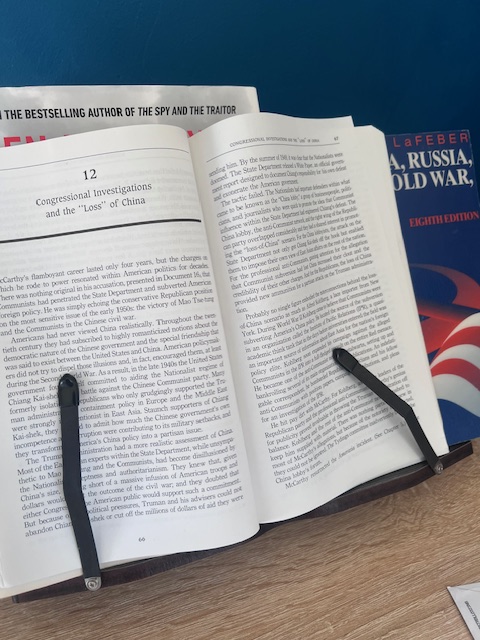
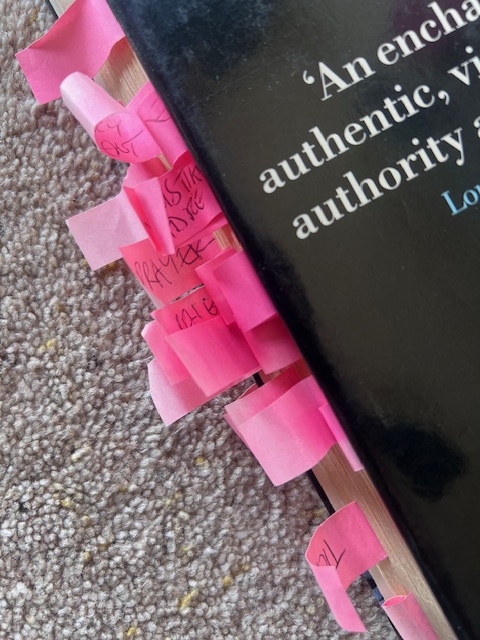
There are several things I can’t do without. First up – my bookstand! This allows me to prop open my research books on my desk as I’m typing. It really is one of the most useful things for a historical novelist, and costs peanuts. Second, the index tab stickers that you use to mark pages in books. Again, cost is negligeable, but I use them all the time to mark bits of research I need to keep. Third – a week away with writer friends. This is definitely the most expensive – but invaluable for keeping up with what’s happening in other parts of the publishing world, sharing experiences good and bad, and getting moral support from other writers who understand. Before going back to your lonely desk!
Looking ahead, what do you feel your next project might be?
I’m working on a sequel in which my two main characters, Theo and Zofia, think they are safe and happy in America. But even within a safe society, tensions can arise – particularly if you have come through Russia and China, during the Red Scare.
Praise and blurb:
‘A fast-paced, beautifully written, and moving story. Refreshing to read a book set in a different theatre of war. Wartime Shanghai jumped off the page’ CLARE FLYNN
A poignant story of the impossible choices we make in the shadow of war, for fans of Daisy Wood and Marius Gabriel.
1941. When Zofia’s beloved husband Haru is conscripted into the Imperial Japanese Army, she is left to navigate Japanese-occupied Shanghai alone.
Far from home and surrounded by a country at war, Zofia finds unexpected comfort in a bond with Hilly, a spirited young refugee escaping Nazi-occupied Austria.
As violence tightens its grip on the city, they seek shelter with Theo, Zofia’s American employer. But with every passing day, the horrors of war and Haru’s absence begin to reshape Zofia’s world – and her heart.
Can she still love someone who has become the enemy?
Readers love The Enemy’s Wife:
‘A gorgeous novel that will truly pull at your heartstrings‘ CARLY SCHABOWSKI
‘I loved The Enemy’s Wife – a gripping, fast-paced and evocative story about the Japanese occupation of Shanghai during WW2 – and really rooted for the brave and selfless central character, Zofia. Highly recommended’ ANN BENNETT
‘Such an emotional and moving read, grounded in immaculate research that never overshadows the heart of the story’ SUZANNE FORTIN
Deborah Swift
Author Bio:
Deborah used to be a costume designer for the BBC, before becoming a writer. Now she lives in an old English school house in a village full of 17th Century houses, near the glorious Lake District. Deborah has an award-winning historical fiction blog at her website www.deborahswift.com.
Deborah loves to write about how extraordinary events in history have transformed the lives of ordinary people, and how the events of the past can live on in her books and still resonate today.
Her WW2 novel Past Encounters was a BookViral Award winner, and The Poison Keeper was a winner of the Wishing Shelf Book of the Decade.
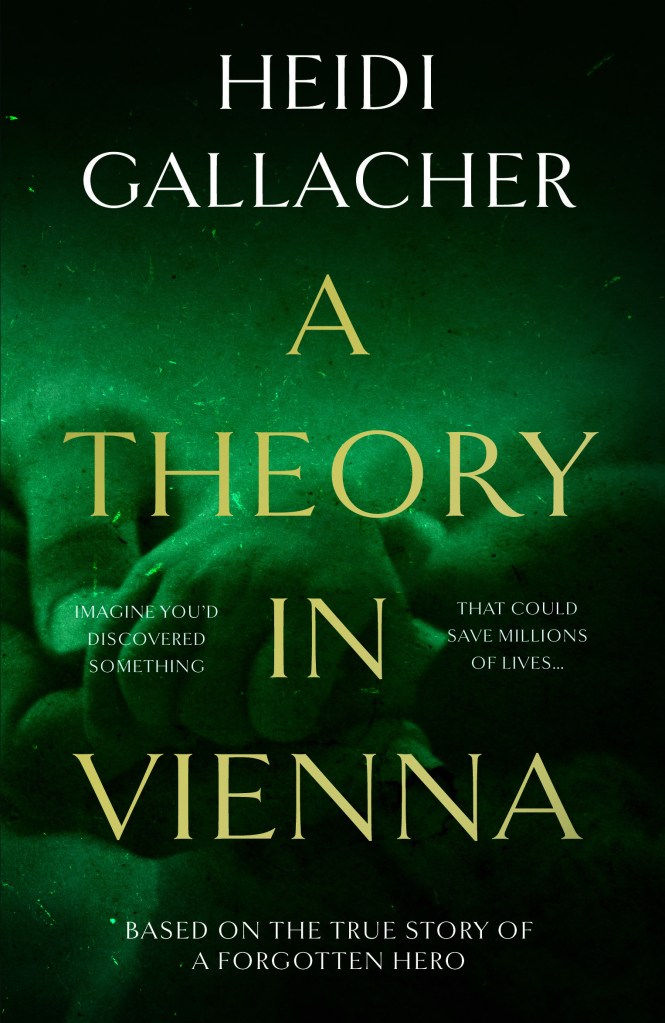
It’s my great pleasure to welcome Heidi Gallacher to my website to answer questions about her novel, A Theory in Vennia:
Tell us about your novel:
The novel tells the story of Ignaz Semmelweis, a 19th-century doctor whose simple, lifesaving discovery was ignored in his own lifetime. My interest was piqued when I came across him during my research for a previous historical novel.
So, set against the emergence of modern medicine, A Theory in Vienna follows a man who proves something undeniable, yet who lacks the language, authority and cultural awareness needed to be believed. At its heart, the book isn’t just about medical history; it’s about what happens when the truth arrives too early. It explores obsession, resistance, and the quiet loneliness of being right in a world that isn’t ready to listen. Semmelweis’s story is tragic, but it’s also urgently human – a reminder that progress often depends as much on humility and courage as it does on evidence.
Was there a part of Semmelweis’s struggle that resonated with you on a personal level? Did that connection change the way you wrote about him?
Yes – what resonated most with me was the experience of not being heard, even when the evidence is clear. It’s probably happened to each one of us, at some time of our lives. Semmelweis’s struggle isn’t only about science; it’s about communication, timing, and the pain of watching something urgent fail to land. That connection shaped the way I wrote about him. I became less interested in presenting him as a flawless hero and more focused on his inner world – his frustration, his rigidity, and the ways his certainty both sustained and damaged him.
Semmelweis is often portrayed as a tragic figure. How did you approach writing a man whose brilliance and frustration shaped both his legacy and his downfall?
I tried to resist the temptation to turn Semmelweis into either a martyr or a warning. His tragedy lies in the fact that his brilliance and his frustration were inseparable; the same intensity that allowed him to see what others missed also made it difficult for him to persuade them. He isn’t undone by ignorance alone, but by the way repeated resistance hardens him and isolates him. His discovery endures, but the human price he paid gives the story its emotional weight.
Semmelweis fought for a truth no one wanted to hear. Have you ever had a moment in life where you’ve had to hold your ground in the face of doubt or resistance?
Yes – though on a far smaller scale. What I recognised in Semmelweis was the quiet determination it takes to stay with an idea when external validation doesn’t arrive. There were moments while writing this book when I had to trust the story despite uncertainty and resist the urge to soften it to make it more palatable.
Three centuries passed from the first epidemic of childbed fever until the early 1900s. More lives were lost across the world from this fever than lives were lost in all of the wars during that time.
If you could sit with Semmelweis for five minutes, as a woman and a writer, what would you want to ask him or tell him?
I would want to tell him that the women he fought for are no longer invisible – that their tragic lives are now understood as the true measure of his work. As a writer, I’d ask whether he ever sensed the cost of being right, and whether he would still have chosen that path knowing where it led.
What do you hope modern readers will take away from A Theory in Vienna, especially in a world that still debates science, evidence and public health?
I hope readers come away with a renewed sense of attentiveness – to small actions, to overlooked voices, and to the quiet ways care can save lives. Semmelweis’s insistence on something as simple as handwashing reminds us that progress often arrives through everyday acts of responsibility and compassion. More than anything, I hope the book leaves readers feeling that change is possible – and that listening, humility, and care still matter.
Blurb: Imagine you’d discovered something. Something that could save hundreds of thousands of lives. But they wouldn’t let you tell anyone. Wouldn’t it drive you mad?
Young Hungarian doctor Ignaz Semmelweis uncovers the real reason thousands of young women are dying after childbirth. Yet, in mid-19th-century Europe, his simple methods are ridiculed. Semmelweis faces the battle of his life to convince others that the cause is simple…
Based on the true story of a forgotten hero, A Theory in Vienna brings the remarkable story of this man to life.
‘I bring to light a truth, which was unknown for many centuries with direful results for the human race.’ – Ignaz Philipp Semmelweis.
Heidi Gallacher
Author Bio:
Heidi was born in London in the Sixties. She grew up in South Wales, UK and moved to Paris as a young adult where she taught English for two years. She currently lives in Switzerland and recently completed an MA in Creative Writing.
Her first short story was published in Prima magazine (UK) in 2018. Heidi now writes historical fiction. Her first novel, Rebecca’s Choice is set in Tredelerch– an old house in Wales that belonged to her family generations ago. This novel won an award from The Coffee Pot Book Club in 2020, Debut Novel Bronze Medal.
Her second novel, A Theory in Vienna, is set in 19th century Vienna and Budapest. It tells the incredible story of unsung hero Ignaz Semmelweis, whose life-saving discovery was ridiculed at the time.
Heidi enjoys travelling (the further North the better!), singing and writing songs, and spending time reading and writing at her Swiss chalet where the views are amazing.
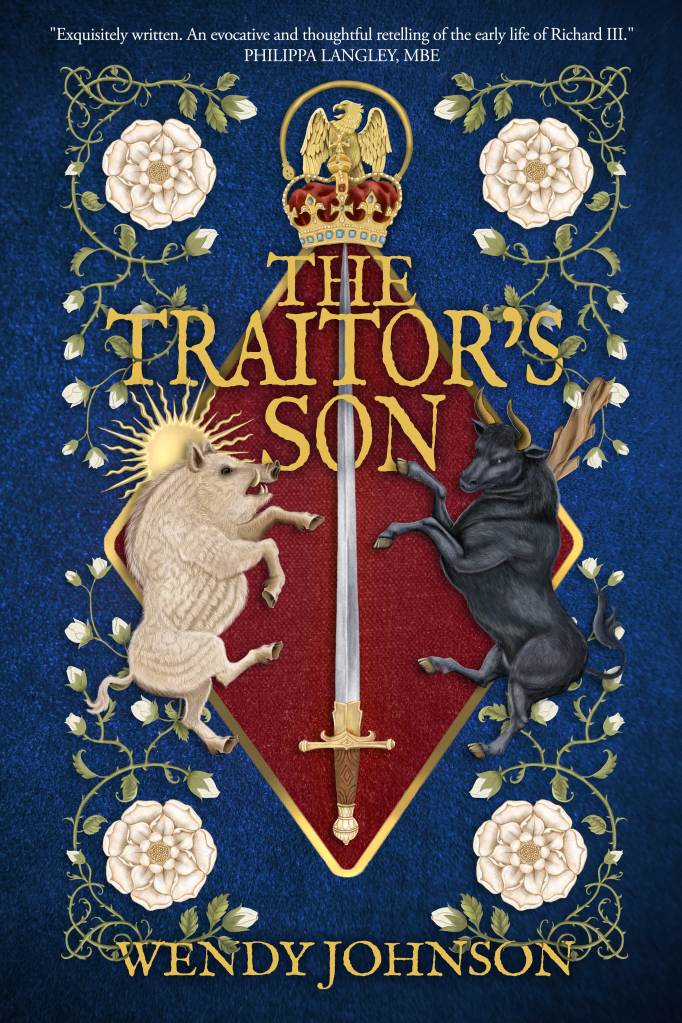
I am excited to welcome Wendy Johnson to my blog to answer questions about her novel, ‘The Traitor’s Son.’
Tell us about your latest book:
‘The Traitor’s Son’ is my debut novel, and the first in a proposed trilogy reimagining the life of Richard III. This first instalment covers Richard’s ten formative years between 1461 and 1471 and tells of how a grieving, fatherless boy grows into a courageous warrior of eighteen. It is a story of inner conflict, of love, loyalty, sacrifice, and treachery within the House of York. It culminates in a heart-wrenching dilemma, when Richard finds himself forced to choose between Edward, his blood brother and king, and Richard Neville, earl of Warwick, the man he has come to look upon as a second father.
What is your preferred writing routine?
I try to write every day, on average for around two hours. My habit is to continually edit my work as I go, so that only when I’m happy with what I’ve written do I carry on with the next scene. This can make for slow progress, but in my experience, it makes the final edit much easier, because most of the hard work has already been done. I enjoy listening to music as I write: sometimes I’ll find authentic medieval music on YouTube, as this helps to set the scene, but mostly I listen to the Wolf Hall soundtrack by composer Debbie Wiseman. Of course, Wolf Hall is set at a later date, but the music is very stirring, and I find it helps galvanise my writing. I’ve recently discovered the soundtrack for The Lord of the Rings, too, and find that really emotive.
What advice do you have for new writers?
Two things in particular really helped me improve as a writer. The first was advancing my knowledge of how to write — the Writers and Artists Guide to How to Write by Harry Bingham was invaluable. It helped me hone the craft, teaching me such a lot and opening my eyes as to what was required of an aspiring author. The second thing was to constantly read the novels of award winning authors and try to learn from them. Both of these things helped me no end, and if new writers are serious about their work, I would recommend trying something similar. I think the third piece of advice I would give would be to never give up — it’s a hard road, but if you really want to write and are determined to succeed, then you will. Have faith in your work and just keep going!
Tell us something unexpected you discovered during your research.
As someone who has been fascinated by the Wars of the Roses for most of my life, I was already very familiar with the history, so I wouldn’t say I was too surprised by anything thrown up by my research. However, while I was writing this first volume, concentrating on the childhood and youth of Richard III, something did occur to me which I decided to incorporate as the major theme of the novel. Richard’s father, the Duke of York, was slain in battle when Richard was only eight years old.
We know from the contemporary record, and from the evidence of his later life, that Richard greatly venerated his father’s memory, and it’s clear he’d felt very close to him. It has often been suggested that this void in young Richard’s life was filled by his elder brother, Edward (later Edward IV), but this has never rung true to me.
At the time of their father’s demise Edward himself was only eighteen years of age, and although Richard must have admired his brothe r’s military prowess and may even have considered him in heroic terms, I believe the ideal candidate for the role of father figure would have been his thirty – seven – year old cousin, Richard Neville, earl of Warwick. Edward assigned to Warwick the tutelage of his young brother, and Richard underwent his knightly training in the earl’s household. Warwick must undoubtedly have been an influence on the youth, and between the ages of twelve and sixteen, Richard must have surely sought the paternal guidance of his cousin, as well as the affection of a father figure.
The more I thought about this, the more I felt I had to introduce the theme to the novel as I had begun to wonder how Richard must have felt when Warwick rebelled against the king. Should he pledge his allegiance to Edward, his blood brother as well as his king, or did he support Warwick, a man who had become a second father to him? Of course, we know from history that he supported his king, but was that an easy choice to make?
In ‘The Traitor’s Son’, Ric hard sees both options as a betrayal, and this heart-wrenching dilemma forms the main thrust of the novel.
What was the hardest scene you remember writing?
By far, the hardest scene to write was that which described the battle of Barnet. For most of the other scenes in the book, I felt I had at least some point of reference, but a battle was something I found extremely difficult to imagine. The historical events were easy to research, but the emotions involved are something the vast majority of people will never have to face. At times, it almost felt as though I couldn’t bring myself to write it, but I knew I had to, as this forms the climax of the novel. I got there in the end, and I’m pleased with the scene, but I didn’t relish having to picture it in my mind’s eye.
What are you planning to write next?
‘The Traitor’s Son’ is the first in a proposed trilogy, and I’m currently working on the sequel. The second volume will take Richard up to the age of thirty and will cover the events of 1471 through to the early weeks of 1483. The story will be a rollercoaster ride for my protagonist and will once again focus on the trials and tribulations of the three York brothers – what I like to call the ‘fraternal triangle.’
As with ‘The Traitor’s Son’, I want historical fact to be the backbone of the novel, and so, as well as having to place myself as far as is conceivably possible in Richard’s shoes, I also need to ensure the storyline is as accurate as it can be and that the characters ring true to their real-life counterparts. The trilogy will end with a final book covering Richard’s all too brief reign, and there is a possibility that sometime in the future, I may choose to write about his brother, George, Duke of Clarence, a man equally maligned and caricatured by history, but that will be some time in the future.
Wendy Johnson
Author Bio:
Wendy Johnson has a lifelong passion for medieval history, its people, and for bringing their
incredible stories to life. Her specific areas of interest are the fifteenth century, the Wars of the Roses, and Richard III in particular. She enjoys narratives which immerse the reader in the past and tries faithfully to recreate the later Middle Ages within her own writing. She has contributed to a number of historical anthologies and was a runner-up in the Woman and Home Short Story Competition 2008.
Praise for The Traitor’s Son:
“I loved this novel, it was beautifully written, extremely atmospheric, the characters’
personalities came through perfectly, can’t wait for the next instalment.” ~ Linda Hayward, 5* AmazonReview.
“Exquisitely written. An evocative and thoughtful retelling of the early life of Richard III.” ~ Philippa Langley, MBE.
“Sometimes the perfect use of the written word takes my breath away. Not very often, but this book is it. A wonderful story written so beautifully that I shall not forget it for a long time. Everything to my mind is perfect. The language, the story, the pacing. Just wonderful.”~ Kindle Customer, 5* Amazon Review.
“Wonderfully woven story of a young Richard III. Woven with a sure knowledge of the
history and a realistic telling of a story about a young boy finding his way through tragedy
and triumph, uncertainty and a legacy he cannot escape.Brilliant debut which promises more and
more.” ~ Cris, 5* Amazon Review
“I loved this novel, it was beautifully written, extremely atmospheric, the characters’
personalities came through perfectly, can’t wait for the next instalment.” ~ Linda Hayward, 5* Amazon Review.
“Really enjoyed this book. Holds the reader enthralled from the first paragraph to the last.
The next volume can’t be released soon enough.” ~ J.M. Henderson, 5* Amazon Review
Perfect for fans of Hilary Mantel, Annie Garth Waite and Sharon K. Penman.
Anne’s sister Mary is also at the French court, and Anne soon learns that not everyone is pleased about the union between the French king and his young queen.
The king’s cousin-in-law, Louise of Savoy, is desperate for Queen Mary not to fall pregnant, so that her son Francis will ascend the throne.
And with Louise and the English queen pulling Anne in two different directions, it will not be possible to appease everyone.
Can Anne successfully navigate the familial politics at the French royal court? Will she make her mark as one of the queen’s maids?
Or could her divided loyalties prove to be her undoing…?
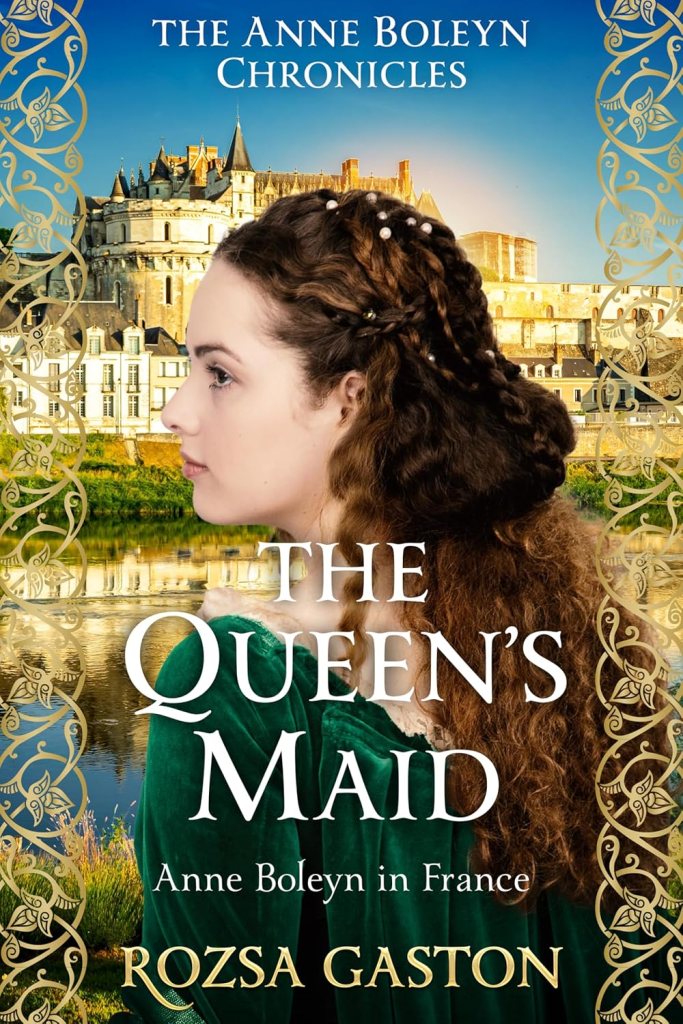
THE QUEEN’S MAID is a thoroughly researched, fascinating historical novel set during the 16th century in Europe. It is the second book in the Anne Boleyn Chronicles series.
‘Wonderfully detailed and entirely enjoyable. This is a young Anne in whom I absolutely believe, and who does much to explain the woman she’d become.’ – Sarah Gristwood, author of Game of Queens
THE ANNE BOLEYN CHRONICLES SERIES: Book One: Maid of Honour Book Two: The Queen’s Maid Book Three: Queen of Diamonds
Rozsa Gaston is a historical fiction author who writes books on women who reach for what they want out of life.
She is the author of Maid of Honour: Anne Boleyn at Margaret of Austria‘s Court, 𝗚𝗿𝗮𝗻𝗱 𝗣𝗿𝗶𝘇𝗲 𝗪𝗶𝗻𝗻𝗲𝗿 of the 𝟮𝟬𝟮𝟰 𝗖𝗛𝗔𝗨𝗖𝗘𝗥 𝗕𝗼𝗼𝗸 𝗔𝘄𝗮𝗿𝗱 for Early Historical Fiction, The Queen’s Maid: Anne Boleyn in France, Queen of Diamonds: The French Royal Court, Margaret of Austria, 𝗙𝗶𝗿𝘀𝘁 𝗣𝗹𝗮𝗰𝗲 𝗪𝗶𝗻𝗻𝗲𝗿 of the 𝟮𝟬𝟮𝟯 𝗖𝗛𝗔𝗨𝗖𝗘𝗥 𝗕𝗼𝗼𝗸 𝗔𝘄𝗮𝗿𝗱 for Early Historical Fiction, the four-book Anne of Brittany Series: Anne and Charles; Anne and Louis, 𝗚𝗲𝗻𝗲𝗿𝗮𝗹 𝗙𝗶𝗰𝘁𝗶𝗼𝗻 𝗪𝗶𝗻𝗻𝗲𝗿 of the 𝟮𝟬𝟭𝟴 𝗣𝗨𝗕𝗟𝗜𝗦𝗛𝗘𝗥𝗦 𝗪𝗘𝗘𝗞𝗟𝗬 𝗕𝗼𝗼𝗸𝗟𝗶𝗳𝗲 𝗣𝗿𝗶𝘇𝗲; Anne and Louis: Rulers and Lovers; and Anne and Louis Forever Bound, 𝗙𝗶𝗿𝘀𝘁 𝗣𝗹𝗮𝗰𝗲 𝗪𝗶𝗻𝗻𝗲𝗿 of the 𝟮𝟬𝟮𝟮 𝗖𝗛𝗔𝗨𝗖𝗘𝗥 𝗕𝗼𝗼𝗸 𝗔𝘄𝗮𝗿𝗱 for Early Historical Fiction.
Other works include Sense of Touch, Marguerite and Gaston, The Least Foolish Woman in France, Paris Adieu, and Budapest Romance.
Gaston studied European history at Yale and received her master’s degree in international affairs from Columbia. She worked at Institutional Investor, WR Capital, and as a columnist for The Westchester Guardian before becoming a novelist.
She is currently working on Book Four of The Anne Boleyn Chronicles, covering Anne Boleyn’s time at the 1520 Field of Cloth of Gold. She lives in Bronxville, New York with her family.
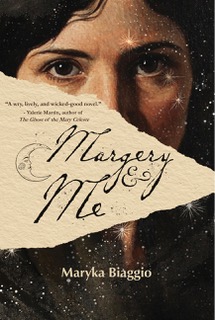
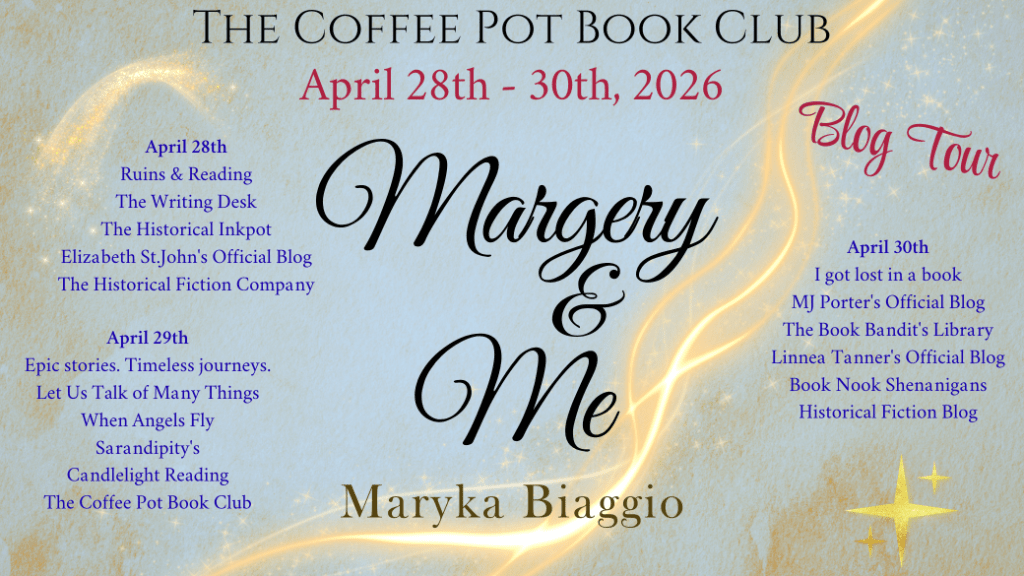
Margery and Me tells the mysterious true story of a medium who mystified scientists, challenged skeptics, and sparked a sensation across America and Europe. It is written by a psychology professor-turned-novelist Maryka Biaggio. And I can’t wait to read this one.
In the 1920s, Margery Crandon captivated both Boston society and psychic researchers with her astonishing seances. At her gatherings, her deceased brother Walter regularly appeared, entertaining the circle with his witty and cheeky remarks. Margery’s abilities earned her the admiration of luminaries, including Sir Arthur Conan Doyle and William Butler Yeats. But one man stood in opposition: Harry Houdini, the legendary magician, who was determined to expose her as a fraud.
Margery and Me tells the true story of the medium who mystified scientists, challenged skeptics, and sparked a sensation across America and Europe. As Houdini and Margery clashed in a battle of wits and wills, the question remained: Could the master illusionist unmask her, or would her extraordinary powers be enough to convert even the most resolute of doubters?
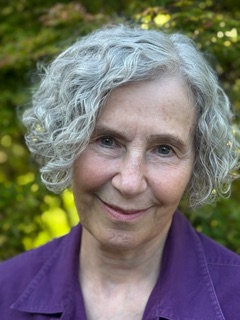
Maryka Biaggio
Author Bio:
Maryka Biaggio is a psychology professor-turned-novelist who brings forgotten lives back into the light. Specializing in historical fiction inspired by real people, she crafts emotionally resonant narratives anchored in careful research.
Her debut novel, Parlor Games (Doubleday, 2013), launched a distinguished career that includes Gun Girl and the Tall Guy and Margery and Me. Her work has earned numerous accolades, including the Willamette Writers Award, Oregon Writers Colony Award, Historical Novel Society Review Editors’ Choice, La Belle Lettre Award, and a Publishers Weekly pick.
Biaggio is celebrated for illuminating overlooked historical figures with psychological depth and narrative grace.
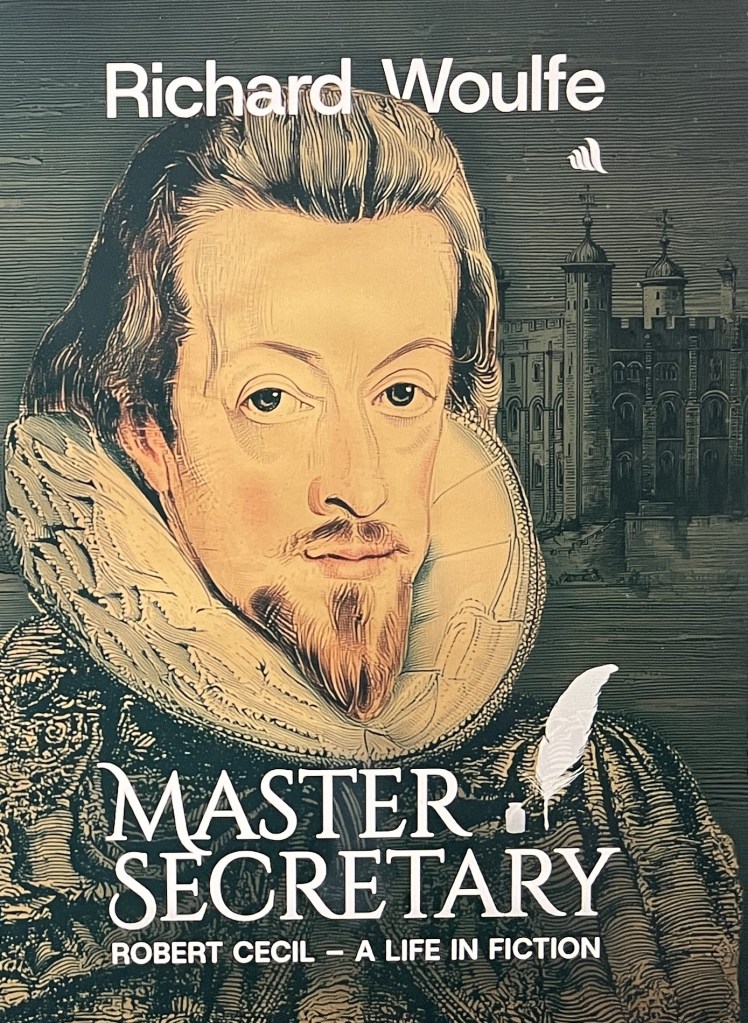
Richard Woulfe has just published Master Secretary: Robert Cecil, A Life in Fiction, a new collection of stories centred on one of England’s most intriguing historical figures. It’s an exciting release, and I’m delighted to share the news with you.
“Statesman, strategist, survivor: Robert Cecil stood at the very heart of England’s transition from Tudor to Stuart rule. Hunched-backed and underestimated in an age hostile to disability, he rose to become Master Secretary to Elizabeth I and James I, suppressing the Essex Rebellion, foiling the Gunpowder Plot, and negotiating peace with Spain.
In this richly imagined sequence of eighteen interlinked stories, Cecil’s voice is joined by those of his family, allies, and adversaries—Elizabeth I, Anthony and Francis Bacon, Walter Raleigh, Ben Jonson, Arbella Stuart, and nameless spies and commoners whose lives brushed against his. From court intrigue to tavern gossip, from the grandeur of the Somerset House Peace Conference to a humble Limerick shop, these tales weave fact and fiction into a vivid portrait of one of history’s most remarkable political survivors.
Spanning his birth to his final conversation with the sculptor designing his tomb, Master Secretary opens a window onto the world Shakespeare inhabited—a world of politics and diplomacy, comedy and tragedy, faith and betrayal. Grounded in historical record yet alive with imagination, this is a compelling re-telling of the life of Robert Cecil: underestimated by many, unforgotten by all.”
Tell us about your book:
This is a cradle to almost-grave collection of stories relating to Robert Cecil, Secretary of State from 1586 to 1612, a role his father William Cecil had previously occupied. It begins on the day he was born, when William Cecil is trying to get home for news of the birth but is delayed by Queen Elizabeth and others, and ends with Robert discussing the design of his tomb with its sculptor. It covers the Lopez execution, the Essex Rebellion, the transfer of power from the Tudors (Elizabeth 1st) to the Stuarts (James 1st) and the Gunpowder Plot. Also included are Francis Bacon (Cecil’s first cousin), Ben Jonson, Walter Raleigh, Arabella Stuart. Other female voices include Cecil’s wife, Anne Bacon, Elizabeth Ist on her deathbed, an intelligencer, as well as the wife of a Limerick shop owner who had only vaguely heard of Robert Cecil.
Tell us about your research for this book. Did you discover anything unexpected?
The Lopez conspiracy was always baffling to me, as it seemed so obvious the man was innocent. Why had the Earl Of Essex persued it so doggedly? Now I realise that a motive was to discredit the Cecils and their intelligence network.
Something unexpected also related to the Earl of Essex, specifically his rebellion. The play Richard II was performed by supporters of Essex as a way of bolstering support, but when the rebellion failed Shakespeare’s company had to explain to the Privy Council why they allowed the play to be staged in the first place. I had always assumed Shakespeare himself needed to be at his imaginative best with his excuses but then found out he wasn’t actually there. No, it was an actor/manager who convinced Cecil of their innocence in that matter. Shakespeare was present though when Elizabeth ordered that a production of the play be performed one day before Essex’s execution.
What made you choose Robert Cecil, 1st Earl of Salisbury, as a subject?
I come from a drama background and knew Cecil to be Master Secretary when Marlowe, Shakespeare and Ben Jonson were writing. But there is a lot more; for example, Cecil was chiefly responsible for Walter Raleigh’s incarceration in the Tower, but visited Raleigh there just before his own death. What did they say to each other? This is where historical fiction excels; nobody knows what was said but I imagine Cecil not apologising but accusing Raleigh of being responsible for his own misfortune. And what was Elizabeth I thinking on her deathbed – all those whom she was convivial with dead, the succession already being orchestrated by her Master Secretary?
Or Francis Bacon, two years his senior. Francis Bacon went to Cambridge at 12, and it is reasonable to assume they two met when Francis was home. Two highly ambitious children, what did they talk about? And who get the better of who? Francis Bacon also sought the Queen’s patronage, but did their rivalry start from a younger age?
I have an admiration for Cecil – though his father helped him to rise in government, he still had to overcome so many difficulties, not least that his back was hunched. He was Secretary of State for 16 years (Thomas Cromwell by contrast only lasted 6), managed the transfer to the Stuarts despite his own father being instrumental in the death of James I’s mother (Mary Queen of Scots).
I also feel that telling his life via linked stories allows room for his defenders and critics to make their case. Cecil divided opinion in his own time, and still does.
What advice would you give new writers? Persevere. Writing and rewriting takes a hell of a lot of time, but you’ll get there if you’re confident there’s a story worth telling. Oh, and that writing is also enjoyable (most of the time).
What are you planning to write next?
The life of King Richard II, specifically from his coronation at the age of 10 to his deposition and death 22 years later. Now, there is somebody with no shortage of detractors.
“Statesman, strategist, survivor: Robert Cecil stood at the very heart of England’s transition from Tudor to Stuart rule. Hunched-backed and underestimated in an age hostile to disability, he rose to become Master Secretary to Elizabeth I and James I, suppressing the Essex Rebellion, foiling the Gunpowder Plot, and negotiating peace with Spain.
In this richly imagined sequence of eighteen interlinked stories, Cecil’s voice is joined by those of his family, allies, and adversaries—Elizabeth I, Anthony and Francis Bacon, Walter Raleigh, Ben Jonson, Arbella Stuart, and nameless spies and commoners whose lives brushed against his. From court intrigue to tavern gossip, from the grandeur of the Somerset House Peace Conference to a humble Limerick shop, these tales weave fact and fiction into a vivid portrait of one of history’s most remarkable political survivors.
Spanning his birth to his final conversation with the sculptor designing his tomb, Master Secretary opens a window onto the world Shakespeare inhabited—a world of politics and diplomacy, comedy and tragedy, faith and betrayal. Grounded in historical record yet alive with imagination, this is a compelling re-telling of the life of Robert Cecil: underestimated by many, unforgotten by all.
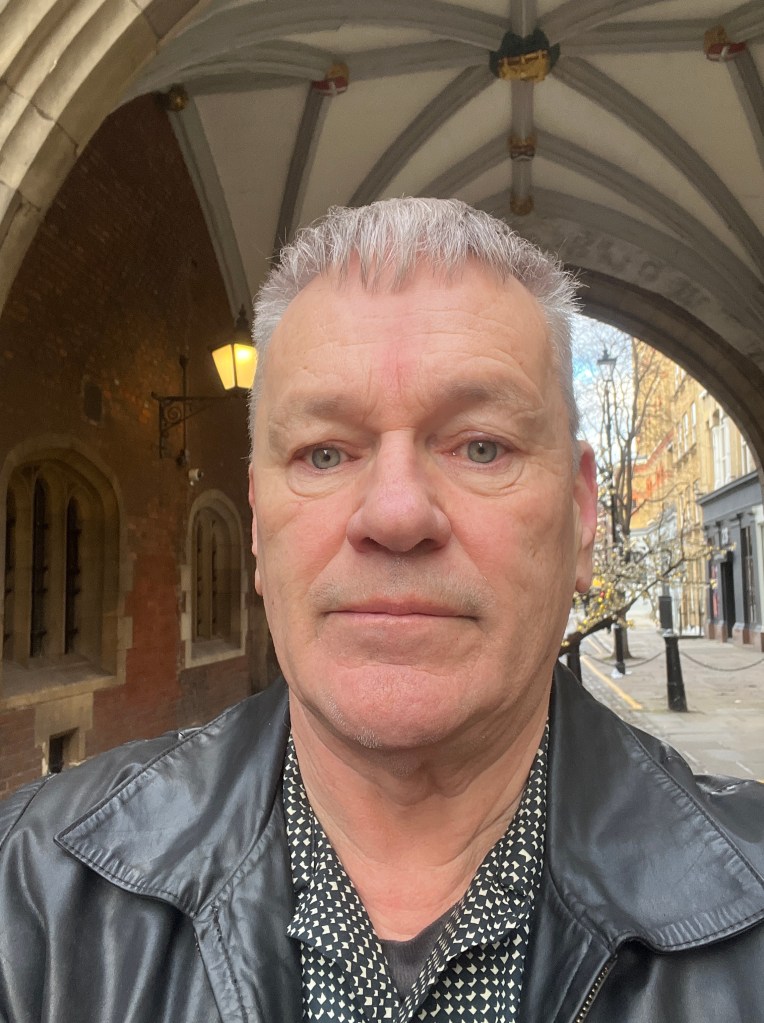
Author Richard Woulfe
Richard has had two radio plays produced: one by RTE Radio based on James Joyce’s/Nora Barnacle’s time in Trieste, the other a Victorian drama by the Wireless Theatre Company. Stage plays of his have also been performed, and short stories published. Richard is from Limerick, and now lives in London.







 Nicola Harris