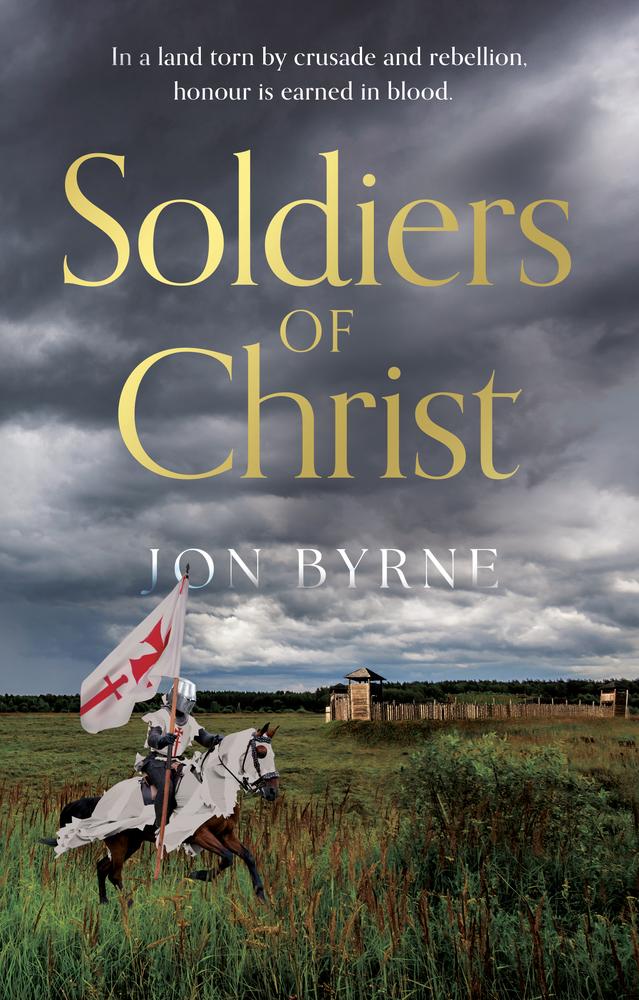
I would like to thank Jon Byrne, the Book Guild, and the Coffee Pot Book Club for providing me with a review copy of Soldiers of Christ. As always, this is an entirely honest assessment, regardless of the complimentary copy. This review contains no spoilers.
This is a rip roaring read following the life of Richard Fitz Simon, an exiled Norman noble who flees England to join a German brotherhood of warrior monks. It is a well researched novel and an exciting, full‑blooded story.
I loved the fight scenes, the rivalry and jealousy among the brothers, the flashes of humour, and Richard’s deadly enemies. I loved to hate Bishop Albert and Richard’s master and Knight‑brother Rudolf, and don’t get me started on the sneaky, treacherous Wolfgang. So much of this felt real as I read it, especially the squabbles, revenge, and corruption. It was all so human and gritty, which is what I enjoy in a novel.
The descriptions of battles and hand‑to‑hand combat made me feel the exhaustion and the pain the characters would have endured. There is plenty of tension, romance, and adventure throughout. It is well written, clearly researched, and full of energy.
I’ve given it four stars because it’s a strong, well researched novel that’s full of action and dark. Which I love.
Blurb:
In a land torn by crusade and rebellion, honour is earned in blood.
1205. Richard Fitz Simon has fled England after his title was usurped, joining the Livonian Order of Swordbrothers – a German brotherhood of warrior-monks fighting to bring the word of God to the pagan frontier. After slaying the Lithuanian champion at the Battle of Rodenpois, Richard is celebrated by the Order and their Semigallian allies.
Yet his position remains precarious. Jealous rivals question his right to stand among the brotherhood, and his master, Knight-brother Rudolf, is enraged by Richard’s disobedience. When dark secrets from Lübeck resurface, Richard also finds himself at odds with Bishop Albert, head of the Christian mission in Livonia. As he struggles to reconcile faith, duty and identity, he is drawn into a brutal world of suspicion and bloodshed.
Sent on an expedition to build a castle deep in the wilderness, Richard soon sees tensions erupt – and the path he has chosen threatens to destroy everything he has fought to become.
Jon Byrne
Author Bio:
Jon Byrne, originally from London, now lives with his German family by a lake in Bavaria with stunning views of the Alps. As well as writing, he works as a translator for a local IT company and occasionally as a lumberjack. He has studied the medieval world for over twenty years, building up a comprehensive personal library and a particular interest in the often-overlooked Northern Crusades.
Soldiers of Christ is Book Two of The Northern Crusader Chronicles, a gritty, historically grounded series focused on realism, moral ambiguity, and the brutal realities of medieval warfare.
Written for readers who value authenticity and atmosphere over romanticised adventure, the novel explores a largely forgotten crusading frontier, culminating in the first of many confrontations in a harsh wilderness of forest and swamp.
Readers who enjoy the historical detail of authors such as Bernard Cornwell, Conn Iggulden, or Ben Kane may find familiar ground here.
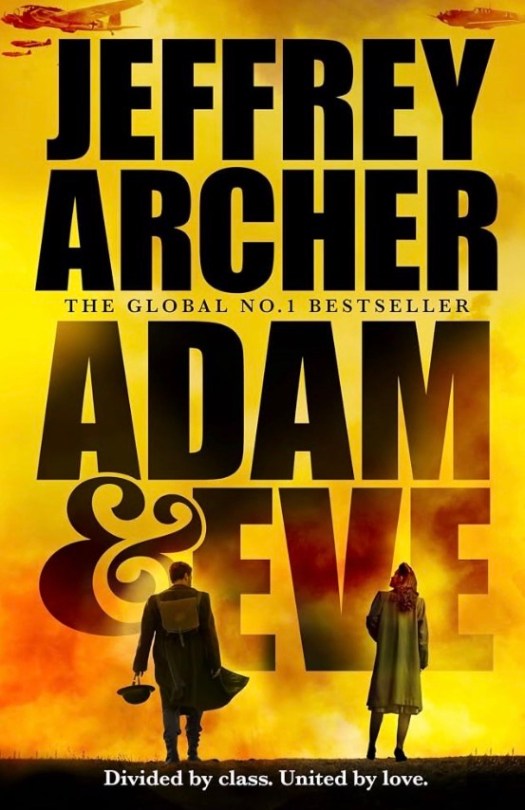
I would like to thank Jeffrey Archer, HarperCollins UK, and NetGalley for my advanced copy of Adam and Eve to review. As always, my review is entirely honest & there are no spoilers.
Screenshot
Book Blurb:
THE FINAL NOVEL FROM THE MASTER STORYTELLER
November 11th, 1918. As the guns of the Great War fall silent, two babies draw their first breath.
Eve is the daughter of an Earl. Adam, a shepherd’s son. Yet from their first meeting they form an extraordinary bond that neither privilege nor prejudice can break.
Then on a single September night in 1940, as Hitler prepares to invade the British Isles, their actions will change his mind. Determining not just their own futures but the fate of a nation.
They will show extraordinary courage. They will make unimaginable sacrifices. And the story of what they did will stay with you long after you’ve turned the last page.
From the broads of Norfolk to the beaches of Dunkirk, Adam & Eve is a breathtaking epic of courage, sacrifice, and love forged in Britain’s darkest hour.
‘If there were a Nobel Prize for storytelling, Archer would win’ Daily Telegraph
‘Archer is a master entertainer’ Time
‘Probably the greatest storyteller of our age’ Mail on Sunday
‘Peerless master of the page turner’ Daily Mail
Jeffrey Archer’s book ‘End Game’ was a Sunday Times bestseller.
My Review:
Adam and Eve starts with all the hallmarks of Jeffrey Archer’s usual strengths: pace, clarity, and a premise that promises moral tension. For most of the book, it’s competent, readable, and engaging enough. He breaks all the rules like the master storyteller he undoubtedly is.
My problem:
The first twist is where everything collapses. Archer tries to deliver a shock reversal, but it’s so implausible, so unbelievable, and so coincidental that I found myself shaking my head in disbelief.
Then a strange swap takes place, and instead of deepening the narrative, it cheapens it. Worse still, other twists pile on top of the first one, and each one is less believable than the first.
Why it didn’t work for me:
To be fair to Archer, all the signs are there from the start of the novel that the twists are possible. However, the issue for me was that I found them utterly unbelievable and the result felt contrived rather than clever.
My overall impression:
The book is readable; Archer always is, but the ending leaves a sour aftertaste. It’s hard to recommend a novel whose twists undermine the entire structure. Readers who enjoy neat reversals may tolerate it; anyone who values believable character development will likely find it frustrating.
My verdict:
This was a solid setup undone by twists that ask too much and delivers too little. This is a two-star review because I could not finish it.
Jeffrey Archer is one of the world’s bestselling authors, with sales of over 275 million copies in 97 countries, and is the only author ever to have been a number one bestseller in fiction (twenty times), short stories (four times) and non-fiction (The Prison Diaries). He was born in London, and brought up in the West Country. He gained a Blue in Athletics at Oxford, was President of the University Athletics Club, and went on to run the 100 yards in 9.6 seconds for Great Britain in 1966. Jeffrey has served five years in the House of Commons as a Member of Parliament, and thirty years as a Member of the House of Lords.
He has written 27 novels, 7 sets of short stories, 3 prison diaries, 3 plays (all of which have been performed in London’s West End) and a gospel. His first novel, Not a Penny More, Not a Penny Less was sold to 17 countries within a year. It was also made into a successful serial for BBC Radio 4, and was later televised in 1990 by the BBC. He won the Prix Relay du Roman d’Évasion, a prize that rewards a novel in which readers can ‘escape from everyday life’, for his novel Paths of Glory, and the Prix Polar International Prize for the best international thriller of the year, for his novel A Prisoner of Birth. The Clifton Chronicles, a series of seven novels published between 2011-2017, topped the bestseller lists around the world.
Famous for his discipline as a writer who works on up to fourteen drafts of each book, Jeffrey also brings a vast amount of insider knowledge to his books. Whether it’s his own career in politics, his passionate interest in art, or the wealth of fascinating background detail – inspired by the extraordinary network of friends he has built over a lifetime at the heart of Britain’s establishment – his novels provide a fascinating glimpse into a range of closed worlds.
Jeffrey is also an amateur auctioneer, conducting up to 20 charity auctions a year. He has been married to Dame Mary Archer, Chair of the Science Museum Group, for 55 year, and they have two sons, two granddaughters and three grandsons. He splits his time between London, Cambridge and Mallorca – where he writes the first draft of each new novel.
The fifth book In his new William Warwick novels – the first of which, Nothing Ventured, was published in 2019 – is NEXT IN LINE which was published in September 2022.
This title is available to read on Kindle Unlimited.
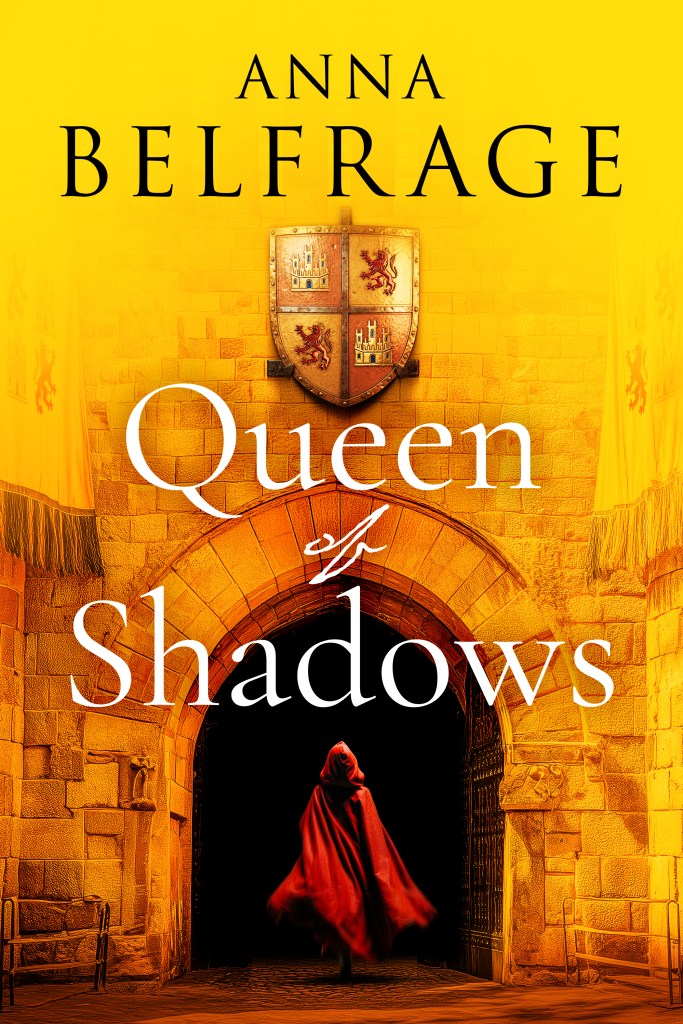
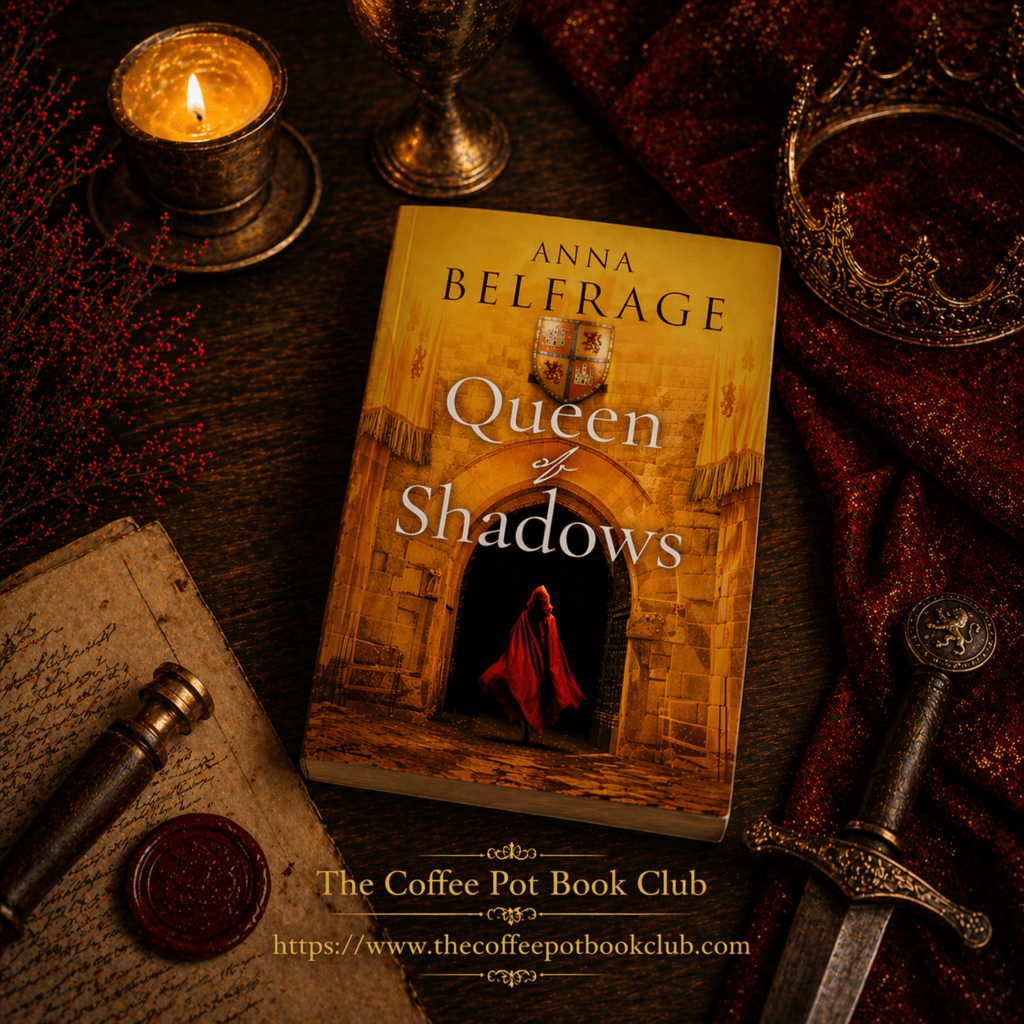
I would like to thank Anna Belfrage, Timelight Press, and the Coffee Pot Book Club for providing me with early access to Queen of Shadows for review. I received this novel for free, but my review is entirely honest
Blurb:
She should have stayed in the shadows—but Leonor de Guzmán yearned for the sun
Castile in the 1330s is a place of constant turmoil. King Alfonso must contend with the incursions from the Muslim Marinids eager to reclaim Al-Andalus while struggling with repeated rebellions against his firm rule.
When Alfonso needs respite, he finds it in the arms of his Leonor—the most beautiful woman in the realm. But while he may love Leonor over all others, his lawful wife, Maria of Portugal, is tired of being constantly displaced by the fair Leonor.
Leonor loves her man. She gives him healthy sons, a place to be himself. But she is only a mistress, even if Alfonso treats her like a queen. Leonor’s enemies watch and hate.
Flying too close to the sun comes at a high price. How much will Leonor’s love cost her?
Based on the true story of Alfonso XI and his complicated relationships to wife and life-long mistress.
My Review:
Leonor de Guzmán is a woman that history has attempted to sideline. Thanks to the author Anna Belfrage, the mistress of King Alfonso XI and fourteenth-century Castile become very much alive in this rich and exceptional novel.
Leonor is not the king’s passing favourite, but the love of his life and the woman he treated as his true partner. She bore him ten children, many of them sons, and held a place in his life that looked very much like queenship.
The difficulty was that Alfonso already had a wife. Maria of Portugal was the lawful queen, the political match, the woman with the crown, but she did not hold the king’s heart.
Alma, a young woman of mixed Castilian and Moorish heritage who serves Leonor, becomes the thread that reveals the deeper tensions of the kingdom. Through her, we see the uneasy coexistence of cultures and faiths, the contradictions people carry, and the quiet strength required simply to endure.
The author is equally skilled at evoking place. She gives us the stark northern plateau and the shimmering southern landscapes, the grandeur of palaces and the small, intimate details of daily life. Food, herbs, travel, the textures of work, and ritual all feel close enough to touch.
This is a story about power and love, about the cost of loyalty, about joy that sits beside fear. It is not a soft or romantic past. At times, it can be difficult to read, but it is an extremely rewarding one. These were people with familiar longings and sorrows, yet shaped by a world whose values can feel utterly foreign to us. The pacing, the tension and the vivid descriptions make this a rich and compelling read. I became utterly engrossed. This is a five-star review.
Anna Belfrage
Author Bio:
Had Anna been allowed to choose, she’d have become a time-traveller. As this was impossible, she became a financial professional with three absorbing interests: history, romance and writing. Anna has authored the acclaimed time travelling series The Graham Saga, set in 17th century Scotland and Maryland, as well as two equally acclaimed medieval series; The King’s Greatest Enemy which is set in 14th century England, and The Castilian Saga ,which is set against the medieval conquest of Wales. She has also published a time travel romance, The Whirlpools of Time, and its sequel Times of Turmoil, and is now considering just how to wiggle out of setting the next book in that series in Peter the Great’s Russia, as her characters are demanding. . .
All of Anna’s books have been awarded the IndieBRAG Medallion, she has several Historical Novel Society Editor’s Choices, and one of her books won the HNS Indie Award in 2015. She is also the proud recipient of various Reader’s Favorite medals as well as having won various Gold, Silver and Bronze Coffee Pot Book Club awards.
“A master storyteller” “This is what all historical fiction should be like. Superb.”
Find out more about Anna, her books and enjoy her eclectic historical blog on her website, www.annabelfrage.com where you will also find her post about Alfonso and Leonor:
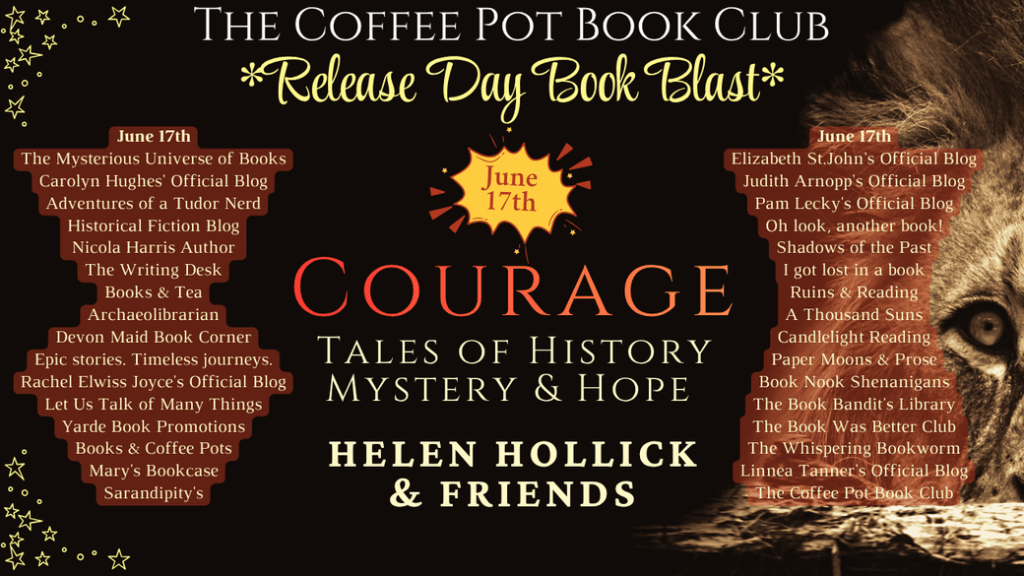
The lion has long been a symbol of courage, loyalty, and hope. A creature of power and, in some traditions, of the divine. We imagine it unflinching, unafraid. Yet the truest bravery is not found in the open, but within, where the lion lies hidden, waiting to be called upon. In moments of uncertainty or grief. Courage is not the absence of fear, but the decision to face it. It is the moment when we would rather flee, but instead, find a strength we did not know we possessed.
These powerful and often emotional stories follow men, women, and children as they face profound adversity, the resilience to endure, cling to hope for the future, and the courage to change their lives forever.
Join these ordinary people as they uncover extraordinary strength and emerge, in their own way, lion-hearted.
Triggers: adult content: some violence, rape, difficult personal circumstances.
The Stories – in appearance order: (collated by Helen Hollick)
THE SENTRY by Alison Morton
Roman province of Noricum, AD 395
When danger strikes and you are on your own with only fear as a companion
THE SAXON by Derek Birks
Southern Britain, the frontier between the Belgae and the Atrebates. AD 471
When escape means more than just running for your life
THE PHOENIX by Marian L Thorpe
Ésparias, a fictional country bordering the western sea circa AD 900
A mother’s dilemma? To keep them safe – or let them go?
SIFLEDE by Judith Arnopp
London, October 1066
When the Normans come, Southwark’s residents need to fight, flee, hide or die
DAISY CHAIN by Annie Whitehead
England, 1141
A mother’s love. A mother’s grief
STEPPING BETWEEN by Anna Belfrage
Ludlow Castle, England, 1308
When all you can do is to endure
CONFRONTING PLAGUE by Carolyn Hughes
England, 1361
When courage must survive in the face of history’s cruellest plague
KATE’S LETTER by Patricia Furstenberg
Transylvania, Kingdom of Hungary, 1478
One letter, sealed in dragon’s wax
THE PORTRAIT’S SECRET by Amy Maroney
Paris, 1536
When a woman holds a secret, does she keep it, or share it?
LEGACY by Jean Gill
Tudor England, 1558
When a man loses everything, what is his legacy?
A TALETELLER’S TALE by Helen Hollick
Somewhere in the Caribbean, 1709
When the only sound is the song of the sea, do you listen? Or do you drown in the embrace of a mermaid?
THE GATE by Elizabeth St.John
London, 1900
When courage costs everything
DARKNESS RISING by Cathie Dunn
Venezia, June 1923
Can the mystery of a secluded island, and a murder, be solved before
time runs out?
A SACK OF POTATOES by Antoine Vanner
Groenhorst, outskirts of Amersvoort, The Netherlands
November 11th, 1954
Courage meant survival for many – but others relied on greed
This title is available to read on #KindleUnlimited.
Author Bios:
Helen Hollick: About Helen – (anthology compiler)
Originally first published in 1993, and now known for her captivating storytelling and attention to historical detail, Helen’s historical fiction, nautical adventures, cosy mysteries and short stories, invite readers to step into worlds where the boundaries between fiction and history blend together. Her historical novels span a variety of periods, with a particular focus on the Early Medieval. Her Pendragon’s Banner series offers a vivid portrayal of the King Arthur story set against a plausible reality setting, while the events that led to the 1066 Battle of Hastings shows her ability to bring historical figures and settings to life. Her novel about Queen Emma (The Forever Queen – USA title) became a USA Today best-seller.
In the Sea Witch Voyages, she subtly weaves in elements of supernatural fantasy against the Golden Age of Piracy, creating an immersive and addictive nautical adventure experience.
Her Jan Christopher cosy mystery series is set during the 1970s, based around her, sometimes hilarious, years of working as a North London library assistant. Her 2025 release of Ghost Encounters, co-produced with her adult daughter, Kathy, reveals some benign ghosts of North Devon where the family moved to in 2013. Helen has written several short stories, further exploring the echoes of the past, all with her compelling and convincing signature style.
Cathie Dunn: About Cathie – Cathie is an award-winning, Amazon-bestselling author of historical fiction, mystery, dual-timeline, and romance set in Scotland, England, and France. Her latest release, Ascent – the story of Poppa of Bayeux, handfasted wife of Rollo the Viking – is her sixth novel, and she is currently working on the sequel, Treachery. In her House of Normandy series, Cathie seeks to showcase the forgotten women behind the famous warriors who forged early medieval Normandy. Cathie lives in the south of France with her husband and two rescue pets, enjoying the Mediterranean sunshine and visiting the many historic sites whenever she can. Find her across social media and on http://www.cathiedunn.com Amazon author page: https://author.to/CathieDunn
Judith Arnopp: About Judith – Multi award-winning author, Judith Arnopp’s novels are set in the late medieval and Tudor period. Her main focus is on the women of the era, her meticulous research offering deep psychological analysis of well-known figures such as Margaret Beaufort, Marguerite of Anjou, Anne Boleyn and Henry VIII himself. She has also written non-fiction How to Dress like a Tudor.
Anna Belfrage: About Anna – Had Anna been allowed to choose, she’d have become a time-traveller. As this was impossible, she became a financial professional with three absorbing interests: history, romance and writing. Anna has authored the acclaimed time travelling series The Graham Saga, set in 17th century Scotland and Maryland, as well as the equally acclaimed medieval series The King’s Greatest Enemy which is set in 14th century England, and The Castilian Saga, which is set against the medieval conquest of Wales. She has also published a time travel romance, The Whirlpools of Time, and its sequel Times of Turmoil, and is now considering how to wiggle out of setting the next book in that series in Peter the Great’s Russia, as her characters are demanding.
Derek Birks: About Derek – Derek writes character-driven, action-packed fiction. His debut historical novel, Feud, is the first of a series of eight books and one novella, entitled The Wars of the Roses. which follows the fortunes of the fictional Elder family. He has also written the Amazon bestselling series, The Last of The Romans, which focuses on the real fifth century Romano-British character of Ambrosius Aurelianus. His first non-fiction book is: A Guide to the Wars of the Roses. Under the pen name Tom Hadley, he has also written the Liv Fisher modern thriller series, which begins with Eyes Like Blades.
Derek has written and produced over 40 podcasts on the Wars of the Roses, and now co-hosts the podcast series, A Slice of Medieval, with historian, Sharon Bennett Connolly.
Cathie Dunn: About Cathie – Cathie is an award-winning, Amazon-bestselling author of historical fiction, mystery, dual-timeline, and romance set in Scotland, England, and France. Her latest release, Ascent – the story of Poppa of Bayeux, handfasted wife of Rollo the Viking – is her sixth novel, and she is currently working on the sequel, Treachery. In her House of Normandy series, Cathie seeks to showcase the forgotten women behind the famous warriors who forged early medieval Normandy.
Cathie lives in the south of France with her husband and two rescue pets, enjoying the Mediterranean sunshine and visiting the many historic sites whenever she can.
Patricia Furstenberg: About Patricia – Patricia is a Romanian-born, South Africa-based author of character-driven historical fiction set in medieval Eastern Europe. Her latest novel, When Secrets Bloom, part of the Blood of Kings, Heart of Shadows saga, explores the turbulent world of Vlad the Impaler, weaving meticulous research with moral complexity, faith, and the quiet resilience of women navigating power and peril. Her short stories, poetry, and travel features have appeared in anthologies and online publications. Patricia blogs about overlooked corners of history and cultural heritage on her
Jean Gill: About Jean – Award-winning Welsh author and photographer Jean Gill lives in Provence with the best scent-hound in the world, a Nikon D750 and a man. Best known for writing epic medieval adventures in The Troubadours and The Midwinter Dragon series, Jean has published twenty-seven multi-genre books since 1988, including the dog bestseller Someone To Look Up To.
For many years, she taught English, and was the first woman to be a secondary headteacher in the Welsh county of Dyfed. She is mother or stepmother to five children so life is hectic. With Scottish parents, Welsh and French residence and an English birthplace, she can usually shout for the winning team in sporting events.
Kathy Hollick-Bater: About Kathy – Kathy is severely dyslexic and struggles with her reading and writing. Her passion is horses and mental well-being. She started riding at the age of three, had her own pony at thirteen, and discovered showjumping soon after. Kathy is now a Devon farmer’s wife, runs Taw River Equine Events, and coaches riders of any age or experience, specialising in positive mindset and overcoming confidence issues via her Centre10 accreditation and Emotional Freedom Technique training. EFT, or ‘tapping’, uses the body’s pressure points to aid calm relaxation and to promote gentle healing around emotional, mental or physical issues. She hopes to extend her training in order to help ex-servicemen overcome PTSD.
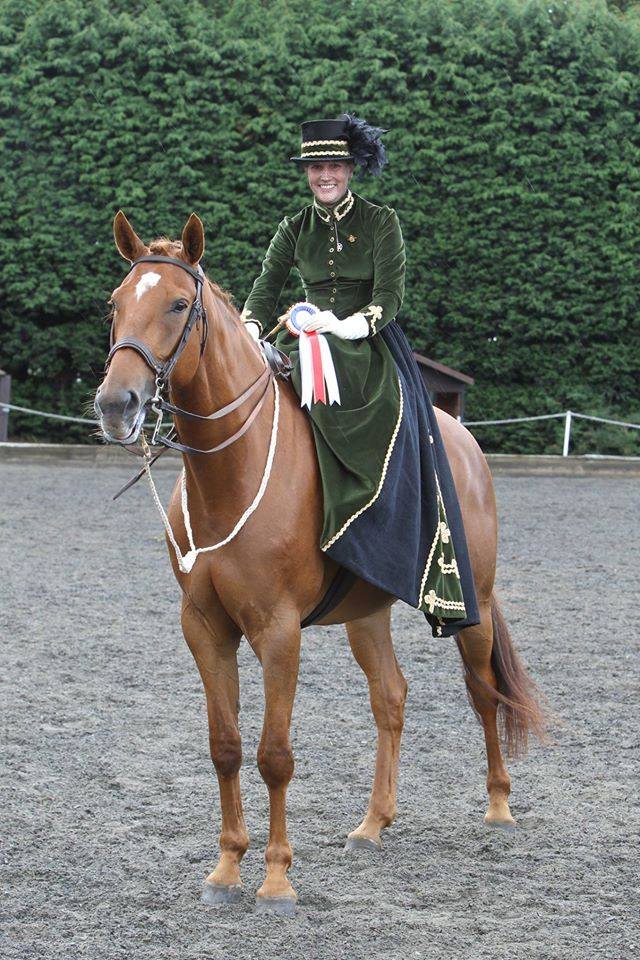
Kathy regularly competes at British Showjumping, and rides side-saddle (‘aside’) when she has the opportunity. She produces her own horses, several from home-bred foals. She also has the ability to see, hear and talk to friendly ghosts, several of whom share our 1769 farmhouse.
Carolyn Hughes: About Carolyn – Carolyn is the author of The Meonbridge Chronicles series, historical fiction set in fourteenth century England. The first Chronicle, Fortune’s Wheel, is set in the immediate aftermath of what we call The Black Death. Times of social change are always fascinating, and trying to depict the great upheaval in society brought about by the plague was the inspiration for the book. In the subsequent novels, Carolyn has sought to reveal the lives of mostly ordinary medieval folk through stories that tell of experiences especially pertinent to the time but which also resonate today. The stories focus particularly on the lives of women, if only because women in history often have not had much opportunity to “speak”.
There are now eight books in the series. More will follow.
Amy Maroney: About Amy – Amy lives in Oregon, U.S.A., and spent many years as a writer and editor of nonfiction before turning her hand to historical fiction. Amy is the author of the Miramonde Series, a trilogy about a Renaissance-era female artist and the modern-day scholar on her trail; and the Sea and Stone Chronicles, which features strong, talented women seeking their fortunes in the medieval Mediterranean. To receive a free prequel novella to the Miramonde Series, join Amy Maroney’s community of readers on her website: https://www.amymaroney.com/
Alison Morton: About Alison – Alison writes the thrillers she always wanted to read – ones featuring tough but compassionate heroines. Her eleven-book Roma Nova thriller series is set in an imaginary European country where a remnant of the ancient Roman Empire has survived into the 21st century and is ruled by women who face conspiracy, revolution and heartache but with a sharp line in dialogue.
All six full-length Roma Nova novels have won the BRAG Medallion, the prestigious award for indie fiction. SUCCESSIO, AURELIA, INSURRECTIO and JULIA PRIMA have been selected as Historical Novel Society’s Editor’s Choices. AURELIA was a finalist in the 2016 HNS Indie Award. The Bookseller selected SUCCESSIO as Editor’s Choice in its inaugural indie review.
Six years’ military service, a fascination with ancient Rome and a life of reading crime, historical and thriller fiction have inspired her writing. She lives in Poitou in France, the home of Mélisende, the heroine of her contemporary thrillers, Double Identity, Double Pursuit and Double Stakes.
Elizabeth St.John: About Elizabeth – Elizabeth’s critically acclaimed historical fiction brings to life the stories of her ancestors—extraordinary women whose close connections to England’s kings and queens offer an intimate perspective on Medieval, Tudor, and Stuart times. Inspired by family archives and historic residences from Lydiard Park to the Tower of London, she explores ancestral portraits, diaries, and lost gardens—and occasionally encounters a ghost. Discovering a whole different family history in The Gate, Elizabeth expands her storytelling into the early 20th century, adding a new era to her repertoire.
Living between California, England, and the past, Elizabeth is International Ambassador for The Friends of Lydiard Park and curator of The Lydiard Archives, where she is always searching for inspiration for her next novel. Her works include The Lydiard Chronicles, set during the English Civil War, and The Godmother’s Secret, exploring the mystery of the princes in the Tower. In The King’s Intelligencer, set in the court of Charles II, a young woman must decide what she is willing to risk to reveal the whereabouts of the missing princes.
Marian L Thorpe: About Marian – Marian’s novels are historical fiction of an imagined world, one that is close to Britain, Northern Europe, and Rome, but isn’t any of them. Her short stories, either in multiple-author anthologies or her own collections range from urban fantasy to historical fiction, slice-of-life to climate fiction.
After two careers as a research scientist and an educator, she decided it was time to do what she’d always wanted, and be a writer. Her first book was published when she was in her mid-50s. Her life-long interest in Roman and post-Roman European history provided the inspiration for her first series, while her other interests in landscape archaeology and birding provide background.
Antoine Vanner: About Antoine – Antoine spent four decades in international business, latterly at senior executive level, and lectured in academia afterwards. He lived through military coups, a guerrilla war, negotiations with governments, storms at sea and life in mangrove swamps, tropical forest, offshore oil-platforms, and the boardroom. He has lived and worked long-term in eight countries, has travelled widely in all continents except Antarctica and is fluent in three languages.
He has a passion for nineteenth-century political and military history and has a deep understanding of what was the cutting-edge technology of the time. His knowledge of human nature and his first-hand experience of the locales – often surprising – of the most important conflicts of the period provide the impetus for his chronicling of the lives of Royal Navy officer Nicholas Dawlish and his magnificent wife, Florence. There are thirteen volumes so far in the Dawlish Chronicles series, the actions set in the period 1858 to 1915.
Vanner now lives in Britain with his wife, Eva Lagassé (a journalist by background), their dog and five horses.
Annie Whitehead: About Annie – is a prize-winning writer, historian, and Fellow of the Royal Historical Society, and has written four award-winning novels set in ‘Anglo-Saxon’ Mercia. She has contributed to fiction and nonfiction anthologies and written for various magazines. She has twice been a prize winner in the Mail on Sunday Novel Writing Competition, and won First Prize in the 2012 New Writer Magazine’s Prose and Poetry Competition, a finalist in the Tom Howard Prize for nonfiction and shortlisted for the Exeter Story Prize and Trisha Ashley Award 2021. She was the winner of the inaugural Historical Writers’ Association HWA/Dorothy Dunnett Prize 2017 and subsequently a judge for that same competition. She has also been a judge for the HNS (Historical Novel Society) Short Story Competition, and was a 2024 judge for the HWA Crown Nonfiction Award and chaired the same panel in 2025.
Her nonfiction books are Mercia: The Rise and Fall of a Kingdom (a #1 Amazon Best-seller, published by Amberley books) and Women of Power in Anglo-Saxon England (Pen & Sword Books). In 2023 she contributed to a new history of English monarchs, published by Hodder & Stoughton, and in 2025 Murder in Anglo-Saxon England was published by Amberley Books.
In February 2026 she signed a contract for a new nonfiction book about the Anglo-Saxons, to be published by The History Press in 2027.
With an introduction by Lorna Fergusson: About Lorna – Lorna Fergusson is an award-winning short story writer and novelist. Founder of Fictionfire Literary Consultancy, she is an experienced editor, writing coach and speaker. She has taught on various Oxford University writing programmes since 2002. Her stories have won an Ian St James Award, the Historical Novel Society’s Short Story Award, and been shortlisted for the Bridport Prize, Pan Macmillan’s Write Now prize and the Historical Novel Society’s First Chapters prize. She was twice runner-up for the Mogford Prize. Author of The Chase and An Oxford Vengeance, her latest book is a collection of stories set in France, One Morning in Provence. She is currently developing one of the Mogford stories as a novel, as well as working on poetry and a book on mindset for writers. Born in Scotland, she is married with two sons and lives in Oxford, England.
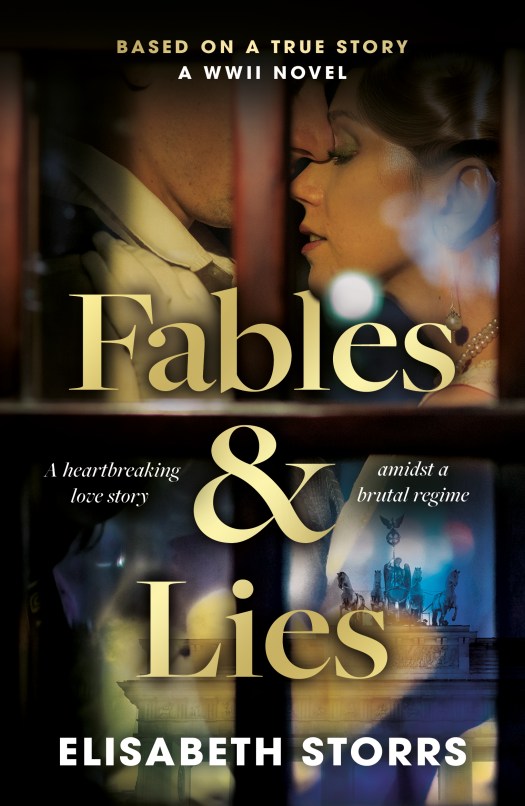
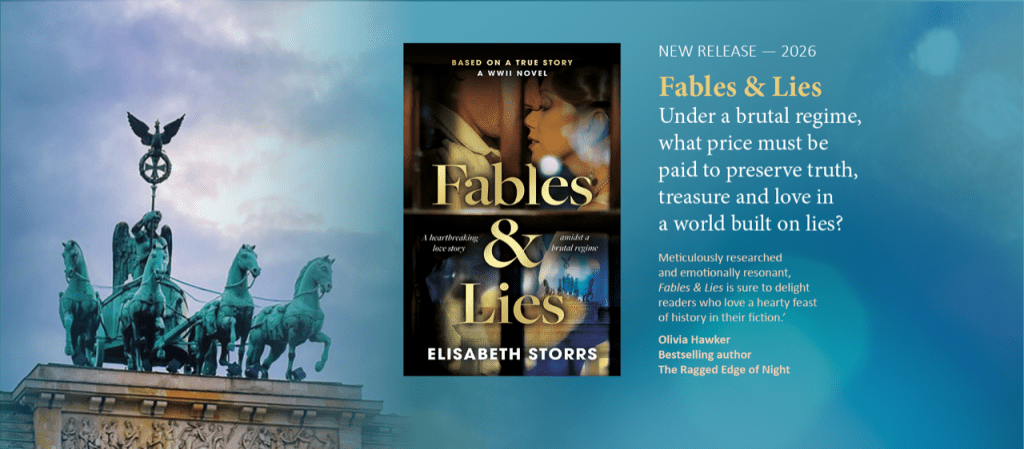
Under a brutal regime, what price must be paid to preserve truth, treasure and love in a world built on lies?
WWII Berlin. Freyja Bremer, a patriotic museum assistant, marries Kaspar Voigt, an ambitious SS scholar, to protect her father. Yet she is unaware her husband is instrumental in Himmler’s twisted quest for Aryan supremacy.
As she strives to safeguard the priceless Priam’s Treasure from air raids, Freyja falls in love with Darien Lessing, an archaeologist who exposes the moral decay beneath the Regime’s myths. Her awakening drives her into perilous resistance — aiding a Jewish doctor and his wife, Darien’s sister — while uncovering Kaspar’s role in the SS’s darkest programs, which subvert history to justify invasion, abduction and murder.
As Berlin collapses into chaos and bloodshed, Freyja, caught between duty, deception and desire, must risk everything to preserve truth in a world built on lies.
A heartbreaking yet triumphant love story, Fables & Lies shines light on lesser-known aspects of the Nazi Regime. It gives voice to the complex moral struggles of German women, the forgotten resistance of Gentiles married to Jews, the dangers of contested history, the evils of Himmler’s racial studies program and the unsung bravery of German museum curators who saved their nation’s treasures.
Perfect for readers of Kelly Rimmer, Anthony Doer and Laura Morelli.
Praise for Fables & Lies:
“A heartrending story of a young woman caught in the machinations of the Third Reich and in the web of a regime-compliant family. The novel is meticulously researched and emotionally resonant, sure to delight readers who love a hearty feast of history in their fiction.”~ Olivia Hawker, bestselling author of The Ragged Edge of Night
“A powerful and heartbreaking story set in war-torn Berlin, FABLES & LIES charts the slow dawning horror of a young woman as she realises all she has been taught about Hitler and the Third Reich is a lie. Impeccably researched and sensitively rendered, Elisabeth Storrs has shone a light on little-known aspects of life in Germany under the Nazi regime.”
~ Kate Forsyth, bestselling author of Bitter Greens
“Written from the little explored German viewpoint, FABLES & LIES is a gripping account of the quest to save the world’s great antiquities during WW2 and an ode to those women and men who risked all for freedom. A beautifully written novel. I’ve never read anything like it.”
~ Nicole Alexander, author of The Limestone Road
“Elisabeth Storrs has indeed broken the mould by writing ‘from the other side’. Evocative, detailed and heart-rending as the heroine journeys through disillusion and danger in the Third Reich.”
~ Alison Morton, author ofthe Roma Nova series
“A chilling and meticulously researched journey into the shadow world of the Ahnenerbe. Blending historical rigor with gripping fiction, FABLES & LIES reminds us of the devastating consequences when history is twisted to serve power.”
~ Leah Kaminsky, author of The Hollow Bones
Elisabeth Storrs
Author Bio:
Elisabeth Storrs has a great love for history and myths. She is the award-winning author of A Tale of Ancient Rome trilogy which was endorsed by Ursula Le Guin, Kate Quinn and Ben Kane.
Now her obsession lies with Trojan treasure and twisted Germanic prehistory in her new release, Fables & Lies: A World War II Novel.
Elisabeth is also the founder of the Historical Novel Society Australasia and the $155,000 ARA Historical Novel Prize. She lives in Sydney with her husband in a house surrounded by jacarandas.
Triggers: The book contains offensive Nazi ideology together with graphic war imagery (including rape), stillbirth and bereavement. Audiobook Narrator: Lucy Tregear.
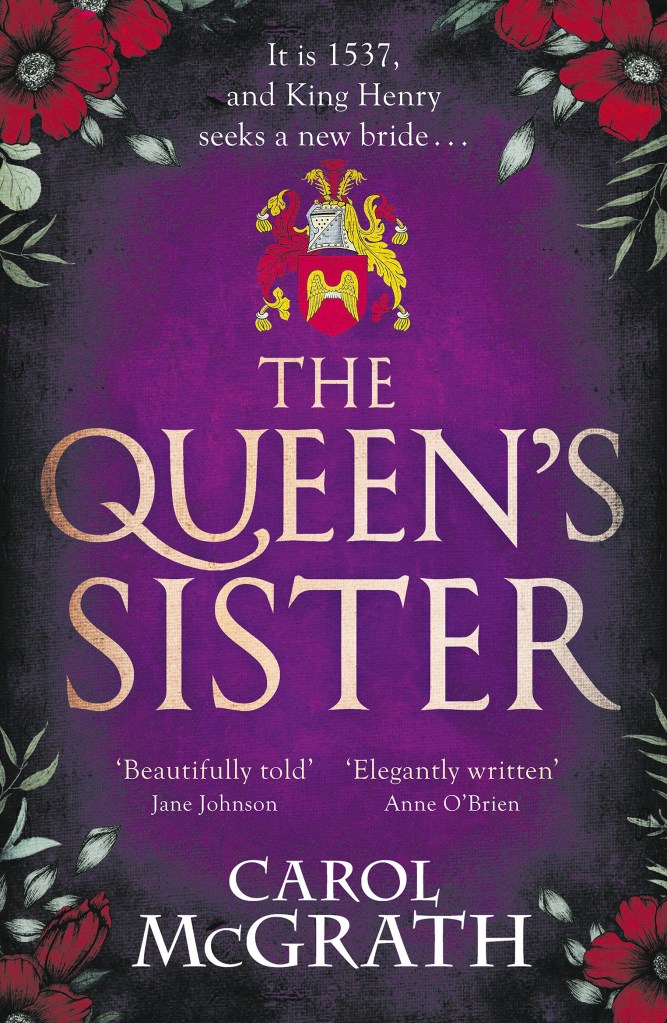
Thank you to Carol McGrath, Headline Accent and the Coffee Pot Book Club for my advanced copy of this novel. I received it at no cost, but my review is entirely honest.
This novel follows the life of Elizabeth, the sister of Queen Jane Seymour. It opens in the Yorkshire countryside, where the recently widowed Elizabeth, only nineteen, is already a mother, the manager of Kexby Manor and is becoming an enterprising cloth merchant and employer.
The story gives a vivid sense of what the religious upheavals of the sixteenth century must have felt like for ordinary people and how easy it was to be swept up in the changes and to fall into danger. I also felt the slower rhythm of Tudor life very clearly. Gossip travelled slowly, and the seasons and the church shaped every part of daily existence.
Elizabeth is still reeling from the news of the sudden arrest of Anne Boleyn when news arrives of the queen’s execution. Elizabeth was once Anne’s maid of honour, and the moral injustice of her former mistress’s fall feels very real. The shock of that moment is powerfully drawn. We know it is coming, reading in the comfort of the twenty‑first century, but Elizabeth has no such luxury. For her, it is a seismic event, made even more astonishing when she learns that her sister Jane will be the next queen of England.
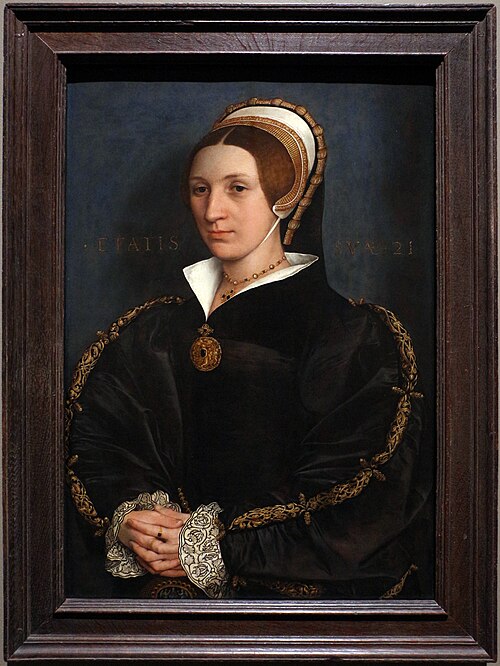
Soon, news comes from her brother, Edward Symour, who encourages her second marriage to the son of Thomas Cromwell Gregory. It is a delicious second marriage for Elizabeth, and the joy she shares with her new husband shines through every scene. She sits for a painting with Hans Holbein, a moment that underlines just how elite her new family is.
But her marriage brings her into the shadows of courtly plots and secrecy, at the same time as religious change across the country threatens the traditions and values she has always lived by.
This is an exceptionally well written and well researched novel, and it stands out as a work worth reading. This is a five Star novel.
Portrait of a lady, probably a Member of the Cromwell Family, perhaps Elizabeth Seymour. c. 1535-40, Hans Holbein the Younger
Blurb:
A mother, a wife, a woman of substance… At nineteen, Elizabeth Seymour is already a mother, has been recently widowed, and seen her Queen, Anne Boleyn, lose her life. Against the wishes of her father, she heads North, away from Wulf Hall and the court in London to Yorkshire, determined to establish a new beginning as a landowner and business woman. As her family in Wiltshire curry favour with King Henry, aided by Thomas Cromwell, Elizabeth makes Kexby Manor her home, finding loyalty among her people there.
Soon, news comes to Elizabeth of the King’s desires for her sister, Jane and while her brother, Edward, encourages her own betrothal to Gregory Cromwell, son of Thomas. It is a happy second marriage for Elizabeth, but it brings unwanted involvement in the dark plots and secrecy of the court, while in the wider country, changes in religious practice threaten to alter the traditions and values of all she has known…
THE QUEEN’S SISTER vividly imagines the story of the woman possibly portrayed in Hans Holbein’s beautiful painting ‘Portrait of a Lady,’ and is a colourful, meticulously researched novel of Tudor life behind the scenes.
What readers say about Carol McGrath’s novels:
‘Another beautifully crafted, well-researched work of historical fiction from Carol McGrath’
‘Brimming with intrigue, tension and adventure, The Lost Queen is a powerful Medieval tale full of atmosphere, danger and emotion and transports the reader to another world’
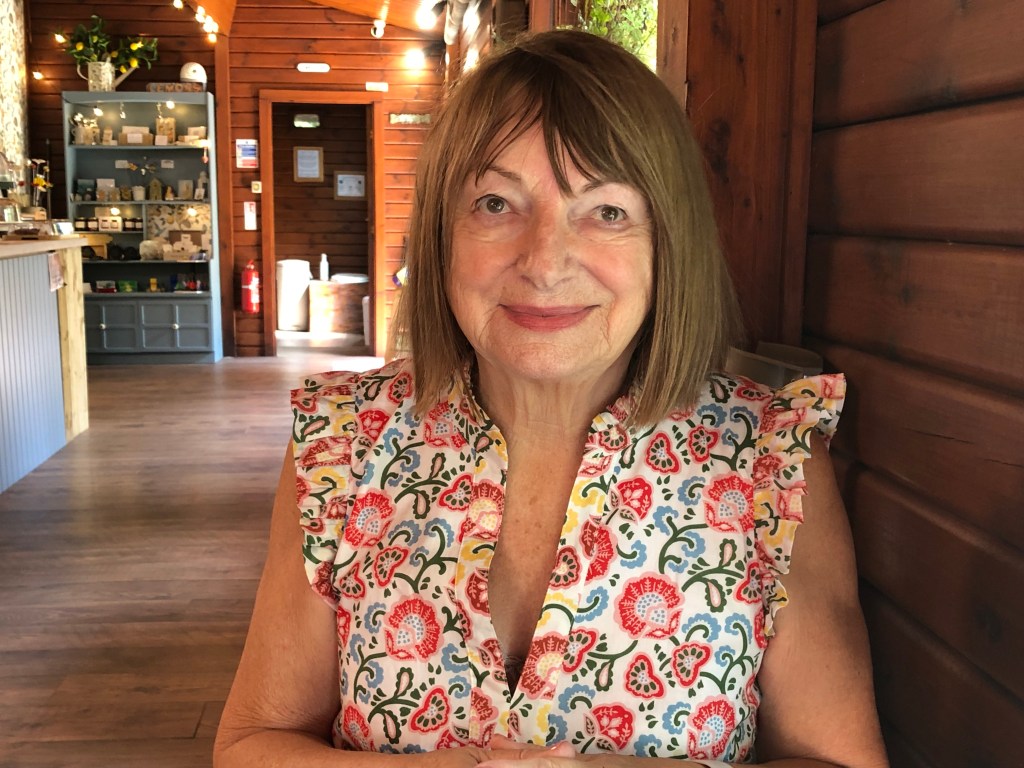
Carol McGrath
Author Bio:
Following a first degree in English and History at QUB, Carol McGrath completed an MA in Creative Writing from The Seamus Heaney Centre, Queens University Belfast, followed by an MPhil in English from University of London. She is published by Headline.
The Handfasted Wife, first in a trilogy about the royal women of 1066 was shortlisted for the RoNAs in 2014. The Swan-Daughter and The Betrothed Sister complete this highly acclaimed trilogy. Mistress Cromwell, a best-selling historical novel about Elizabeth Cromwell, wife of Henry VIII’s statesman, Thomas Cromwell, was republished by Headline in 2020. The Silken Rose, first in a Medieval She-Wolf Queens Trilogy, featuring Ailenor of Provence, saw publication in April 2020. This was followed by The Damask Rose. The Stone Rose was published April 2022. The Stolen Crown 2023 and July 2024 The Lost Queen about Berengaria of Navarre and The Third Crusade. The Queen’s Sister, sequel to Mistress Cromwell sees publication in June 2026.
Carol writes historical non-fiction as well as fiction. Sex and Sexuality in Tudor England was published in February 2022 by Pen & Sword. She speaks at Conferences and gives interviews.
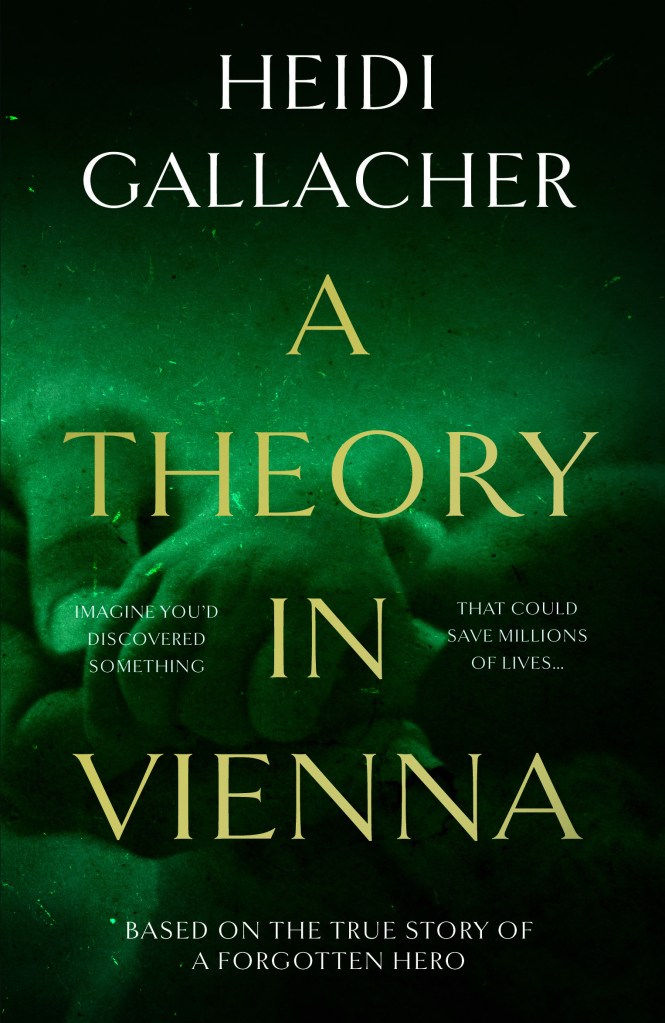
It’s my great pleasure to welcome Heidi Gallacher to my website to answer questions about her novel, A Theory in Vennia:
Tell us about your novel:
The novel tells the story of Ignaz Semmelweis, a 19th-century doctor whose simple, lifesaving discovery was ignored in his own lifetime. My interest was piqued when I came across him during my research for a previous historical novel.
So, set against the emergence of modern medicine, A Theory in Vienna follows a man who proves something undeniable, yet who lacks the language, authority and cultural awareness needed to be believed. At its heart, the book isn’t just about medical history; it’s about what happens when the truth arrives too early. It explores obsession, resistance, and the quiet loneliness of being right in a world that isn’t ready to listen. Semmelweis’s story is tragic, but it’s also urgently human – a reminder that progress often depends as much on humility and courage as it does on evidence.
Was there a part of Semmelweis’s struggle that resonated with you on a personal level? Did that connection change the way you wrote about him?
Yes – what resonated most with me was the experience of not being heard, even when the evidence is clear. It’s probably happened to each one of us, at some time of our lives. Semmelweis’s struggle isn’t only about science; it’s about communication, timing, and the pain of watching something urgent fail to land. That connection shaped the way I wrote about him. I became less interested in presenting him as a flawless hero and more focused on his inner world – his frustration, his rigidity, and the ways his certainty both sustained and damaged him.
Semmelweis is often portrayed as a tragic figure. How did you approach writing a man whose brilliance and frustration shaped both his legacy and his downfall?
I tried to resist the temptation to turn Semmelweis into either a martyr or a warning. His tragedy lies in the fact that his brilliance and his frustration were inseparable; the same intensity that allowed him to see what others missed also made it difficult for him to persuade them. He isn’t undone by ignorance alone, but by the way repeated resistance hardens him and isolates him. His discovery endures, but the human price he paid gives the story its emotional weight.
Semmelweis fought for a truth no one wanted to hear. Have you ever had a moment in life where you’ve had to hold your ground in the face of doubt or resistance?
Yes – though on a far smaller scale. What I recognised in Semmelweis was the quiet determination it takes to stay with an idea when external validation doesn’t arrive. There were moments while writing this book when I had to trust the story despite uncertainty and resist the urge to soften it to make it more palatable.
Three centuries passed from the first epidemic of childbed fever until the early 1900s. More lives were lost across the world from this fever than lives were lost in all of the wars during that time.
If you could sit with Semmelweis for five minutes, as a woman and a writer, what would you want to ask him or tell him?
I would want to tell him that the women he fought for are no longer invisible – that their tragic lives are now understood as the true measure of his work. As a writer, I’d ask whether he ever sensed the cost of being right, and whether he would still have chosen that path knowing where it led.
What do you hope modern readers will take away from A Theory in Vienna, especially in a world that still debates science, evidence and public health?
I hope readers come away with a renewed sense of attentiveness – to small actions, to overlooked voices, and to the quiet ways care can save lives. Semmelweis’s insistence on something as simple as handwashing reminds us that progress often arrives through everyday acts of responsibility and compassion. More than anything, I hope the book leaves readers feeling that change is possible – and that listening, humility, and care still matter.
Blurb: Imagine you’d discovered something. Something that could save hundreds of thousands of lives. But they wouldn’t let you tell anyone. Wouldn’t it drive you mad?
Young Hungarian doctor Ignaz Semmelweis uncovers the real reason thousands of young women are dying after childbirth. Yet, in mid-19th-century Europe, his simple methods are ridiculed. Semmelweis faces the battle of his life to convince others that the cause is simple…
Based on the true story of a forgotten hero, A Theory in Vienna brings the remarkable story of this man to life.
‘I bring to light a truth, which was unknown for many centuries with direful results for the human race.’ – Ignaz Philipp Semmelweis.
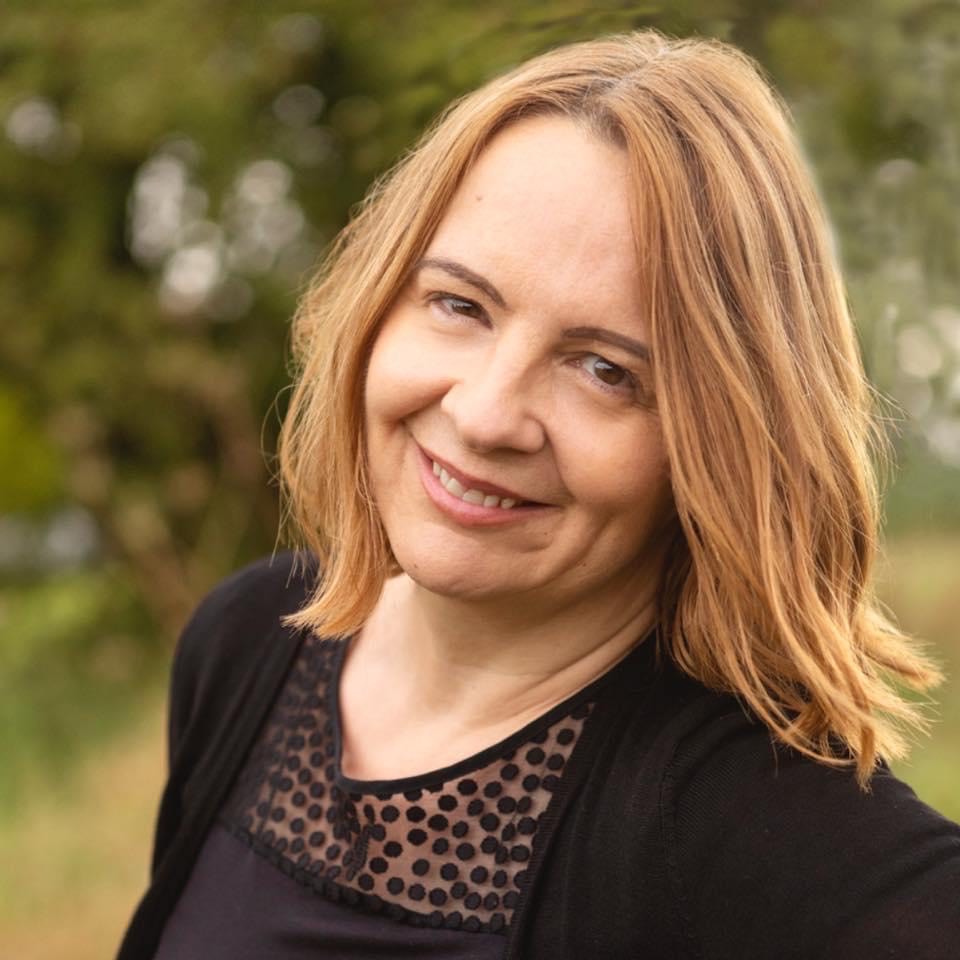
Heidi Gallacher
Author Bio:
Heidi was born in London in the Sixties. She grew up in South Wales, UK and moved to Paris as a young adult where she taught English for two years. She currently lives in Switzerland and recently completed an MA in Creative Writing.
Her first short story was published in Prima magazine (UK) in 2018. Heidi now writes historical fiction. Her first novel, Rebecca’s Choice is set in Tredelerch– an old house in Wales that belonged to her family generations ago. This novel won an award from The Coffee Pot Book Club in 2020, Debut Novel Bronze Medal.
Her second novel, A Theory in Vienna, is set in 19th century Vienna and Budapest. It tells the incredible story of unsung hero Ignaz Semmelweis, whose life-saving discovery was ridiculed at the time.
Heidi enjoys travelling (the further North the better!), singing and writing songs, and spending time reading and writing at her Swiss chalet where the views are amazing.
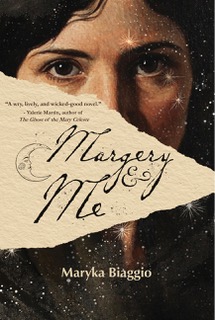
Margery and Me tells the mysterious true story of a medium who mystified scientists, challenged skeptics, and sparked a sensation across America and Europe. It is written by a psychology professor-turned-novelist Maryka Biaggio. And I can’t wait to read this one.
In the 1920s, Margery Crandon captivated both Boston society and psychic researchers with her astonishing seances. At her gatherings, her deceased brother Walter regularly appeared, entertaining the circle with his witty and cheeky remarks. Margery’s abilities earned her the admiration of luminaries, including Sir Arthur Conan Doyle and William Butler Yeats. But one man stood in opposition: Harry Houdini, the legendary magician, who was determined to expose her as a fraud.
Margery and Me tells the true story of the medium who mystified scientists, challenged skeptics, and sparked a sensation across America and Europe. As Houdini and Margery clashed in a battle of wits and wills, the question remained: Could the master illusionist unmask her, or would her extraordinary powers be enough to convert even the most resolute of doubters?
Maryka Biaggio
Author Bio:
Maryka Biaggio is a psychology professor-turned-novelist who brings forgotten lives back into the light. Specializing in historical fiction inspired by real people, she crafts emotionally resonant narratives anchored in careful research.
Her debut novel, Parlor Games (Doubleday, 2013), launched a distinguished career that includes Gun Girl and the Tall Guy and Margery and Me. Her work has earned numerous accolades, including the Willamette Writers Award, Oregon Writers Colony Award, Historical Novel Society Review Editors’ Choice, La Belle Lettre Award, and a Publishers Weekly pick.
Biaggio is celebrated for illuminating overlooked historical figures with psychological depth and narrative grace.
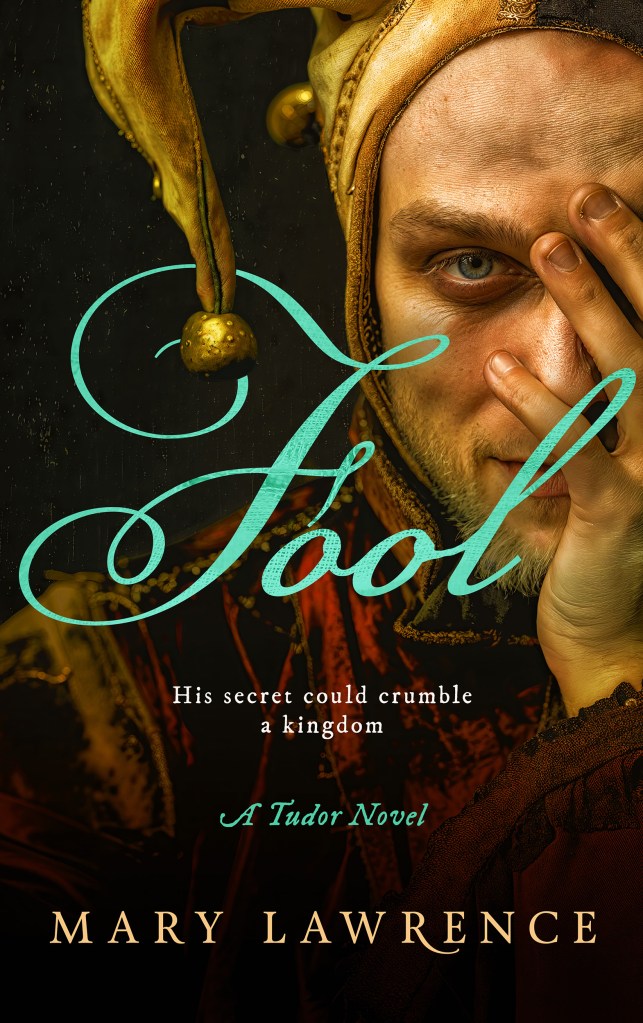
Today I’m reviewing Fool, the latest Tudor novel by Mary Lawrence. My thanks to the Coffee Pot Book Club and to Mary for the review copy. As always, my thoughts are entirely my own.
Fool is a delicious, dark, intimate and surprisingly tender portrait of life on the margins of Henry VIII’s court.
Told through a narrator who is both invisible and indispensable. Kronos is the type of character that historical fiction rarely gives centre stage to, and that’s what makes it so compelling. Kronos is found on a midden heap, literally thrown out with the excrement at birth because of his disabilities. He is taken in by the monks at Thetford Priory and taught the basics of healing the sick in the infirmary.
Mary Lawrence builds the story around a simple but clever idea that the person who everyone overlooks can see everything.
Kronos’s voice is the novel’s greatest strength. He is sharp, observant and deeply wounded in a superstitious age when a disability is seen as bad luck or as a sign of sin. His perspective makes the Tudor court feel more claustrophobic and dangerous than the usual descriptions of pretty gowns and shallow conversations often found in Tudor novels.
The plot moves between Krono’s brutal past and the political crisis he is dragged into when he learns a secret that could destroy Queen Katherine Howard. The author handles this with restraint, never leaning on shock value. Instead, tension is built through the character of Krono, his fear, his passion, and his anger. What stands out is how human the story feels. Kronos is not a caricature or a novelty despite being a person with dwarfism.
He is a man shaped by trauma, humour and a lifetime of being underestimated. His resilience is quiet but powerful, and the emotional beats especially around abandonment and identity land with real weight.
The Tudor setting is richly textured without ever becoming a history lesson. The royal court is used as a pressure cooker and not just a glittering backdrop. The result is a novel that feels historically grounded and emotionally immersive.
Fool is a thoughtful, character-driven Tudor novel that succeeds because it dares to centre the person everyone else ignores. It’s tense, humane and unexpectedly moving. It’s a fresh angle on the Tudor era, and it’s a story that lingers long after the last page.
It’s a five star novel!
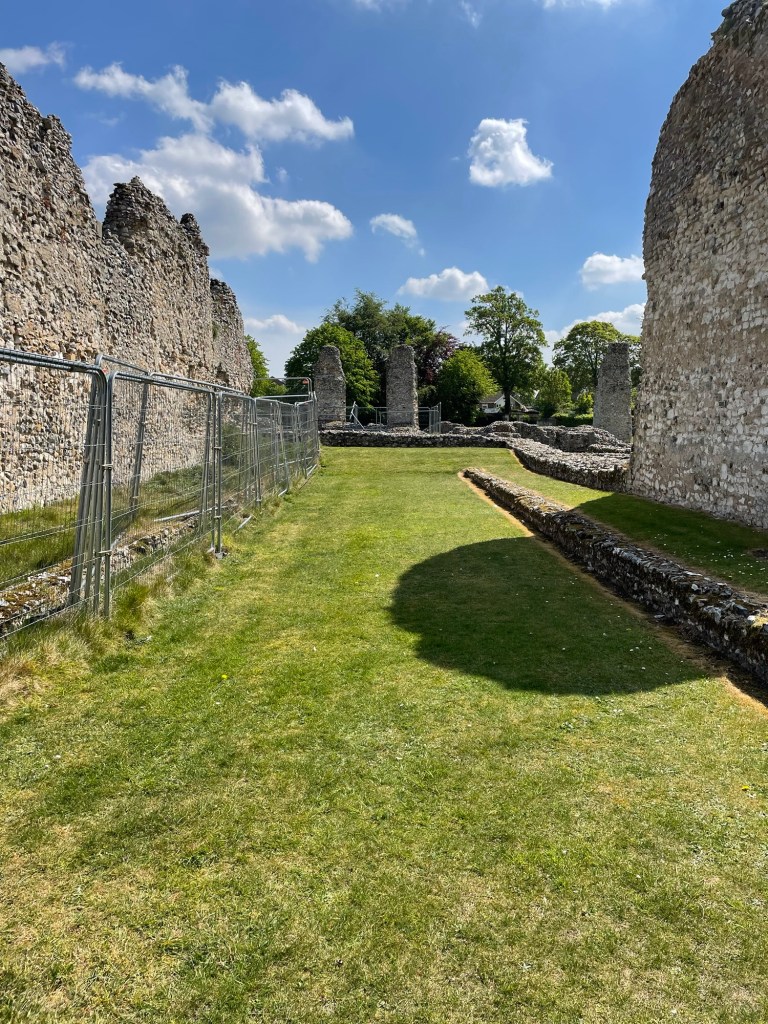
My trip to Thetford Priory:
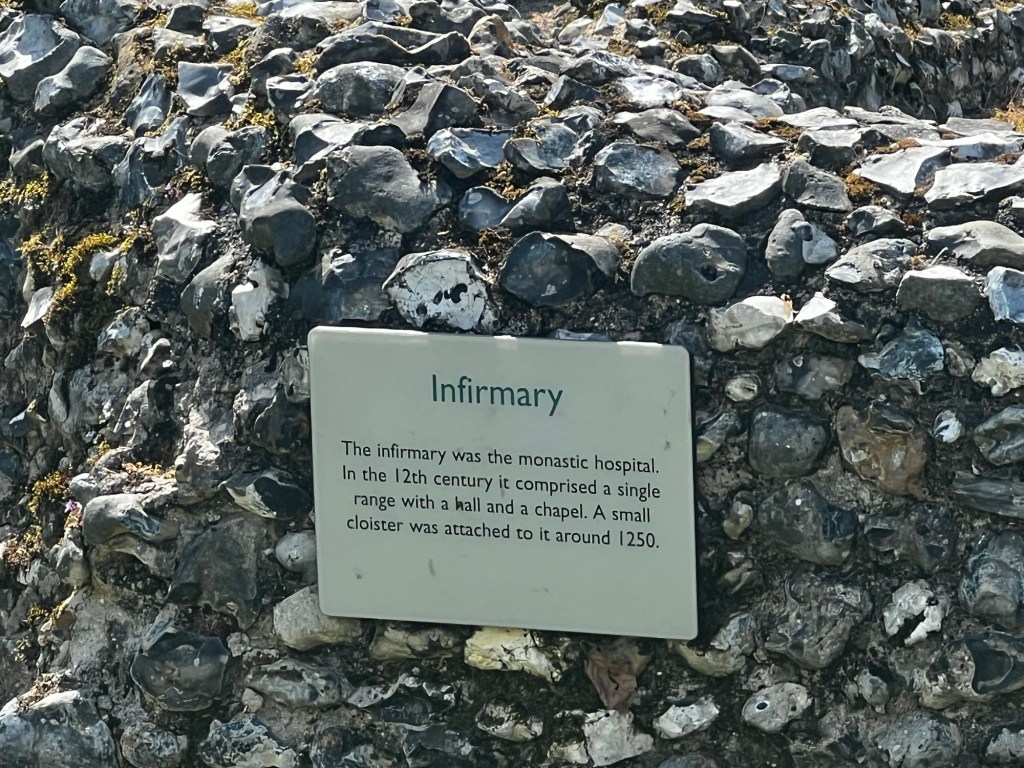
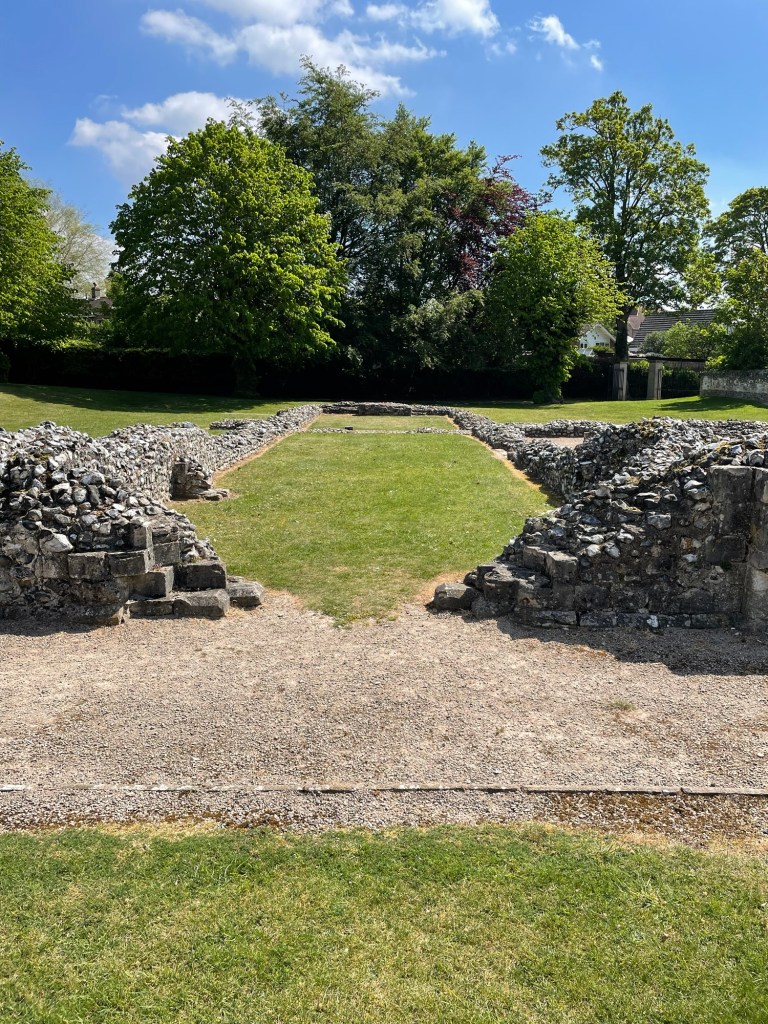
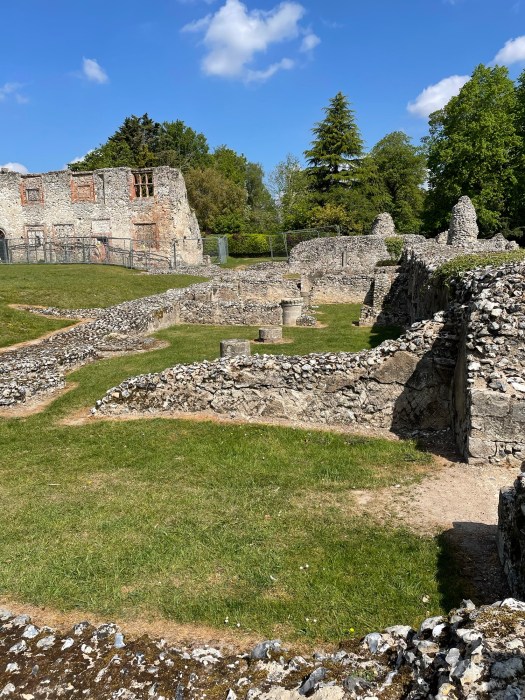
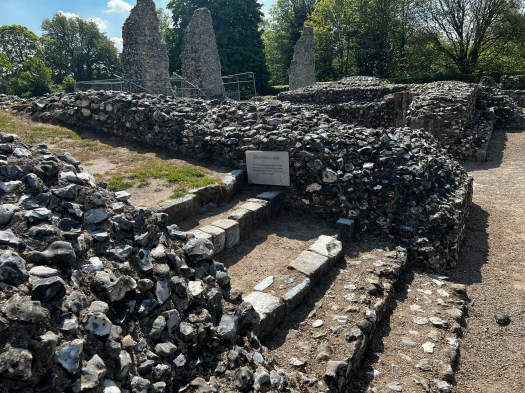
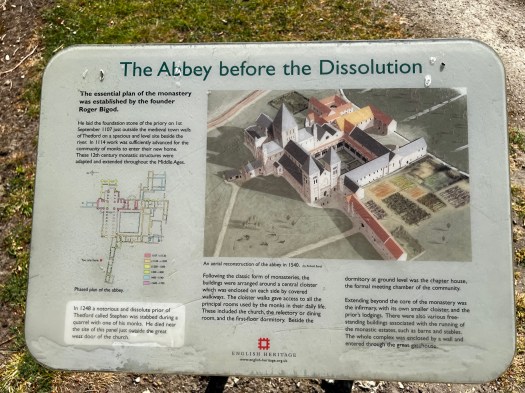
These are the images I took on my trip to the ruins of Thetford Priory after reading the novel. The first two are of the infirmary where Kronos worked. It was amazing to stand here and think about Kronos and Brother Ulric clattering around in here and curing the sick. The third is an image of the buttery where ale and beer would have been stored. It later became the kitchen where the fire burned, and cauldrons bubbled, tended by the fictional Brother Trelli, who made the pottage. In the background, you can see a small part of the enormous Abbot’s house.
The fourth picture shows the steps that once led to the monks’ dormitory, which was destroyed during the reformation. The fifth picture shows an artist’s impression of what the abbey looked like in its prime. The last photograph is of the monks’ refectory, where they ate. Entry is free, and the paths are gravel. I had no issues using my mobility scooter here.
A Story of Secrets, Survival, and the Power of Being Overlooked
If you love historical fiction filled with tension, courtly intrigue, and characters who refuse to stay in the place the world assigns them, this novel delivers. Fool introduces a hero who has been ignored his entire life, only to discover that invisibility can be the sharpest weapon in a dangerous court:
Betrayal. Power. Perception. The most dangerous mind at court belongs to a fool.
From the author ofThe Alchemist’s Daughtercomes a dark tale of ambition and survival.
What others have said about Fool:
“One of the most vibrant characters I’ve encountered in years.“–Goodreads Ecostell
Kronos is a fool–mocked for his dwarfism, prized for his juggling, and underestimated by everyone who matters. But in a court ruled by paranoia and whispers, invisibility is its own kind of power.
When Kronos overhears a secret that could destroy Queen Katherine Howard, he becomes a liability the crown cannot afford. Silenced, mutilated, and left for dead, he survives–barely.
Rescued by an ambitious apothecary, Kronos soon realizes he has not escaped danger–he has merely changed masters. His secret is worth a fortune…and powerful men are willing to kill to control it.
But Kronos has spent his life being overlooked and he’s ready to use that to his advantage.
As rival factions circle and scheme, Kronos sets a plan in motion–one that could topple the mighty, rewrite his fate, and force his foes to reconsider which of them is truly…the fool.
Perfect for fans of C.J. Sansom and Philippa Gregory.
Praise for Fool:
“Vividly written and grounded in scrupulous research, Fool captures both the dark comedy and lethal danger of Henry VIII’s court.”
~ Nancy Bilyeau, author of The Crown and The Blue
“A masterclass in immersive storytelling.”
~ Tony Riches, author of the best-selling Tudor Trilogy
“A thoughtful and unsparing Tudor novel that reframes the court jester not as comic ornament but as a precarious witness to power.”
~ Megan Parker for IndieReader
A Snippet :
The monks had warned me that the secular world outside the priory could be unkind. Not just to men like me, but to anyone possessing half a heart of compassion. There is a coldness that comes with age and experience. To survive means to outwit.
Never should one take advantage of another’s weakness. After all, exploitation is human nature, and it is our struggle with evil not to take advantage of those less clever, less handsome than ourselves. However, it is better to outwit oneself—to be able to suppress one’s susceptibility in taking offence and feeling wounded. How well one builds his suit of armour determines his ability to endure the barbs of insult and misfortune. I would get plenty of practise.
My visit to London helped me realise that the breadth of human experience was immeasurable and I had seen only a little piece. Where would I find my corner of existence? Viewing the king’s opulent palaces of Whitehall and St. James only made me more determined that I should find my way inside one of them.
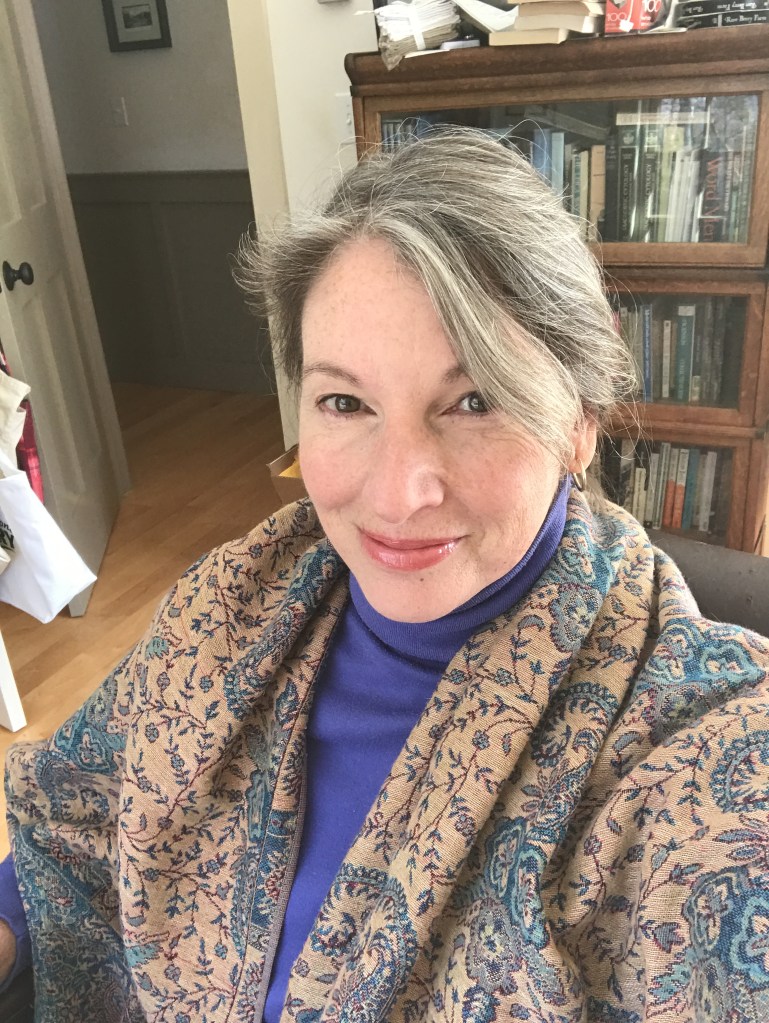
Mary Lawrence
Author Bio:
Mary Lawrence is the author of the Bianca Goddard mysteries, a 5-book series that takes place in the slums of Tudor London featuring the daughter of an infamous alchemist. Suspense Magazine named The Alchemist’s Daughter and The Alchemist of Lost Souls best historical mysteries of 2015 and 2017.
Her writing has been published in several journals, including The Daily Beast. When she is not writing, she tends a small berry farm in Maine with her husband and creates artisanal jams for sale at market.