I would like to thank Jon Byrne, the Book Guild, and the Coffee Pot Book Club for providing me with a review copy of Soldiers of Christ. As always, this is an entirely honest assessment, regardless of the complimentary copy. This review contains no spoilers.
This is a rip roaring read following the life of Richard Fitz Simon, an exiled Norman noble who flees England to join a German brotherhood of warrior monks. It is a well researched novel and an exciting, full‑blooded story.
I loved the fight scenes, the rivalry and jealousy among the brothers, the flashes of humour, and Richard’s deadly enemies. I loved to hate Bishop Albert and Richard’s master and Knight‑brother Rudolf, and don’t get me started on the sneaky, treacherous Wolfgang. So much of this felt real as I read it, especially the squabbles, revenge, and corruption. It was all so human and gritty, which is what I enjoy in a novel.
The descriptions of battles and hand‑to‑hand combat made me feel the exhaustion and the pain the characters would have endured. There is plenty of tension, romance, and adventure throughout. It is well written, clearly researched, and full of energy.
I’ve given it four stars because it’s a strong, well researched novel that’s full of action and dark. Which I love.
Blurb:
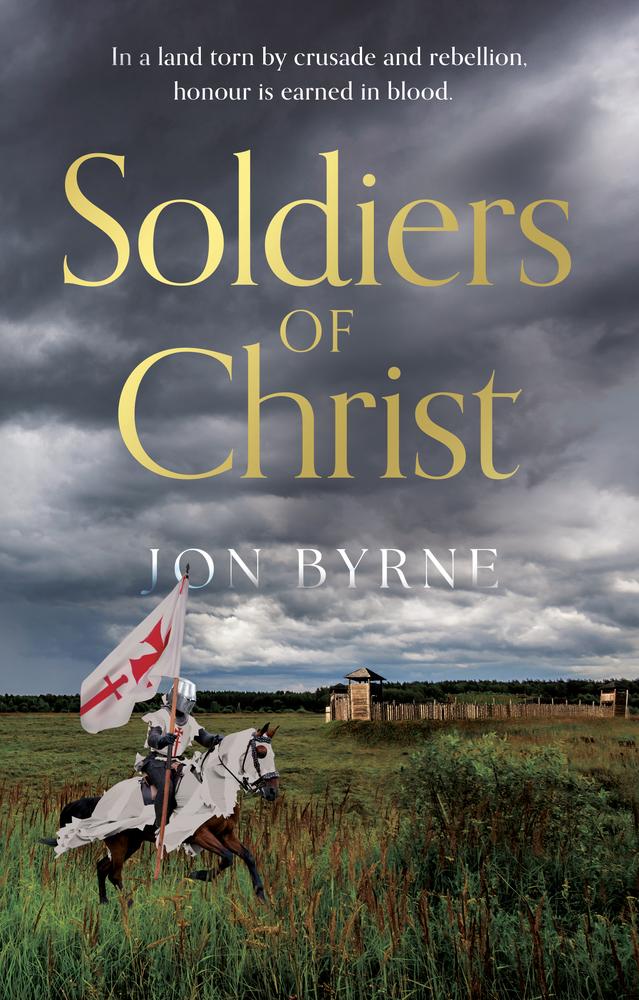
In a land torn by crusade and rebellion, honour is earned in blood.
1205. Richard Fitz Simon has fled England after his title was usurped, joining the Livonian Order of Swordbrothers – a German brotherhood of warrior-monks fighting to bring the word of God to the pagan frontier. After slaying the Lithuanian champion at the Battle of Rodenpois, Richard is celebrated by the Order and their Semigallian allies.
Yet his position remains precarious. Jealous rivals question his right to stand among the brotherhood, and his master, Knight-brother Rudolf, is enraged by Richard’s disobedience. When dark secrets from Lübeck resurface, Richard also finds himself at odds with Bishop Albert, head of the Christian mission in Livonia. As he struggles to reconcile faith, duty and identity, he is drawn into a brutal world of suspicion and bloodshed.
Sent on an expedition to build a castle deep in the wilderness, Richard soon sees tensions erupt – and the path he has chosen threatens to destroy everything he has fought to become.
Jon Byrne
Author Bio:
Jon Byrne, originally from London, now lives with his German family by a lake in Bavaria with stunning views of the Alps. As well as writing, he works as a translator for a local IT company and occasionally as a lumberjack. He has studied the medieval world for over twenty years, building up a comprehensive personal library and a particular interest in the often-overlooked Northern Crusades.
Soldiers of Christ is Book Two of The Northern Crusader Chronicles, a gritty, historically grounded series focused on realism, moral ambiguity, and the brutal realities of medieval warfare.
Written for readers who value authenticity and atmosphere over romanticised adventure, the novel explores a largely forgotten crusading frontier, culminating in the first of many confrontations in a harsh wilderness of forest and swamp.
Readers who enjoy the historical detail of authors such as Bernard Cornwell, Conn Iggulden, or Ben Kane may find familiar ground here.
I would like to thank Jeffrey Archer, HarperCollins UK, and NetGalley for my advanced copy of Adam and Eve to review. As always, my review is entirely honest & there are no spoilers.
Screenshot
Book Blurb:
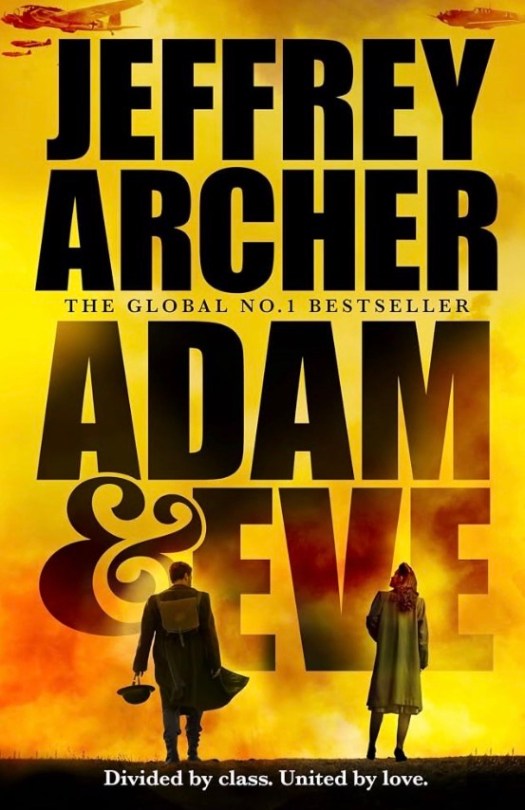
THE FINAL NOVEL FROM THE MASTER STORYTELLER
November 11th, 1918. As the guns of the Great War fall silent, two babies draw their first breath.
Eve is the daughter of an Earl. Adam, a shepherd’s son. Yet from their first meeting they form an extraordinary bond that neither privilege nor prejudice can break.
Then on a single September night in 1940, as Hitler prepares to invade the British Isles, their actions will change his mind. Determining not just their own futures but the fate of a nation.
They will show extraordinary courage. They will make unimaginable sacrifices. And the story of what they did will stay with you long after you’ve turned the last page.
From the broads of Norfolk to the beaches of Dunkirk, Adam & Eve is a breathtaking epic of courage, sacrifice, and love forged in Britain’s darkest hour.
‘If there were a Nobel Prize for storytelling, Archer would win’ Daily Telegraph
‘Archer is a master entertainer’ Time
‘Probably the greatest storyteller of our age’ Mail on Sunday
‘Peerless master of the page turner’ Daily Mail
Jeffrey Archer’s book ‘End Game’ was a Sunday Times bestseller.
My Review:
Adam and Eve starts with all the hallmarks of Jeffrey Archer’s usual strengths: pace, clarity, and a premise that promises moral tension. For most of the book, it’s competent, readable, and engaging enough. He breaks all the rules like the master storyteller he undoubtedly is.
My problem:
The first twist is where everything collapses. Archer tries to deliver a shock reversal, but it’s so implausible, so unbelievable, and so coincidental that I found myself shaking my head in disbelief.
Then a strange swap takes place, and instead of deepening the narrative, it cheapens it. Worse still, other twists pile on top of the first one, and each one is less believable than the first.
Why it didn’t work for me:
To be fair to Archer, all the signs are there from the start of the novel that the twists are possible. However, the issue for me was that I found them utterly unbelievable and the result felt contrived rather than clever.
My overall impression:
The book is readable; Archer always is, but the ending leaves a sour aftertaste. It’s hard to recommend a novel whose twists undermine the entire structure. Readers who enjoy neat reversals may tolerate it; anyone who values believable character development will likely find it frustrating.
My verdict:
This was a solid setup undone by twists that ask too much and delivers too little. This is a two-star review because I could not finish it.
Jeffrey Archer is one of the world’s bestselling authors, with sales of over 275 million copies in 97 countries, and is the only author ever to have been a number one bestseller in fiction (twenty times), short stories (four times) and non-fiction (The Prison Diaries). He was born in London, and brought up in the West Country. He gained a Blue in Athletics at Oxford, was President of the University Athletics Club, and went on to run the 100 yards in 9.6 seconds for Great Britain in 1966. Jeffrey has served five years in the House of Commons as a Member of Parliament, and thirty years as a Member of the House of Lords.
He has written 27 novels, 7 sets of short stories, 3 prison diaries, 3 plays (all of which have been performed in London’s West End) and a gospel. His first novel, Not a Penny More, Not a Penny Less was sold to 17 countries within a year. It was also made into a successful serial for BBC Radio 4, and was later televised in 1990 by the BBC. He won the Prix Relay du Roman d’Évasion, a prize that rewards a novel in which readers can ‘escape from everyday life’, for his novel Paths of Glory, and the Prix Polar International Prize for the best international thriller of the year, for his novel A Prisoner of Birth. The Clifton Chronicles, a series of seven novels published between 2011-2017, topped the bestseller lists around the world.
Famous for his discipline as a writer who works on up to fourteen drafts of each book, Jeffrey also brings a vast amount of insider knowledge to his books. Whether it’s his own career in politics, his passionate interest in art, or the wealth of fascinating background detail – inspired by the extraordinary network of friends he has built over a lifetime at the heart of Britain’s establishment – his novels provide a fascinating glimpse into a range of closed worlds.
Jeffrey is also an amateur auctioneer, conducting up to 20 charity auctions a year. He has been married to Dame Mary Archer, Chair of the Science Museum Group, for 55 year, and they have two sons, two granddaughters and three grandsons. He splits his time between London, Cambridge and Mallorca – where he writes the first draft of each new novel.
The fifth book In his new William Warwick novels – the first of which, Nothing Ventured, was published in 2019 – is NEXT IN LINE which was published in September 2022.
This book is available to read on Kindle Unlimited.
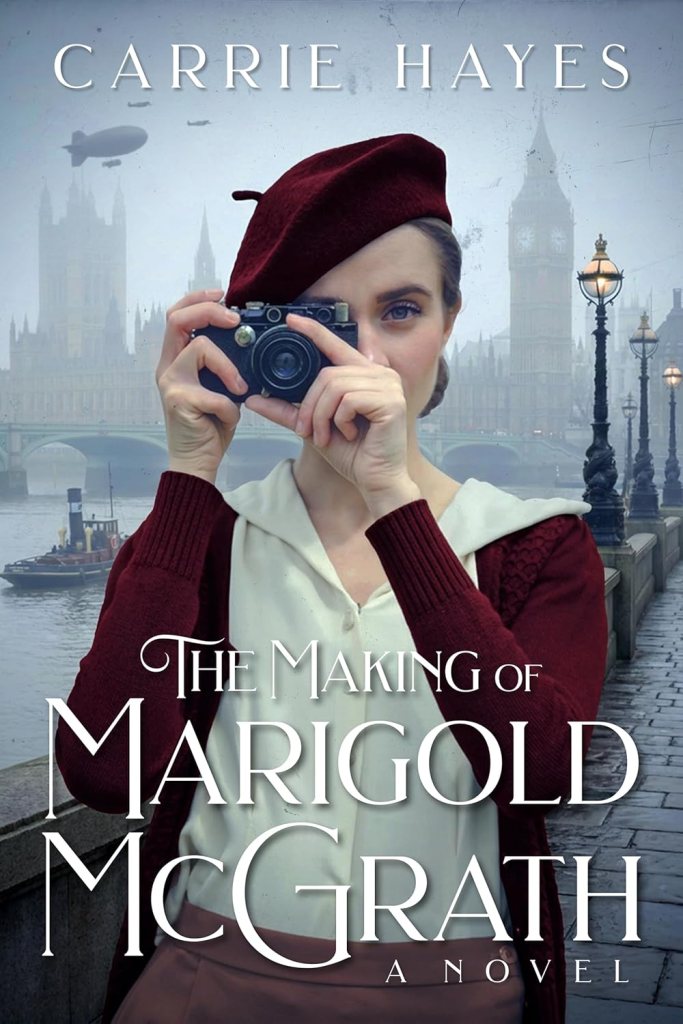
I would like to thank Carrie Hayes, HTPH Press, and the Coffee Pot Book Club for allowing my readers to have access to this excerpt from Carrie’s latest novel.
Blurb:
New York City, 1937. Seventeen-year-old Marigold McGrath is coming undone.
Her mother is dead. Her father is drawn to dangerous politics. The only place she feels joy is behind a camera — where she can frame the world on her own terms.
After a series of her own missteps, she reinvents herself in London: mentored by a celebrated émigré photographer, photographing Kindertransport children, working alongside Edward R. Murrow. She falls in love with Joop, a charming Dutch student, and shrugs off the war gathering around her.
Then the Blitz begins. Joop vanishes into the Dutch Resistance. And Marigold — who has always preferred to photograph the world as she wishes it were — must finally decide what kind of woman, and what kind of witness, she is willing to become.
A sweeping WWII coming-of-age novel set in wartime London.
For readers of Kristin Hannah, Kate Quinn, and SL Beaumont’sThe War Photographers
Excerpt :
Running through Central Park, ice skates flopping on her shoulders, Marigold slowed to catch her breath. She studied the bridge and the frozen pond. Tall buildings framed the naked trees. Sunshine shone low behind them, casting deep shadows on the snow. She pulled at her left mitten with her teeth and unbuttoned her coat. Inside was her Brownie. It was one of the new ones, with a bellows that folded. She fumbled with its case, groaning at the other mitten hindering her efforts. At last, at last, she looked down into the lens. She moved the aperture slowly to the left and then dialed it back a fraction to the right. The trees, the light, buildings and snow.
She pressed the button and wound the film.
“Gotcha!” Pink mittens wrapped around her eyes.
Marigold staggered forward. “Trude!” She laughed and turned. “Say cheese.”
Trude put her arm in the air, a teasing coquette bundled in scarves with a pompom hat tied under the chin. Marigold blew on her fingers and moved the aperture a fraction one way, then she moved it the other. The light had changed, and Trude was in shadow. Marigold took the picture.
Then as quickly as she’d appeared, Trude ran over the bridge toward the pond. “Last one there’s a rotten egg!”
A dozen other skaters moved across the ice. Girls and boys about their own age, mostly from the neighborhood. Marigold hopped on one foot and then the other. Her earmuffs just weren’t doing the trick and inside the mittens her fingers felt frozen. Trude spread a small blanket onto the snow and patted the spot next to her. “Come on, Mari, you’ll feel so much better when you’re skating.”
Marigold doubted that very much. Lacing up her skates felt like torture and she willed her knees to stop shaking. She watched Trude expertly wrap the laces around her own slim ankles then tie a knot, tucking the laces inside the socks peeping above her skates. Trude clambered onto her knees and stood to make her way to the pond. In a single move she was gliding across the ice, and then crowed, “Haha!” Somehow Trude’s fluid grace made everything seem effortless.
Marigold watched her turn a flawless figure eight as boys skated around her and everything sparkled. “Come on, Mari!” Trude waved her over.
Marigold muttered under her breath, come on, come on, chiding herself not to be so awkward, then responded, “I’m coming!” She took a deep breath and imagined herself the world-renowned figure skating movie star Sonja Henie. She extended her arms as she stepped onto the ice. But her left leg slowly slid out from her while her right leg began to move forward. Marigold’s top half suddenly felt heavy. She waved her arms, her skates stepping forward and backward, her ankles wobbling.
“You can do it,” Trude pirouetted beside her.
“I know, I know I can do it,” Marigold’s heart began thumping. The other skaters danced along the ice.
Trude whispered, “Bend your knees.”
But Marigold’s knees collapsed, pulling her bottom as if by a magnet. “I’m falling though, I am.”
“No, you’re not.” Trude held out her hand, waiting.
“I am, oh my goodness.” It was difficult to breathe, and she was suddenly warm. Her hands met the ice and her feet surrendered.
Trude still waited. “Come on, I’ve got you.” She pulled Marigold up and placed her arm around her waist, then said, “Oh look. There’s Will Carrington with a swishy, dishy friend.”
Marigold froze in horror. Why was she such a klutz?
The boys called from across the ice. “Hello, Fräuleins.”
Trude smiled and called, “Morgen, Herr Carrington. Wie gehts? Why don’t you introduce us to your friend?”
Eagerly the boys skated over. Will said, “This is Chip.”
Chip stopped in front of her, the edge of his skates making a smooth spray of ice. He held his hand out to Marigold. “You can hang on to me if you want. I’ll teach you to skate.” He placed an arm round her waist. She leant against him and he led her across the pond. Perhaps she’d be Sonja Henie after all.
“What grade are you in, Marigold?” Chip’s eyes were heavily fringed and he had a cleft in his chin.
“I’m a senior.”
Smiling, he picked up speed. “Me, too. Is this your first time on the ice?”
“Kind of.” She thought it best not to say that despite years of lessons, she was just a lousy skater. “Where do you go to school, Chip?”
“I’m at Lawrenceville. You know, in New Jersey. It’s a good place, not as many…” He gestured to a couple arguing in Yiddish. “People like that. As in New York.”
Marigold looked up at him again. She hoped he didn’t have the same lapel pin as her dad. Well, she thought to herself, at least he was handsome. Soon the streetlamps were lit. It was time to go home.
“Let’s go to my place,” Will offered. He lived in a brownstone only a block away. Everyone agreed and they went to his house, dumping their coats and skates upon ancient Chinese chairs just inside the door.
The half dozen guests traipsed upstairs, and Will procured some cocoa and cups on a tray from the housekeeper.
“Where is everybody?” Trude asked, by which she meant Will’s younger brothers.
“At the movies with Nanny.” He smiled wickedly. “Come on, let’s play a game.”
Out came a box from under the bed, inside of which was a bottle of rum. Shouts of approval went around as he generously poured it into the cups of hot chocolate. Some of the boys skipped the hot chocolate and drank the booze neat, laughing as it burned their throats and rendered them speechless.
“Let’s play records,” Trude said. Will agreed and she chose the very latest from his collection. A trumpet opened the refrain, soulful and longing, echoed by the orchestra. A man began to sing,
I’ve flown around the world in a plane,
I’ve settled revolutions in Spain, and the North Pole I have charted,
Still, I can’t get started with you . . .
Chip took Marigold’s hand. “May I?”
She moved toward him. His shoulders were square and he swayed as he danced, brushing against her. Marigold stepped closer, sensing the rise of his chest, the flatness of his stomach. She forgot having been frozen and grew toasty from the rum and Chip’s handsome touch. Resting her head upon his shoulder she saw a mouse scurry across the floor. She stifled a gasp. If there was a time not to mind the mice at Will’s house, this was the time. But the mix of the rum, her desire, and the mouse made her woozy.
“’Scuse me!” She squirmed away and stumbled to the powder room. She ran the water and rubbed her face, then looked at herself in the mirror. There was a knock on the door.
“Can I come in?” It was Trude, who promptly lifted her skirt and sat on the toilet. “Did you see the mouse?”
Marigold shuddered. “You know I did.”
Trude finished and joined her at the mirror. “That Chip seems to like you.”
Marigold flicked some water at her friend. “How would you know?”
“Because I have eyes in the back of my head.” Trude refreshed her lipstick and handed it to Marigold. “I’m a regular spy.” She then dropped her voice, “You know, like Mata Hari.”
Marigold studied her now vibrant mouth. “I can’t believe you’re leaving me.”
“Oh, you’ll be fine.”
“I won’t be able to go skating.” The thought of days without Trude felt intolerable.
“Yes, you will.” Trude gestured to Marigold’s lower lip. “You need a bit more.”
Obediently, Marigold reapplied it.
Trude said, “Ask Chip. It’ll be the Ice Capades before you know it.”
Marigold decided not to share what she thought about Chip, murmuring, “And my only model will be my mother.”
“But’s she’s a wonderful model.”
“It’s not the same.” Movies without Trude, skating without Trude, soda fountains without her. Marigold gave herself a little shake. The fresh lipstick would look terrible if she began to cry.
Trude took off her glasses and wiped them with a handkerchief. “You’ll just have to come and visit.” She gave Marigold a cheesy smile in the mirror and held out her hand. “Come on. Back to the party.”
“I don’t want to go out there.” Marigold sighed. “I really hate mice.”
Praise:
“I read a lot ofhistorical novels… this one wasone of my favorites. From the characters to the setting to the actions depicted Ithoroughly enjoyedthe journey—I reallydidn’t want it to end!“ ~ Netgalley Review 5*
“The Making of Marigold McGrathby Carrie Hayes is the tale of a well to do American seventeen year old sent to Europe just prior toWorld War II. The book isexquisitely writtenwith a well paced dialogue. The characters are well formed and interesting. Sprinkled throughout the book are bits from news outlets that help set the larger context for the reader – they are well timed and helpful.Great read,well worth it!“ ~ Goodreads Review 5*
“The Making of Marigold McGrath explores a rarely examined aspect of WWII: the complex journeys to maturity ofyoung adults in war-torn Europeas they seek human connection and meaning. Marigold finds both, using her skills as a photographer to document the stories of refugee children. With gobs ofhistorical referencesandvivid imagery, interlaced withintrigueandromance, The Making of Marigold McGrath is agreat read!“ ~ Goodreads Review 5*
This book is available to read on Kindle Unlimited.
Carrie Hayes
Author Bio:
Carrie’s first two novels, Naked Truth or Equality and Well Dressed Lies, follow the lives of the iconoclastic suffragist sisters, Victoria Woodhull and Tennessee Claflin.
Carrie lives with her husband and two spoiled dogs in a rambling Victorian house just outside of New York City.
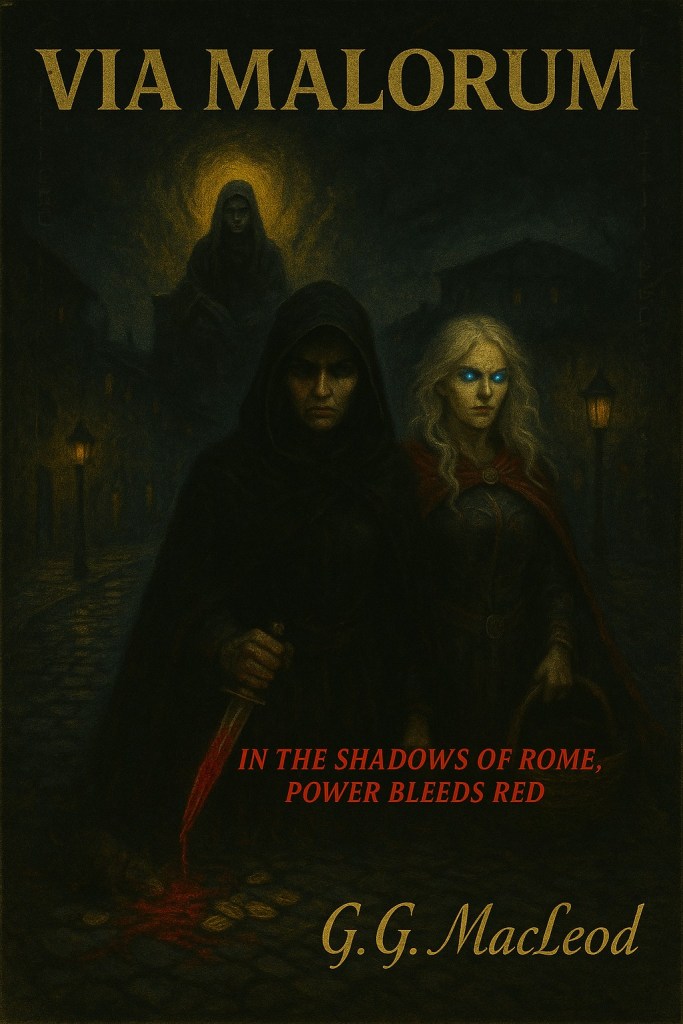
In the shadowed streets of ancient Rome, 37 CE, power is a blade that cuts both ways. Agrippina, a towering enigma of ambition, slips from Caligula’s gilded cage with her newborn son, Domitius, her mind a labyrinth of cold calculation. At her side prowls Messalina, a siren in scarlet, her seductive cunning as deadly as her blade. Together, they navigate a city teeming with decadence and deceit, pursued by whispers of treachery and the emperor’s wrath.
Their journey leads to the Temple of Fortuna where the enigmatic Prophet Cassandra unveils a cryptic fate – one that demands sacrifice and promises blood. As alleys echo with violence and forbidden passions ignite, Agrippina’s quest for dominion collides with Messalina’s ruthless desires. In a night where every step drips with danger, who will rise and who will fall?
VIA MALORUM is a visceral plunge into the heart of Roman darkness, blending historical intrigue with the chilling allure of giallo. Prepare for a tale where power bleeds red, and trust is a luxury none can afford.
Triggers: Some rough lesbian sex, moderate violence.
G.G. MacLeod
Author Bio:
The author is a 59-year-old Canadian male based in Calgary. The author has always had a tendency of combining genres like horror and action along with drama, psychological thrillers, giallo, and sometimes even comedy.
It really depends on how the author feels from moment to moment as they write because the author likes to entertain themselves first and then hope that a smattering of other people out there in the world will like it as well.
I’m delighted to have Tony Riches on the site today with his latest novel, Queen Anna, the first in his Stuart Queen series. It’s a book I’ve been quietly looking forward to: the story of a young woman navigating storms, suspicion and the uneasy politics of two kingdoms. Riches has a gift for bringing overlooked figures into clear focus, and Anna of Denmark is a fascinating choice. It promises to be a thoughtful, atmospheric beginning to the series, and I’m very pleased to share it here today.
A crown won in the eye of a storm.
A queen who refuses to be broken…
Princess Anna of Denmark sails for Scotland to marry King James VI, but storms ravage her fleet, igniting a deadly obsession with witchcraft in her new home. Arriving in a strange and paranoid court, Anna finds her new husband’s bed is a treacherous place.
Surrounded by whispering courtiers and shifting alliances, Anna refuses to remain a passive pawn. When the court takes her children to raise them away from her, the young queen draws her line in the sand.
From the windswept castles of Scotland to the glittering, dangerous English court, Anna is restored to her rightful place in history.
Author Bio:
Tony Riches is a full-time UK author of historical fiction. He lives with his wife in Pembrokeshire, West Wales and is a specialist in the lives of the early Tudors. As well as his Elizabethan series, Tony’s historical fiction novels include the best-selling Tudor trilogy and his Brandon trilogy, (about Charles Brandon and his wives). For more information about Tony’s books please visit his website tonyriches.com and his blog, The Writing Desk and find him on Facebook, Instagram, Bluesky and Twitter/X @tonyriches.
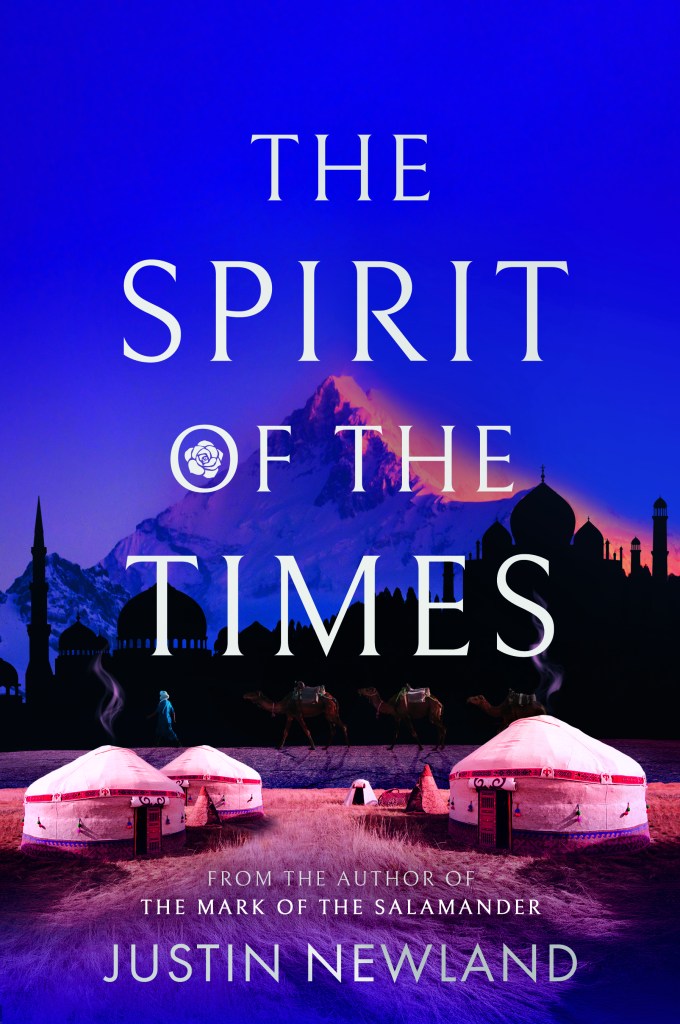
I would like to welcome my guest, Justin Newland, to my website. I’m delighted to be interviewing him about his novel. Before we begin, here is what the book is about:
From a land of milk,
And a Road of Silk,
To a ring of roses,
And a dance of posies,
Comes the tale of the spirit of the times!
In fourteenth-century Central Asia, Karia is a young woman living under the yoke of Mongol occupation. But she’s different. She’s a fighter with supernatural powers. She could use them to keep the Black Plague at bay and solve the mystery of the purple skies at dawn – if only she could overcome her self-doubt.
Travelling in caravans on the Silk Road, she faces dangers seen and unseen – from sandstorms and slave traders to the desert djinn and folk who believe she’s a witch. She fears losing Abi, her little cousin, who’s fascinated by roses and the dance of the Whirling Dervishes of Bukhara.
When Karia falls in love with an English sailor fleeing the Knights Hospitaller, they sail to England with Abi to unravel the meaning of the purple skies, a dance, a posy tree, and a ring of roses.
The Spirit of the Times is part history, part fiction and part speculation: on the origin of disease; the power of innocence; the unfortunate aspects of custom and dogma; and humanity’s ability to respond to the governing influence or spirit of the times.
During your research for The Spirit of the Times, did you come across anything that surprised you?’
Yes, many things. As I’m sure you know yourself, history is a table of plenty that’s packed with surprises.
Here’s one of them, a story about how karma works its way through the events of history – karma to mean the rebalancing of what is out of balance.
When they invaded the lands of Asia and Europe in the 13th century, the Mongol Empire had a strategy. A nomadic people, they prized gold, silver, precious jewels, silk and any other material plunder they would take back to their capital at Karakorum in Central Mongolia.
However, when they pushed into Europe, and defeated the Hungarian army at the Battle of Mohi in 1241, they found an impoverished people, with little carry-away riches to steal. As compensation, they enslaved the rump of the Hungarian army and sold them to the Venetians, who were one of the major slave traders of the time.
The Venetians then sold the Hungarian soldiers to the Sultan of Egypt. Then, in 1260 the Sultan’s army fought and beat the Mongols at the Battle of Ain Jalut. This victory permanently halted the Mongol advance into the Islamic world.
So, the same soldiers that the Mongols had enslaved returned to defeat their enslavers, yielding a surprising example of karma in history.
The Spirit of the Times takes readers across the Silk Road. What first sparked your interest in this period and place?
My novels have focused on periods of history when ‘after’ is substantially different to ‘before’, such as the Ming Dynasty in China, the Tudor Age in England, and the Great Enlightenment in Europe.
The 14th century was one such transitional time, when the great Chinese Empire had, through its own internal weakness, split into two and when Europe was dominated by famine and war, plague and social change.
As a novelist, I wanted to explore the mechanisms for this transition in the 14th Century, by asking and trying to answer questions like: How did it happen? Why did it happen? Was it meant to happen in the way that it did? Were there other possibilities at the time and, if so, what were they, and why weren’t they taken?
The Silk Road played a huge role in this transition. For their time, the Mongols were remarkably tolerant both religiously and socially, and they opened up the Silk Road to trade and most importantly, to ideas. It was travelled by camels and mules, as well as spies and emissaries, priests and Sufis, imams and monks. This was a road of silk, a road of ideas, of silken ideas that crossed from east to west, breathing the winds of change, some of which are still blowing today.
Your novels often weave history with the supernatural. This story touches on the mystery of the purple dawn skies and the coming of the Black Death. How did that idea find its way into the book?
I am always intrigued by coincidences in history and otherwise. Because a coincidence is really a combination of facts for which the connections have yet to be revealed. It’s a bit like fairy tales, myths, folk tales and nursery rhymes. Never accept them at face value. They are all intended to conceal a deeper truth. Somehow, we must peer through the glass darkly, and perceive and uncover the greater mystery.
One coincidence I discovered was that the Black Plague arrived in Melcombe Regis, near Weymouth, around 24th June 1348. Only two months before, on 23rd April, King Edward III instituted England’s ancient and most prestigious chivalric order. That was no coincidence. The English royal family, like most of the English population, knew that the plague was rampaging through France and that it was only a matter of time before it broached England’s shores. The King knew it was coming. So, why institute the Order of the Garter when he did?
That’s the joy of a historical fiction writer, because you can speculate on what those connections are.
It was the same with the purple skies at dawn. I read in a history book that the onset of the plague in the 14th century was preceded – or presaged – by this uncanny phenomenon, that features on the cover of the novel. So, what did that mean? Why purple? Why at dawn? Was there a connection between the plague and the purple skies at dawn. And if so, what was it?
Justin Newland
Author Bio:
Justin Newland’s novels represent an innovative blend of genres, from historical adventure to supernatural thriller and magical realism.
Undeterred by the award of a doctorate in mathematics from Imperial College, London, he conceived his debut novel, The Genes of Isis (Matador, 2018), an epic fantasy set under Ancient Egyptian skies. Next came The Old Dragon’s Head (Matador, 2018), set in Ming Dynasty China in the shadows of the Great Wall.
The Coronation (Matador, 2019) features the Great Enlightenment and speculates on the genesis of the most important event in the modern world – the Industrial Revolution. The Abdication (Matador, 2021) is a mystery thriller in which a young woman confronts her faith in a higher purpose and what it means to abdicate that faith.
At this point in his writing career, after four self-published books, Justin was offered a part-funded contract with the Book Guild.
The Mark of the Salamander (Book Guild, 2023) is the first in a two-book ‘The Island of Angels’ series. It tells the epic tale of England’s coming of age during the Elizabethan era. The second in the series, The Midnight of Eights (Book Guild, 2024), charts the uncanny coincidences of time and tide that culminated in the repulse of the Spanish Armada.
His latest novel, The Spirit of the Times (Matador, 2026), is to be published in July. It tells the story of a young Kyrgyz woman’s journey westwards along the Silk Road. With purple skies at dawn, and a supporting cast of Genghis Khan, the Black Plague, a perplexing rhyme, a ring of roses, it explores the greatest mystery of all – the spirit of the times.
Justin’s enduring passion is to explore the origins of our current time. This prompted a broad research into what we’ve inherited from history – encompassing Egypt, China, Prussia and Tudor England. He also writes entertaining talks which he gives to the WI, U3A, Probus, Rotary and local historical associations. Please visit his website for a current list of the talks.
Alongside the talks, Justin promotes his work with regular book signings at TG Jones (ex. WH Smith) high street stores, selling over 3,500 books since 2019. He has sponsored over 40 UK and US blog tours, given frequent radio interviews and penned many guest posts.
His current book signing motto is: Enjoy, Imagine, Discover.
As a member of the Society of Authors, he has Public and Products Liability Insurance.
Born in Essex, England, three days before the end of 1953, he lives with his lady in plain sight of the Mendip Hills in Somerset, England.
Triggers: The story touches on the thorny and controversial subject of slavery. I felt it needed to be included, mainly because I wanted the story to be authentic, and slavery was a common feature in the 14th Century.
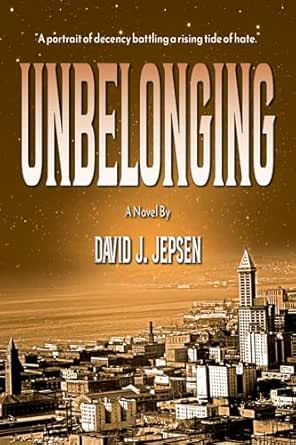
I would like to thank historian David Jepsen, Historium Press, and the Coffee Pot Book Club for allowing me to share an excerpt from David’s latest novel, Unbelonging, on my website.
Before we jump in, here’s a rundown of what the novel is about:
Seattle, 1945. The war is ending-but for many, the hardest battles are just beginning.
In a city transformed by global conflict, four families struggle to find their place amid rising tensions, buried prejudice, and shifting identities. Victory overseas has brought hope, but at home, fear, suspicion, and inequality continue to shape everyday life.
A female defense worker, newly awakened to injustice, risks everything as she steps into the dangerous world of labor activism-threatening not only her future, but the safety of those she loves. A decorated Black war hero returns home expecting honor and opportunity, only to face a different kind of battlefield, where racism and exclusion deny him the freedoms he fought to defend. A Japanese American, released from internment, discovers that the end of war does not mean the end of hatred, and that rebuilding a life in a community that no longer trusts him may be the greatest challenge of all. A hopeful British war bride arrives chasing the promise of a new beginning, only to learn that the American dream is complicated, fragile, and not equally shared.
As labor strikes ripple through the city, racial tensions simmer, and the first shadows of Cold War hysteria begin to take hold, Seattle reveals itself as a place both beautiful and deeply divided. Old prejudices harden even as new voices rise, demanding change.
This powerful, emotionally charged novel strips away the myth of an open and enlightened city, exposing the human cost of exclusion and the quiet courage of those who refuse to accept it.
A sweeping story of resilience, identity, and the search for belonging-welcome to the City on the Sound, where no one is quite sure where they belong.
Praise:
“Just a great read and anyone who picks it up is guaranteed to learn a thing or two: from Guadalcanal to local labor disputes.”
~ Mr. K, Amazon 5* review
Today’s excerpt:
“Mrs. Novak,” Judge Long said at last. “Police took your daughter, Natalie, and five other youth into custody last night in Volunteer Park. They violated the ten o’clock curfew for children under sixteen. Two adult males were also arrested. Most of them appeared to be intoxicated. Did you know the whereabouts of your daughter last night?”
“I didn’t know anything until a juvenile officer called me, your honor. Natalie wasn’t home when I returned from work. That’s when I called Holy Names, and learned she’d skipped school.”
“You work at Boeing, I understand.”
“Yes, your honor.”
“Mrs. Novak, I have tremendous respect for defense workers. They’re doing a great service in this country’s battle against tyranny. I’ve also come to accept, although reluctantly, that many women need to work these days. Unmarried women, divorced women, women who depend on a paycheck for rent and groceries. But I’m having a hard time understanding why you work. From what I can tell, your situation is far from desperate. You own a home in a nice neighborhood. Your children attend private school. Your husband is a commissioned officer in the Navy. He likely sends home most of his monthly paycheck. What do you need that is more important than your children?”
Joanne said nothing, looking at Judge Long. There’s that question again. One her mother made a point of asking almost daily. The fact is, I’m not sure anymore. Initially it was about patriotism, my love for this country, and a desire to support my husband. But I work now. I love it. I’m good at something besides cooking pork roast and cleaning house.
“Mrs. Novak, are you okay?”
“Yes, your honor, sorry.”
Long sat back and folded his arms across his chest. “So I ask again. Is money so important that your children have to return from school to an empty house?”
Why does he think this is about money? Yes, I earn more than most women. But it was never about money. This is another kind of need, a deeper one that I can’t fully understand, let alone explain to a judge. Some internal force is pulling me away from the life I always wanted or thought I wanted. It was enough at least for a while, until I discovered the world outside. Until I saw the endless possibilities waiting to be picked like apples from a tree. The transformation has altered the landscape of my life. It is like the eastern winds that blow down the Cascades every summer, stirring the dust, bending the poplars. How can I explain that to this judge?
“Mrs. Novak! I haven’t got all day,” Long snapped.
Joanne looked at the judge and around the courtroom. How long had she been standing there?
“Again, I apologize, your honor. I choose to work because. . .”
“Mrs. Novak, I don’t care why you work. My chief concern is for the welfare of your daughter and the dozens of other youth I see in here almost every day. Whether you want to buy a new dress or pearl necklace. . .”
“Your honor! I’m not buying . . .”
“Don’t interrupt me, Mrs. Novak. You have a fine daughter here, why are you letting her out at night, getting into the backseat of cars with boys, or should I say men? She’s a minor and . . . “
“I know how old my daughter is, your honor.”
“The facts say you don’t. When you’re at work, your children are coming home to an empty house. Some people think older kids don’t need as much attention, so it’s okay if Mom gets a job. But young people – these so-called eight-hour orphans – need someone to talk to about their day. They have problems at school, and need help with their homework.”
“I help them with their homework, your honor. They’re good students and good kids.”
“I’m sure they are, Mrs. Novak, but this recent event is troubling. “
Long returned his attention to the report, tapping his fingers on the desk while reading through the facts one more time. “Mrs. Novak,” he said, looking up. “As this is Natalie’s first offense, we’re going to drop the charges and hope we don’t see her in here again. Meantime, I suggest you rethink your priorities. Natalie will be released to you in about an hour. You’ll need to take her to the doctor to be tested for VD.”
VD? Did she hear that right, venereal disease? The words wouldn’t register. “Your honor, Natalie is a good Catholic girl. She’d never. . . “
“Mrs. Novak, do you know how many good Catholic girls I see in this courtroom? VD doesn’t care if you’re Catholic or Jewish, or where you worship. There’s practically a VD epidemic raging in the city. For your information, when police arrived at the park, Natalie was in the backseat of a car with an adult male. He’s now sitting in King County jail. Police waited until Natalie dressed before she could exit the vehicle. See a doctor, Mrs. Novak.”
David J. Jepsen is a historian, writer and educator teaching Pacific Northwest and U.S. history at Tacoma Community College. His novel about racial and labor conflicts in Seattle following WW II, titled Unbelonging, was released in April 2026.
He was lead author of Contested Boundaries: A New Pacific Northwest History (John Wiley and Sons, 2017), and he wrote and directed the award winning documentary Labor Wars of the Northwest, nominated in 2019 for Best Feature Film Made in Washington by the Gig Harbor Film Festival.
David writes a weekly post for the Washington State Historical Society titled “This Day in Washington.” He holds a master’s degree in history and a bachelor’s in communications from the University of Washington.
He lives with his wife, Jackie, in Gig Harbor, WA.
This title is available to read on Kindle Unlimited.
I would like to thank Anna Belfrage, Timelight Press, and the Coffee Pot Book Club for providing me with early access to Queen of Shadows for review. I received this novel for free, but my review is entirely honest
Blurb:
She should have stayed in the shadows—but Leonor de Guzmán yearned for the sun
Castile in the 1330s is a place of constant turmoil. King Alfonso must contend with the incursions from the Muslim Marinids eager to reclaim Al-Andalus while struggling with repeated rebellions against his firm rule.
When Alfonso needs respite, he finds it in the arms of his Leonor—the most beautiful woman in the realm. But while he may love Leonor over all others, his lawful wife, Maria of Portugal, is tired of being constantly displaced by the fair Leonor.
Leonor loves her man. She gives him healthy sons, a place to be himself. But she is only a mistress, even if Alfonso treats her like a queen. Leonor’s enemies watch and hate.
Flying too close to the sun comes at a high price. How much will Leonor’s love cost her?
Based on the true story of Alfonso XI and his complicated relationships to wife and life-long mistress.
My Review:
Leonor de Guzmán is a woman that history has attempted to sideline. Thanks to the author Anna Belfrage, the mistress of King Alfonso XI and fourteenth-century Castile become very much alive in this rich and exceptional novel.
Leonor is not the king’s passing favourite, but the love of his life and the woman he treated as his true partner. She bore him ten children, many of them sons, and held a place in his life that looked very much like queenship.
The difficulty was that Alfonso already had a wife. Maria of Portugal was the lawful queen, the political match, the woman with the crown, but she did not hold the king’s heart.
Alma, a young woman of mixed Castilian and Moorish heritage who serves Leonor, becomes the thread that reveals the deeper tensions of the kingdom. Through her, we see the uneasy coexistence of cultures and faiths, the contradictions people carry, and the quiet strength required simply to endure.
The author is equally skilled at evoking place. She gives us the stark northern plateau and the shimmering southern landscapes, the grandeur of palaces and the small, intimate details of daily life. Food, herbs, travel, the textures of work, and ritual all feel close enough to touch.
This is a story about power and love, about the cost of loyalty, about joy that sits beside fear. It is not a soft or romantic past. At times, it can be difficult to read, but it is an extremely rewarding one. These were people with familiar longings and sorrows, yet shaped by a world whose values can feel utterly foreign to us. The pacing, the tension and the vivid descriptions make this a rich and compelling read. I became utterly engrossed. This is a five-star review.
Anna Belfrage
Author Bio:
Had Anna been allowed to choose, she’d have become a time-traveller. As this was impossible, she became a financial professional with three absorbing interests: history, romance and writing. Anna has authored the acclaimed time travelling series The Graham Saga, set in 17th century Scotland and Maryland, as well as two equally acclaimed medieval series; The King’s Greatest Enemy which is set in 14th century England, and The Castilian Saga ,which is set against the medieval conquest of Wales. She has also published a time travel romance, The Whirlpools of Time, and its sequel Times of Turmoil, and is now considering just how to wiggle out of setting the next book in that series in Peter the Great’s Russia, as her characters are demanding. . .
All of Anna’s books have been awarded the IndieBRAG Medallion, she has several Historical Novel Society Editor’s Choices, and one of her books won the HNS Indie Award in 2015. She is also the proud recipient of various Reader’s Favorite medals as well as having won various Gold, Silver and Bronze Coffee Pot Book Club awards.
“A master storyteller” “This is what all historical fiction should be like. Superb.”
Find out more about Anna, her books and enjoy her eclectic historical blog on her website, www.annabelfrage.com where you will also find her post about Alfonso and Leonor:
The lion has long been a symbol of courage, loyalty, and hope. A creature of power and, in some traditions, of the divine. We imagine it unflinching, unafraid. Yet the truest bravery is not found in the open, but within, where the lion lies hidden, waiting to be called upon. In moments of uncertainty or grief. Courage is not the absence of fear, but the decision to face it. It is the moment when we would rather flee, but instead, find a strength we did not know we possessed.
These powerful and often emotional stories follow men, women, and children as they face profound adversity, the resilience to endure, cling to hope for the future, and the courage to change their lives forever.
Join these ordinary people as they uncover extraordinary strength and emerge, in their own way, lion-hearted.
Triggers: adult content: some violence, rape, difficult personal circumstances.
The Stories – in appearance order: (collated by Helen Hollick)
THE SENTRY by Alison Morton
Roman province of Noricum, AD 395
When danger strikes and you are on your own with only fear as a companion
THE SAXON by Derek Birks
Southern Britain, the frontier between the Belgae and the Atrebates. AD 471
When escape means more than just running for your life
THE PHOENIX by Marian L Thorpe
Ésparias, a fictional country bordering the western sea circa AD 900
A mother’s dilemma? To keep them safe – or let them go?
SIFLEDE by Judith Arnopp
London, October 1066
When the Normans come, Southwark’s residents need to fight, flee, hide or die
DAISY CHAIN by Annie Whitehead
England, 1141
A mother’s love. A mother’s grief
STEPPING BETWEEN by Anna Belfrage
Ludlow Castle, England, 1308
When all you can do is to endure
CONFRONTING PLAGUE by Carolyn Hughes
England, 1361
When courage must survive in the face of history’s cruellest plague
KATE’S LETTER by Patricia Furstenberg
Transylvania, Kingdom of Hungary, 1478
One letter, sealed in dragon’s wax
THE PORTRAIT’S SECRET by Amy Maroney
Paris, 1536
When a woman holds a secret, does she keep it, or share it?
LEGACY by Jean Gill
Tudor England, 1558
When a man loses everything, what is his legacy?
A TALETELLER’S TALE by Helen Hollick
Somewhere in the Caribbean, 1709
When the only sound is the song of the sea, do you listen? Or do you drown in the embrace of a mermaid?
THE GATE by Elizabeth St.John
London, 1900
When courage costs everything
DARKNESS RISING by Cathie Dunn
Venezia, June 1923
Can the mystery of a secluded island, and a murder, be solved before
time runs out?
A SACK OF POTATOES by Antoine Vanner
Groenhorst, outskirts of Amersvoort, The Netherlands
November 11th, 1954
Courage meant survival for many – but others relied on greed
This title is available to read on #KindleUnlimited.
Author Bios:
Helen Hollick: About Helen – (anthology compiler)
Originally first published in 1993, and now known for her captivating storytelling and attention to historical detail, Helen’s historical fiction, nautical adventures, cosy mysteries and short stories, invite readers to step into worlds where the boundaries between fiction and history blend together. Her historical novels span a variety of periods, with a particular focus on the Early Medieval. Her Pendragon’s Banner series offers a vivid portrayal of the King Arthur story set against a plausible reality setting, while the events that led to the 1066 Battle of Hastings shows her ability to bring historical figures and settings to life. Her novel about Queen Emma (The Forever Queen – USA title) became a USA Today best-seller.
In the Sea Witch Voyages, she subtly weaves in elements of supernatural fantasy against the Golden Age of Piracy, creating an immersive and addictive nautical adventure experience.
Her Jan Christopher cosy mystery series is set during the 1970s, based around her, sometimes hilarious, years of working as a North London library assistant. Her 2025 release of Ghost Encounters, co-produced with her adult daughter, Kathy, reveals some benign ghosts of North Devon where the family moved to in 2013. Helen has written several short stories, further exploring the echoes of the past, all with her compelling and convincing signature style.
Cathie Dunn: About Cathie – Cathie is an award-winning, Amazon-bestselling author of historical fiction, mystery, dual-timeline, and romance set in Scotland, England, and France. Her latest release, Ascent – the story of Poppa of Bayeux, handfasted wife of Rollo the Viking – is her sixth novel, and she is currently working on the sequel, Treachery. In her House of Normandy series, Cathie seeks to showcase the forgotten women behind the famous warriors who forged early medieval Normandy. Cathie lives in the south of France with her husband and two rescue pets, enjoying the Mediterranean sunshine and visiting the many historic sites whenever she can. Find her across social media and on http://www.cathiedunn.com Amazon author page: https://author.to/CathieDunn
Judith Arnopp: About Judith – Multi award-winning author, Judith Arnopp’s novels are set in the late medieval and Tudor period. Her main focus is on the women of the era, her meticulous research offering deep psychological analysis of well-known figures such as Margaret Beaufort, Marguerite of Anjou, Anne Boleyn and Henry VIII himself. She has also written non-fiction How to Dress like a Tudor.
Anna Belfrage: About Anna – Had Anna been allowed to choose, she’d have become a time-traveller. As this was impossible, she became a financial professional with three absorbing interests: history, romance and writing. Anna has authored the acclaimed time travelling series The Graham Saga, set in 17th century Scotland and Maryland, as well as the equally acclaimed medieval series The King’s Greatest Enemy which is set in 14th century England, and The Castilian Saga, which is set against the medieval conquest of Wales. She has also published a time travel romance, The Whirlpools of Time, and its sequel Times of Turmoil, and is now considering how to wiggle out of setting the next book in that series in Peter the Great’s Russia, as her characters are demanding.
Derek Birks: About Derek – Derek writes character-driven, action-packed fiction. His debut historical novel, Feud, is the first of a series of eight books and one novella, entitled The Wars of the Roses. which follows the fortunes of the fictional Elder family. He has also written the Amazon bestselling series, The Last of The Romans, which focuses on the real fifth century Romano-British character of Ambrosius Aurelianus. His first non-fiction book is: A Guide to the Wars of the Roses. Under the pen name Tom Hadley, he has also written the Liv Fisher modern thriller series, which begins with Eyes Like Blades.
Derek has written and produced over 40 podcasts on the Wars of the Roses, and now co-hosts the podcast series, A Slice of Medieval, with historian, Sharon Bennett Connolly.
Cathie Dunn: About Cathie – Cathie is an award-winning, Amazon-bestselling author of historical fiction, mystery, dual-timeline, and romance set in Scotland, England, and France. Her latest release, Ascent – the story of Poppa of Bayeux, handfasted wife of Rollo the Viking – is her sixth novel, and she is currently working on the sequel, Treachery. In her House of Normandy series, Cathie seeks to showcase the forgotten women behind the famous warriors who forged early medieval Normandy.
Cathie lives in the south of France with her husband and two rescue pets, enjoying the Mediterranean sunshine and visiting the many historic sites whenever she can.
Patricia Furstenberg: About Patricia – Patricia is a Romanian-born, South Africa-based author of character-driven historical fiction set in medieval Eastern Europe. Her latest novel, When Secrets Bloom, part of the Blood of Kings, Heart of Shadows saga, explores the turbulent world of Vlad the Impaler, weaving meticulous research with moral complexity, faith, and the quiet resilience of women navigating power and peril. Her short stories, poetry, and travel features have appeared in anthologies and online publications. Patricia blogs about overlooked corners of history and cultural heritage on her
Jean Gill: About Jean – Award-winning Welsh author and photographer Jean Gill lives in Provence with the best scent-hound in the world, a Nikon D750 and a man. Best known for writing epic medieval adventures in The Troubadours and The Midwinter Dragon series, Jean has published twenty-seven multi-genre books since 1988, including the dog bestseller Someone To Look Up To.
For many years, she taught English, and was the first woman to be a secondary headteacher in the Welsh county of Dyfed. She is mother or stepmother to five children so life is hectic. With Scottish parents, Welsh and French residence and an English birthplace, she can usually shout for the winning team in sporting events.
Kathy Hollick-Bater: About Kathy – Kathy is severely dyslexic and struggles with her reading and writing. Her passion is horses and mental well-being. She started riding at the age of three, had her own pony at thirteen, and discovered showjumping soon after. Kathy is now a Devon farmer’s wife, runs Taw River Equine Events, and coaches riders of any age or experience, specialising in positive mindset and overcoming confidence issues via her Centre10 accreditation and Emotional Freedom Technique training. EFT, or ‘tapping’, uses the body’s pressure points to aid calm relaxation and to promote gentle healing around emotional, mental or physical issues. She hopes to extend her training in order to help ex-servicemen overcome PTSD.
Kathy regularly competes at British Showjumping, and rides side-saddle (‘aside’) when she has the opportunity. She produces her own horses, several from home-bred foals. She also has the ability to see, hear and talk to friendly ghosts, several of whom share our 1769 farmhouse.
Carolyn Hughes: About Carolyn – Carolyn is the author of The Meonbridge Chronicles series, historical fiction set in fourteenth century England. The first Chronicle, Fortune’s Wheel, is set in the immediate aftermath of what we call The Black Death. Times of social change are always fascinating, and trying to depict the great upheaval in society brought about by the plague was the inspiration for the book. In the subsequent novels, Carolyn has sought to reveal the lives of mostly ordinary medieval folk through stories that tell of experiences especially pertinent to the time but which also resonate today. The stories focus particularly on the lives of women, if only because women in history often have not had much opportunity to “speak”.
There are now eight books in the series. More will follow.
Amy Maroney: About Amy – Amy lives in Oregon, U.S.A., and spent many years as a writer and editor of nonfiction before turning her hand to historical fiction. Amy is the author of the Miramonde Series, a trilogy about a Renaissance-era female artist and the modern-day scholar on her trail; and the Sea and Stone Chronicles, which features strong, talented women seeking their fortunes in the medieval Mediterranean. To receive a free prequel novella to the Miramonde Series, join Amy Maroney’s community of readers on her website: https://www.amymaroney.com/
Alison Morton: About Alison – Alison writes the thrillers she always wanted to read – ones featuring tough but compassionate heroines. Her eleven-book Roma Nova thriller series is set in an imaginary European country where a remnant of the ancient Roman Empire has survived into the 21st century and is ruled by women who face conspiracy, revolution and heartache but with a sharp line in dialogue.
All six full-length Roma Nova novels have won the BRAG Medallion, the prestigious award for indie fiction. SUCCESSIO, AURELIA, INSURRECTIO and JULIA PRIMA have been selected as Historical Novel Society’s Editor’s Choices. AURELIA was a finalist in the 2016 HNS Indie Award. The Bookseller selected SUCCESSIO as Editor’s Choice in its inaugural indie review.
Six years’ military service, a fascination with ancient Rome and a life of reading crime, historical and thriller fiction have inspired her writing. She lives in Poitou in France, the home of Mélisende, the heroine of her contemporary thrillers, Double Identity, Double Pursuit and Double Stakes.
Elizabeth St.John: About Elizabeth – Elizabeth’s critically acclaimed historical fiction brings to life the stories of her ancestors—extraordinary women whose close connections to England’s kings and queens offer an intimate perspective on Medieval, Tudor, and Stuart times. Inspired by family archives and historic residences from Lydiard Park to the Tower of London, she explores ancestral portraits, diaries, and lost gardens—and occasionally encounters a ghost. Discovering a whole different family history in The Gate, Elizabeth expands her storytelling into the early 20th century, adding a new era to her repertoire.
Living between California, England, and the past, Elizabeth is International Ambassador for The Friends of Lydiard Park and curator of The Lydiard Archives, where she is always searching for inspiration for her next novel. Her works include The Lydiard Chronicles, set during the English Civil War, and The Godmother’s Secret, exploring the mystery of the princes in the Tower. In The King’s Intelligencer, set in the court of Charles II, a young woman must decide what she is willing to risk to reveal the whereabouts of the missing princes.
Marian L Thorpe: About Marian – Marian’s novels are historical fiction of an imagined world, one that is close to Britain, Northern Europe, and Rome, but isn’t any of them. Her short stories, either in multiple-author anthologies or her own collections range from urban fantasy to historical fiction, slice-of-life to climate fiction.
After two careers as a research scientist and an educator, she decided it was time to do what she’d always wanted, and be a writer. Her first book was published when she was in her mid-50s. Her life-long interest in Roman and post-Roman European history provided the inspiration for her first series, while her other interests in landscape archaeology and birding provide background.
Antoine Vanner: About Antoine – Antoine spent four decades in international business, latterly at senior executive level, and lectured in academia afterwards. He lived through military coups, a guerrilla war, negotiations with governments, storms at sea and life in mangrove swamps, tropical forest, offshore oil-platforms, and the boardroom. He has lived and worked long-term in eight countries, has travelled widely in all continents except Antarctica and is fluent in three languages.
He has a passion for nineteenth-century political and military history and has a deep understanding of what was the cutting-edge technology of the time. His knowledge of human nature and his first-hand experience of the locales – often surprising – of the most important conflicts of the period provide the impetus for his chronicling of the lives of Royal Navy officer Nicholas Dawlish and his magnificent wife, Florence. There are thirteen volumes so far in the Dawlish Chronicles series, the actions set in the period 1858 to 1915.
Vanner now lives in Britain with his wife, Eva Lagassé (a journalist by background), their dog and five horses.
Annie Whitehead: About Annie – is a prize-winning writer, historian, and Fellow of the Royal Historical Society, and has written four award-winning novels set in ‘Anglo-Saxon’ Mercia. She has contributed to fiction and nonfiction anthologies and written for various magazines. She has twice been a prize winner in the Mail on Sunday Novel Writing Competition, and won First Prize in the 2012 New Writer Magazine’s Prose and Poetry Competition, a finalist in the Tom Howard Prize for nonfiction and shortlisted for the Exeter Story Prize and Trisha Ashley Award 2021. She was the winner of the inaugural Historical Writers’ Association HWA/Dorothy Dunnett Prize 2017 and subsequently a judge for that same competition. She has also been a judge for the HNS (Historical Novel Society) Short Story Competition, and was a 2024 judge for the HWA Crown Nonfiction Award and chaired the same panel in 2025.
Her nonfiction books are Mercia: The Rise and Fall of a Kingdom (a #1 Amazon Best-seller, published by Amberley books) and Women of Power in Anglo-Saxon England (Pen & Sword Books). In 2023 she contributed to a new history of English monarchs, published by Hodder & Stoughton, and in 2025 Murder in Anglo-Saxon England was published by Amberley Books.
In February 2026 she signed a contract for a new nonfiction book about the Anglo-Saxons, to be published by The History Press in 2027.
With an introduction by Lorna Fergusson: About Lorna – Lorna Fergusson is an award-winning short story writer and novelist. Founder of Fictionfire Literary Consultancy, she is an experienced editor, writing coach and speaker. She has taught on various Oxford University writing programmes since 2002. Her stories have won an Ian St James Award, the Historical Novel Society’s Short Story Award, and been shortlisted for the Bridport Prize, Pan Macmillan’s Write Now prize and the Historical Novel Society’s First Chapters prize. She was twice runner-up for the Mogford Prize. Author of The Chase and An Oxford Vengeance, her latest book is a collection of stories set in France, One Morning in Provence. She is currently developing one of the Mogford stories as a novel, as well as working on poetry and a book on mindset for writers. Born in Scotland, she is married with two sons and lives in Oxford, England.
Under a brutal regime, what price must be paid to preserve truth, treasure and love in a world built on lies?
WWII Berlin. Freyja Bremer, a patriotic museum assistant, marries Kaspar Voigt, an ambitious SS scholar, to protect her father. Yet she is unaware her husband is instrumental in Himmler’s twisted quest for Aryan supremacy.
As she strives to safeguard the priceless Priam’s Treasure from air raids, Freyja falls in love with Darien Lessing, an archaeologist who exposes the moral decay beneath the Regime’s myths. Her awakening drives her into perilous resistance — aiding a Jewish doctor and his wife, Darien’s sister — while uncovering Kaspar’s role in the SS’s darkest programs, which subvert history to justify invasion, abduction and murder.
As Berlin collapses into chaos and bloodshed, Freyja, caught between duty, deception and desire, must risk everything to preserve truth in a world built on lies.
A heartbreaking yet triumphant love story, Fables & Lies shines light on lesser-known aspects of the Nazi Regime. It gives voice to the complex moral struggles of German women, the forgotten resistance of Gentiles married to Jews, the dangers of contested history, the evils of Himmler’s racial studies program and the unsung bravery of German museum curators who saved their nation’s treasures.
Perfect for readers of Kelly Rimmer, Anthony Doer and Laura Morelli.
Praise for Fables & Lies:
“A heartrending story of a young woman caught in the machinations of the Third Reich and in the web of a regime-compliant family. The novel is meticulously researched and emotionally resonant, sure to delight readers who love a hearty feast of history in their fiction.”~ Olivia Hawker, bestselling author of The Ragged Edge of Night
“A powerful and heartbreaking story set in war-torn Berlin, FABLES & LIES charts the slow dawning horror of a young woman as she realises all she has been taught about Hitler and the Third Reich is a lie. Impeccably researched and sensitively rendered, Elisabeth Storrs has shone a light on little-known aspects of life in Germany under the Nazi regime.”
~ Kate Forsyth, bestselling author of Bitter Greens
“Written from the little explored German viewpoint, FABLES & LIES is a gripping account of the quest to save the world’s great antiquities during WW2 and an ode to those women and men who risked all for freedom. A beautifully written novel. I’ve never read anything like it.”
~ Nicole Alexander, author of The Limestone Road
“Elisabeth Storrs has indeed broken the mould by writing ‘from the other side’. Evocative, detailed and heart-rending as the heroine journeys through disillusion and danger in the Third Reich.”
~ Alison Morton, author ofthe Roma Nova series
“A chilling and meticulously researched journey into the shadow world of the Ahnenerbe. Blending historical rigor with gripping fiction, FABLES & LIES reminds us of the devastating consequences when history is twisted to serve power.”
~ Leah Kaminsky, author of The Hollow Bones
Elisabeth Storrs
Author Bio:
Elisabeth Storrs has a great love for history and myths. She is the award-winning author of A Tale of Ancient Rome trilogy which was endorsed by Ursula Le Guin, Kate Quinn and Ben Kane.
Now her obsession lies with Trojan treasure and twisted Germanic prehistory in her new release, Fables & Lies: A World War II Novel.
Elisabeth is also the founder of the Historical Novel Society Australasia and the $155,000 ARA Historical Novel Prize. She lives in Sydney with her husband in a house surrounded by jacarandas.
Triggers: The book contains offensive Nazi ideology together with graphic war imagery (including rape), stillbirth and bereavement. Audiobook Narrator: Lucy Tregear.