Renaissance Rivals by Karen Essex

Universal Buy Link: https://books2read.com/u/mdpO2E
For paperback orders: https://shop.karenessex.com

Available on Kindle Unlimited

I have an absolute treat for you today: an excerpt from the long‑awaited sequel to the global bestseller Leonardo’s Swans by screenwriter and award‑winning journalist Karen Essex.

The novel unfolds in Renaissance Italy, where Lucrezia Borgia and Isabella d’Este collide in a sumptuous story of intrigue, ambition, and buried secrets. It’s everything you could want from historical fiction—rich, dangerous, and irresistibly compelling.

About the novel:

Renaissance Rivals, the long-awaited sequel to the global bestseller Leonardo’s Swans, tells the story of the brutal rivalry between two of history’s most fascinating power women: Isabella d’Este, Marchesa of Mantua, celebrated in her own lifetime as “The First Lady of the World,” and Lucrezia Borgia, Duchess of Ferrara, daughter of the infamous Pope Alexander VI and one of the most maligned women in history.

Before Maggie O’Farrell’s doomed duchess in The Marriage Portrait, there were the women who built the courts, forged alliances, and commanded works of artistic genius. In both Renaissance Rivals and Leonardo’s Swans, Essex invites readers to step back one generation into the glittering courts of Renaissance Italy, where beauty, intellect, marriage, and ambition could determine the fate of nations.

The excerpt:

In the city of Rome, the Vatican, 1501

Lucrezia fell face up upon the gold brocade spread covering the bed, her spine sinking listlessly into the mattress while the room spun around her. Dust from the road still clung to her skirts, and her bodice reeked from days of travel. Her ladies tugged at her clothing, trying to free her from the fetid garments, but she waved them away.

She was weary. Weary from the jolting journey by horse, mule, and litter that had carried her home, but even more exhausted by the resistance her entire being had mounted against every mile traveled toward Rome.

Her arm failed her and dropped heavily onto the bed.

“Draw me a bath,” she murmured.

Once they had gone, she raised her hand and let it fall again upon the lavish coverlet, noticing that no dust rose from it. The extravagant decorations in her Vatican apartments were so new there had scarcely been time for dust to settle. She could still smell the dyes upon the rich velvets, tapestries, and brocades draped throughout the room and see the fresh-polished gleam of the newly crafted furnishings.

How beautiful it all was, this hastily assembled opulence, a whirl of deep colors and sumptuous textures arranged to please her and erase the memory of her final days within these very rooms, from which she had fled so suddenly only months before at the command of her father, His Holiness, Pope Alexander Borgia.

“I cannot tolerate your tears, Lucrezia,” he had said, never mind the reason for them. “Do you not trust us to know what is best for you?”

For the first time in her life, she had not immediately bent to his will, and he had sent her away to grieve behind the thick fortified walls of the fortress at Nepi in Lazio, north of Rome.

Even Cesare had neither stopped him nor wished to.

“You are not behaving like a Borgia,” Cesare had told her before turning his back as the litter carried her away.

The memory still stung now, despite that weeks later he had appeared at Nepi to reveal his plans and reassure her of his love.

Why had they not simply left her there?

Just as she had recovered her strength and begun to enjoy a life of solitude and reflection, the dreaded letter demanding her return had arrived. She had feared coming back to this Vatican chamber where she had suffered the greatest anguish of her life, but her father had anticipated this and assumed that fresh surroundings would erase the horrifying past.

Not a trace of the former décor remained. Everything had been swept away like yesterday’s gossip and remade into a setting for her future.

From her position upon the bed, she felt as though she were gazing upon a magnificent theatrical stage newly assembled for a grand production. Indeed, she suspected she was about to become a player in some new drama for which she had not yet been given her lines.

The spectacular painting of Venus, nude and reclining within a gilded frame upon an easel facing the bed, strongly suggested the nature of the role she was expected to perform. The goddess’s slightly parted pink lips seemed meant to lure the viewer into enchantment, yet to Lucrezia they appeared mocking.

Curled beneath knowing blue eyes, those lips looked on the verge of laughter. What did they know that she herself had yet to discover?

The pope had offered no explanation for summoning her back to Rome beyond claiming that he missed her and that it was time for her return. Perhaps he intended to travel and required her once again to oversee his secular affairs within the Vatican.

She had fulfilled those duties before, even before her twenty-first birthday, astonishing cardinals who wondered aloud what madness possessed the pope to leave a mere girl in charge while he traveled. When he announced that Lucrezia would govern in his stead and that her signature would carry his authority on legal documents, one of the more malicious old cardinals had risen and exclaimed: “But Your Holiness, she possesses no pen!”

The entire congregation had roared with laughter at the crude and overused euphemism for the male organ.

Regardless of gender, the cardinals remained perpetually enraged by the pope’s determination to elevate his children to greatness. Yet after months of performing administrative duties with the ease and grace of a seasoned magistrate, they had come to respect her, or at least those particular abilities.

The rest they neither respected nor ever would. And for that she could not entirely blame them, for she knew much of what she had done was sinful and shameful. Still, she took the sacraments daily and knew what must be done to repent.

She confessed directly to God, of course, for she could never tell the truth to her earthly confessors, who knew perfectly well who she was despite the chain metal and muslin curtain separating sinner from cleric within the confessional booths.

If she told the truth, she would be punished. Not directly. No, they punished her in subtler ways, by taking from her whatever she most cherished while showering her with luxuries and splendid things until she became too intoxicated by beauty to protest what had been done.

This last crime, however, had been different.

She had refused to be placated by silver and gold, by entertainments and distractions, by promises of a radiant future if only she obeyed. She had refused, and for that she had been banished. Then mysteriously she had been summoned back.

Before leaving Nepi, she had consulted the fortress astrologer in hopes of discovering why she was being recalled. The old seer had charted the movement of the stars and declared, Jupiter will soon shine favorably upon you, bestowing honors beyond your dreams within mere months of your return.

How much had Father paid for such a prophecy? she wondered.

Triggers: Child loss; miscarriages.

Karen Essex

Author Bio:

Karen Essex is the national and international bestselling author of RUN, DARLING, KLEOPATRA, PHARAOH, LEONARDO’S SWANS, STEALING ATHENA, DRACULA IN LOVE, AND BETTIE PAGE: LIFE OF A PINUP LEGEND. All feature iconic women—powerful women who seduced the world and ruled it.

Essex is also an active screenwriter and speaker, and an award-winning journalist. She divides her time between Los Angeles, New Orleans, and Europe. Her novels are published in twenty-nine languages.

Leonardo’s Swans, the prequel to Renaissance Rivals, was a runaway bestseller in Italy and won the prestigious Premio Roma for Foreign Fiction.

Author Links:

Website: https://www.karenessex.com
Twitter / X: https://x.com/KarenEssex
Facebook: https://www.facebook.com/KarenEssexAuthor/
Instagram: https://www.instagram.com/karenessex/
Pinterest: https://www.pinterest.com/karenessex/
Book Bub: https://www.bookbub.com/profile/karen-essex
TikTok: https://www.tiktok.com/@karenessexwrites
Amazon Author Page: https://amzn.to/44OrSh5
Goodreads: https://www.goodreads.com/author/show/22528.Karen_Essex
Follow Karen’s Substack newsletter, History. Sex. Power: https://substack.com/@karenessex

Tour Schedule Page: https://thecoffeepotbookclub.blogspot.com/2026/07/blog-tour-renaissance-rivals-by-karen-essex.html

oOo
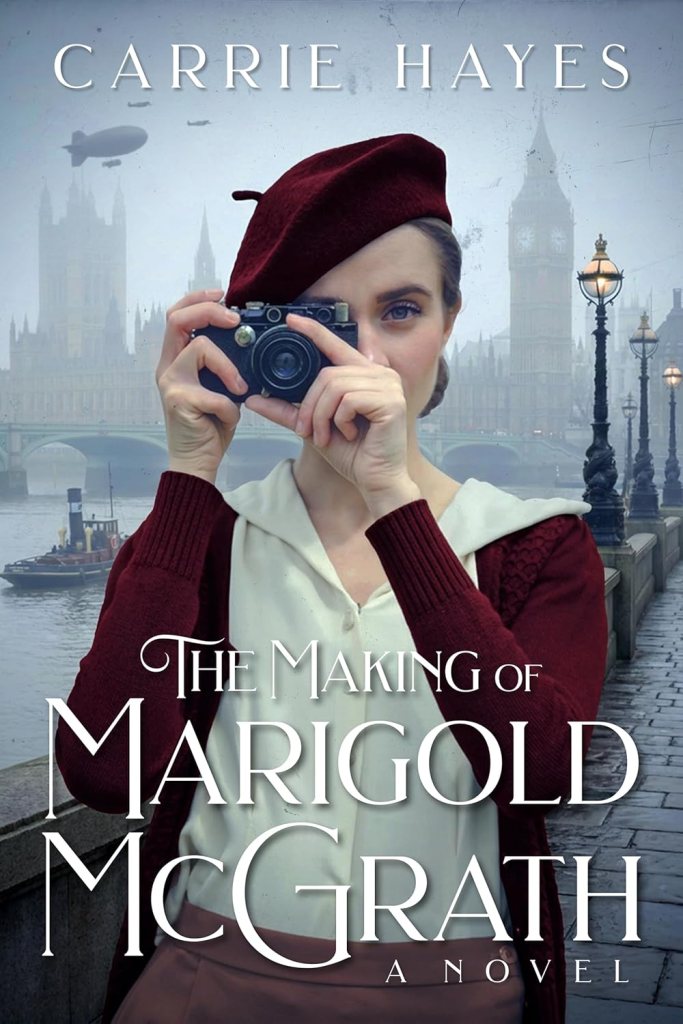

The Making of Marigold McGrath by Carrie Hayes

Universal Buy Link: https://books2read.com/u/388dyw

This book is available to read on Kindle Unlimited.

I would like to thank Carrie Hayes, HTPH Press, and the Coffee Pot Book Club for allowing my readers to have access to this excerpt from Carrie’s latest novel.

Blurb:

New York City, 1937. Seventeen-year-old Marigold McGrath is coming undone.

Her mother is dead. Her father is drawn to dangerous politics. The only place she feels joy is behind a camera — where she can frame the world on her own terms.

After a series of her own missteps, she reinvents herself in London: mentored by a celebrated émigré photographer, photographing Kindertransport children, working alongside Edward R. Murrow. She falls in love with Joop, a charming Dutch student, and shrugs off the war gathering around her.

Then the Blitz begins.
Joop vanishes into the Dutch Resistance. And Marigold — who has always preferred to photograph the world as she wishes it were — must finally decide what kind of woman, and what kind of witness, she is willing to become.

A sweeping WWII coming-of-age novel set in wartime London.

For readers of Kristin Hannah, Kate Quinn, and SL Beaumont’sThe War Photographers

Excerpt :

Running through Central Park, ice skates flopping on her shoulders, Marigold slowed to catch her breath. She studied the bridge and the frozen pond. Tall buildings framed the naked trees. Sunshine shone low behind them, casting deep shadows on the snow. She pulled at her left mitten with her teeth and unbuttoned her coat. Inside was her Brownie. It was one of the new ones, with a bellows that folded. She fumbled with its case, groaning at the other mitten hindering her efforts. At last, at last, she looked down into the lens. She moved the aperture slowly to the left and then dialed it back a fraction to the right. The trees, the light, buildings and snow.

She pressed the button and wound the film.

“Gotcha!” Pink mittens wrapped around her eyes.

Marigold staggered forward. “Trude!” She laughed and turned. “Say cheese.”

Trude put her arm in the air, a teasing coquette bundled in scarves with a pompom hat tied under the chin. Marigold blew on her fingers and moved the aperture a fraction one way, then she moved it the other. The light had changed, and Trude was in shadow. Marigold took the picture.

Then as quickly as she’d appeared, Trude ran over the bridge toward the pond. “Last one there’s a rotten egg!”

A dozen other skaters moved across the ice. Girls and boys about their own age, mostly from the neighborhood. Marigold hopped on one foot and then the other. Her earmuffs just weren’t doing the trick and inside the mittens her fingers felt frozen. Trude spread a small blanket onto the snow and patted the spot next to her. “Come on, Mari, you’ll feel so much better when you’re skating.”

Marigold doubted that very much. Lacing up her skates felt like torture and she willed her knees to stop shaking. She watched Trude expertly wrap the laces around her own slim ankles then tie a knot, tucking the laces inside the socks peeping above her skates. Trude clambered onto her knees and stood to make her way to the pond. In a single move she was gliding across the ice, and then crowed, “Haha!” Somehow Trude’s fluid grace made everything seem effortless.

Marigold watched her turn a flawless figure eight as boys skated around her and everything sparkled. “Come on, Mari!” Trude waved her over.

Marigold muttered under her breath, come on, come on, chiding herself not to be so awkward, then responded, “I’m coming!” She took a deep breath and imagined herself the world-renowned figure skating movie star Sonja Henie. She extended her arms as she stepped onto the ice. But her left leg slowly slid out from her while her right leg began to move forward. Marigold’s top half suddenly felt heavy. She waved her arms, her skates stepping forward and backward, her ankles wobbling.

“You can do it,” Trude pirouetted beside her.

“I know, I know I can do it,” Marigold’s heart began thumping. The other skaters danced along the ice.

Trude whispered, “Bend your knees.”

But Marigold’s knees collapsed, pulling her bottom as if by a magnet. “I’m falling though, I am.”

“No, you’re not.” Trude held out her hand, waiting.

“I am, oh my goodness.” It was difficult to breathe, and she was suddenly warm. Her hands met the ice and her feet surrendered.

Trude still waited. “Come on, I’ve got you.” She pulled Marigold up and placed her arm around her waist, then said, “Oh look. There’s Will Carrington with a swishy, dishy friend.”

Marigold froze in horror. Why was she such a klutz?

The boys called from across the ice. “Hello, Fräuleins.”

Trude smiled and called, “Morgen, Herr Carrington. Wie gehts? Why don’t you introduce us to your friend?”

Eagerly the boys skated over. Will said, “This is Chip.” 

Chip stopped in front of her, the edge of his skates making a smooth spray of ice. He held his hand out to Marigold. “You can hang on to me if you want. I’ll teach you to skate.” He placed an arm round her waist. She leant against him and he led her across the pond. Perhaps she’d be Sonja Henie after all.

“What grade are you in, Marigold?” Chip’s eyes were heavily fringed and he had a cleft in his chin.

“I’m a senior.”

Smiling, he picked up speed. “Me, too. Is this your first time on the ice?”

“Kind of.” She thought it best not to say that despite years of lessons, she was just a lousy skater. “Where do you go to school, Chip?”

“I’m at Lawrenceville. You know, in New Jersey. It’s a good place, not as many…” He gestured to a couple arguing in Yiddish. “People like that. As in New York.”

Marigold looked up at him again. She hoped he didn’t have the same lapel pin as her dad. Well, she thought to herself, at least he was handsome. Soon the streetlamps were lit. It was time to go home.

“Let’s go to my place,” Will offered. He lived in a brownstone only a block away. Everyone agreed and they went to his house, dumping their coats and skates upon ancient Chinese chairs just inside the door.

The half dozen guests traipsed upstairs, and Will procured some cocoa and cups on a tray from the housekeeper.

“Where is everybody?” Trude asked, by which she meant Will’s younger brothers.

“At the movies with Nanny.” He smiled wickedly. “Come on, let’s play a game.”

Out came a box from under the bed, inside of which was a bottle of rum. Shouts of approval went around as he generously poured it into the cups of hot chocolate. Some of the boys skipped the hot chocolate and drank the booze neat, laughing as it burned their throats and rendered them speechless.

“Let’s play records,” Trude said. Will agreed and she chose the very latest from his collection. A trumpet opened the refrain, soulful and longing, echoed by the orchestra. A man began to sing,

I’ve flown around the world in a plane,

I’ve settled revolutions in Spain, and the North Pole I have charted,

Still, I can’t get started with you . . .

Chip took Marigold’s hand. “May I?”

She moved toward him. His shoulders were square and he swayed as he danced, brushing against her. Marigold stepped closer, sensing the rise of his chest, the flatness of his stomach. She forgot having been frozen and grew toasty from the rum and Chip’s handsome touch. Resting her head upon his shoulder she saw a mouse scurry across the floor. She stifled a gasp. If there was a time not to mind the mice at Will’s house, this was the time. But the mix of the rum, her desire, and the mouse made her woozy.

“’Scuse me!” She squirmed away and stumbled to the powder room. She ran the water and rubbed her face, then looked at herself in the mirror. There was a knock on the door.

“Can I come in?” It was Trude, who promptly lifted her skirt and sat on the toilet. “Did you see the mouse?”

Marigold shuddered. “You know I did.”

Trude finished and joined her at the mirror. “That Chip seems to like you.”

Marigold flicked some water at her friend. “How would you know?”

“Because I have eyes in the back of my head.” Trude refreshed her lipstick and handed it to Marigold. “I’m a regular spy.” She then dropped her voice, “You know, like Mata Hari.”

Marigold studied her now vibrant mouth. “I can’t believe you’re leaving me.”

“Oh, you’ll be fine.”

“I won’t be able to go skating.” The thought of days without Trude felt intolerable.

“Yes, you will.” Trude gestured to Marigold’s lower lip. “You need a bit more.”

Obediently, Marigold reapplied it.

Trude said, “Ask Chip. It’ll be the Ice Capades before you know it.”

Marigold decided not to share what she thought about Chip, murmuring, “And my only model will be my mother.”

“But’s she’s a wonderful model.”

“It’s not the same.” Movies without Trude, skating without Trude, soda fountains without her. Marigold gave herself a little shake. The fresh lipstick would look terrible if she began to cry.

Trude took off her glasses and wiped them with a handkerchief. “You’ll just have to come and visit.” She gave Marigold a cheesy smile in the mirror and held out her hand. “Come on. Back to the party.”

“I don’t want to go out there.” Marigold sighed. “I really hate mice.”

Praise:

“I read a lot of historical novels … this one was one of my favorites. From the characters to the setting to the actions depicted I thoroughly enjoyed the journey—I really didn’t want it to end!
~ Netgalley Review 5*

“The Making of Marigold McGrathby Carrie Hayes is the tale of a well to do American seventeen year old sent to Europe just prior toWorld War II. The book isexquisitely writtenwith a well paced dialogue. The characters are well formed and interesting. Sprinkled throughout the book are bits from news outlets that help set the larger context for the reader – they are well timed and helpful.Great read,well worth it!
~ Goodreads Review 5*

“The Making of Marigold McGrath explores a rarely examined aspect of WWII: the complex journeys to maturity ofyoung adults in war-torn Europeas they seek human connection and meaning. Marigold finds both, using her skills as a photographer to document the stories of refugee children. With gobs ofhistorical referencesandvivid imagery, interlaced withintrigueandromance, The Making of Marigold McGrath is agreat read!
~ Goodreads Review 5*

This book is available to read on Kindle Unlimited.

Carrie Hayes

Author Bio:

Carrie’s first two novels, Naked Truth or Equality and Well Dressed Lies, follow the lives of the iconoclastic suffragist sisters, Victoria Woodhull and Tennessee Claflin.

Carrie lives with her husband and two spoiled dogs in a rambling Victorian house just outside of New York City.

Author Links:

Website: www.carriehayeswrites.com

Facebook: https://www.facebook.com/carrie.hayes.984

Instagram: https://www.instagram.com/carriehayes1964/

Book Bub: https://www.bookbub.com/authors/carrie-hayes

Amazon Author Page: https://www.amazon.com/stores/Carrie-Hayes/author/B083R8LZQQ

Goodreads: https://www.goodreads.com/author/show/3487483.Carrie_Hayes

Substack Infrequent Newsletter: https://substack.com/@hayesc

oOo

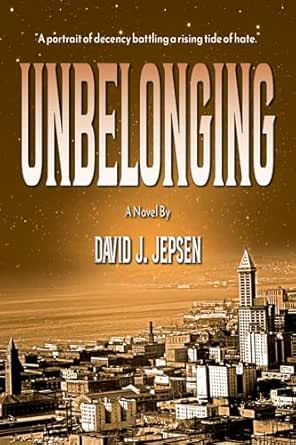
Unbelonging by David J. Jepsen

Universal Buy Link: https://books2read.com/u/38o1n7

I would like to thank historian David Jepsen, Historium Press, and the Coffee Pot Book Club for allowing me to share an excerpt from David’s latest novel, Unbelonging, on my website.

Before we jump in, here’s a rundown of what the novel is about:

Seattle, 1945. The war is ending-but for many, the hardest battles are just beginning.

In a city transformed by global conflict, four families struggle to find their place amid rising tensions, buried prejudice, and shifting identities. Victory overseas has brought hope, but at home, fear, suspicion, and inequality continue to shape everyday life.

A female defense worker, newly awakened to injustice, risks everything as she steps into the dangerous world of labor activism-threatening not only her future, but the safety of those she loves. A decorated Black war hero returns home expecting honor and opportunity, only to face a different kind of battlefield, where racism and exclusion deny him the freedoms he fought to defend. A Japanese American, released from internment, discovers that the end of war does not mean the end of hatred, and that rebuilding a life in a community that no longer trusts him may be the greatest challenge of all. A hopeful British war bride arrives chasing the promise of a new beginning, only to learn that the American dream is complicated, fragile, and not equally shared.

As labor strikes ripple through the city, racial tensions simmer, and the first shadows of Cold War hysteria begin to take hold, Seattle reveals itself as a place both beautiful and deeply divided. Old prejudices harden even as new voices rise, demanding change.

This powerful, emotionally charged novel strips away the myth of an open and enlightened city, exposing the human cost of exclusion and the quiet courage of those who refuse to accept it.

A sweeping story of resilience, identity, and the search for belonging-welcome to the City on the Sound, where no one is quite sure where they belong.

Praise:

“Just a great read and anyone who picks it up is guaranteed to learn a thing or two: from Guadalcanal to local labor disputes.”

~ Mr. K, Amazon 5* review

Today’s excerpt:

“Mrs. Novak,” Judge Long said at last. “Police took your daughter, Natalie, and five other youth into custody last night in Volunteer Park. They violated the ten o’clock curfew for children under sixteen. Two adult males were also arrested. Most of them appeared to be intoxicated. Did you know the whereabouts of your daughter last night?”

“I didn’t know anything until a juvenile officer called me, your honor. Natalie wasn’t home when I returned from work. That’s when I called Holy Names, and learned she’d skipped school.”

“You work at Boeing, I understand.”

“Yes, your honor.”

“Mrs. Novak, I have tremendous respect for defense workers. They’re doing a great service in this country’s battle against tyranny. I’ve also come to accept, although reluctantly, that many women need to work these days. Unmarried women, divorced women, women who depend on a paycheck for rent and groceries. But I’m having a hard time understanding why you work. From what I can tell, your situation is far from desperate. You own a home in a nice neighborhood. Your children attend private school. Your husband is a commissioned officer in the Navy. He likely sends home most of his monthly paycheck. What do you need that is more important than your children?”

Joanne said nothing, looking at Judge Long. There’s that question again. One her mother made a point of asking almost daily. The fact is, I’m not sure anymore. Initially it was about patriotism, my love for this country, and a desire to support my husband. But I work now. I love it. I’m good at something besides cooking pork roast and cleaning house.

“Mrs. Novak, are you okay?”

“Yes, your honor, sorry.”

Long sat back and folded his arms across his chest. “So I ask again. Is money so important that your children have to return from school to an empty house?”

Why does he think this is about money? Yes, I earn more than most women. But it was never about money. This is another kind of need, a deeper one that I can’t fully understand, let alone explain to a judge. Some internal force is pulling me away from the life I always wanted or thought I wanted. It was enough at least for a while, until I discovered the world outside. Until I saw the endless possibilities waiting to be picked like apples from a tree. The transformation has altered the landscape of my life. It is like the eastern winds that blow down the Cascades every summer, stirring the dust, bending the poplars. How can I explain that to this judge?

“Mrs. Novak! I haven’t got all day,” Long snapped.

Joanne looked at the judge and around the courtroom. How long had she been standing there?

“Again, I apologize, your honor. I choose to work because. . .”

“Mrs. Novak, I don’t care why you work. My chief concern is for the welfare of your daughter and the dozens of other youth I see in here almost every day. Whether you want to buy a new dress or pearl necklace. . .”

“Your honor! I’m not buying . . .”

“Don’t interrupt me, Mrs. Novak. You have a fine daughter here, why are you letting her out at night, getting into the backseat of cars with boys, or should I say men? She’s a minor and . . . “

“I know how old my daughter is, your honor.”

“The facts say you don’t. When you’re at work, your children are coming home to an empty house. Some people think older kids don’t need as much attention, so it’s okay if Mom gets a job. But young people – these so-called eight-hour orphans – need someone to talk to about their day. They have problems at school, and need help with their homework.”

“I help them with their homework, your honor. They’re good students and good kids.”

“I’m sure they are, Mrs. Novak, but this recent event is troubling. “

Long returned his attention to the report, tapping his fingers on the desk while reading through the facts one more time. “Mrs. Novak,” he said, looking up. “As this is Natalie’s first offense, we’re going to drop the charges and hope we don’t see her in here again. Meantime, I suggest you rethink your priorities. Natalie will be released to you in about an hour. You’ll need to take her to the doctor to be tested for VD.”

VD? Did she hear that right, venereal disease? The words wouldn’t register. “Your honor, Natalie is a good Catholic girl. She’d never. . . “

“Mrs. Novak, do you know how many good Catholic girls I see in this courtroom? VD doesn’t care if you’re Catholic or Jewish, or where you worship. There’s practically a VD epidemic raging in the city. For your information, when police arrived at the park, Natalie was in the backseat of a car with an adult male. He’s now sitting in King County jail. Police waited until Natalie dressed before she could exit the vehicle. See a doctor, Mrs. Novak.”

Universal Buy Link: https://books2read.com/u/38o1n7

David J. Jepsen

Author Bio:

David J. Jepsen is a historian, writer and educator teaching Pacific Northwest and U.S. history at Tacoma Community College. His novel about racial and labor conflicts in Seattle following WW II, titled Unbelonging, was released in April 2026.

He was lead author of Contested Boundaries: A New Pacific Northwest History (John Wiley and Sons, 2017), and he wrote and directed the award winning documentary Labor Wars of the Northwest, nominated in 2019 for Best Feature Film Made in Washington by the Gig Harbor Film Festival.

David writes a weekly post for the Washington State Historical Society titled “This Day in Washington.” He holds a master’s degree in history and a bachelor’s in communications from the University of Washington.

He lives with his wife, Jackie, in Gig Harbor, WA.

Author Links:

Website: https://davidjjepsen.com/

Facebook account: https://www.facebook.com/david.j.jepsen.2025/

Facebook author page: https://www.facebook.com/profile.php?id=61569571076494

Instagram: https://www.instagram.com/djjepsen

Historium Press author page: https://www.historiumpress.com/david-jepsen

LinkedIn: https://www.linkedin.com/in/david-jepsen-386b5b14/

Goodreads: https://www.goodreads.com/author/show/15496682.David_J_Jepsen

To read more excerpts, follow along the blog tour below:

oOo