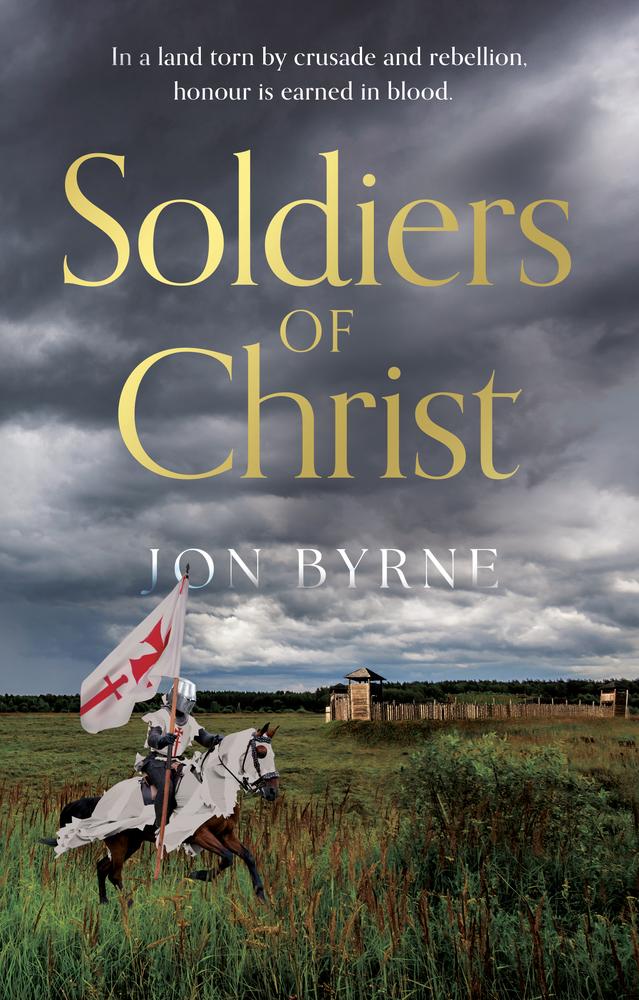
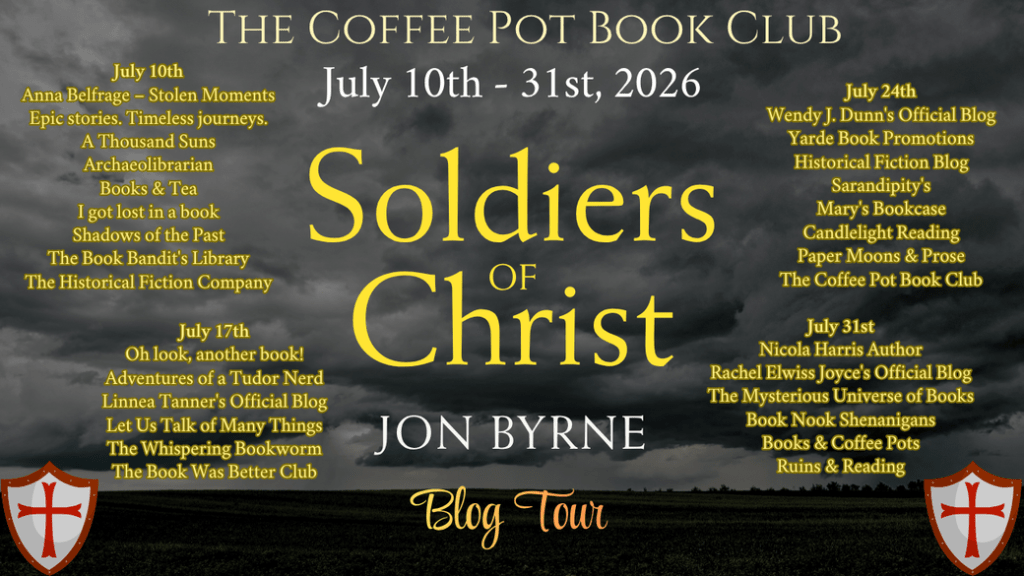
A review of Soldiers of Christ by Jon Byrne

Buy Links:

Universal Buy Link: https://books2read.com/u/bz0eaZ

Google Play: https://play.google.com/store/books/details?id=uQnLEQAAQBAJ

Kobo: https://www.kobo.com/gb/en/ebook/soldiers-of-christ-1

I would like to thank Jon Byrne, the Book Guild, and the Coffee Pot Book Club for providing me with a review copy of Soldiers of Christ. As always, this is an entirely honest assessment, regardless of the complimentary copy. This review contains no spoilers.

This is a rip roaring read following the life of Richard Fitz Simon, an exiled Norman noble who flees England to join a German brotherhood of warrior monks. It is a well researched novel and an exciting, full‑blooded story.

I loved the fight scenes, the rivalry and jealousy among the brothers, the flashes of humour, and Richard’s deadly enemies. I loved to hate Bishop Albert and Richard’s master and Knight‑brother Rudolf, and don’t get me started on the sneaky, treacherous Wolfgang. So much of this felt real as I read it, especially the squabbles, revenge, and corruption. It was all so human and gritty, which is what I enjoy in a novel.

The descriptions of battles and hand‑to‑hand combat made me feel the exhaustion and the pain the characters would have endured. There is plenty of tension, romance, and adventure throughout. It is well written, clearly researched, and full of energy.

I’ve given it four stars because it’s a strong, well researched novel that’s full of action and dark. Which I love.
Blurb:

In a land torn by crusade and rebellion, honour is earned in blood.

1205. Richard Fitz Simon has fled England after his title was usurped, joining the Livonian Order of Swordbrothers – a German brotherhood of warrior-monks fighting to bring the word of God to the pagan frontier. After slaying the Lithuanian champion at the Battle of Rodenpois, Richard is celebrated by the Order and their Semigallian allies.

Yet his position remains precarious. Jealous rivals question his right to stand among the brotherhood, and his master, Knight-brother Rudolf, is enraged by Richard’s disobedience. When dark secrets from Lübeck resurface, Richard also finds himself at odds with Bishop Albert, head of the Christian mission in Livonia. As he struggles to reconcile faith, duty and identity, he is drawn into a brutal world of suspicion and bloodshed.

Sent on an expedition to build a castle deep in the wilderness, Richard soon sees tensions erupt – and the path he has chosen threatens to destroy everything he has fought to become.
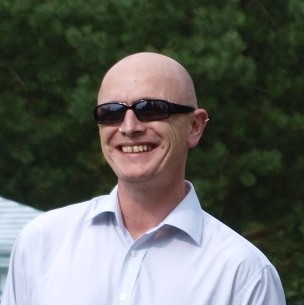
Jon Byrne

Author Bio:

Jon Byrne, originally from London, now lives with his German family by a lake in Bavaria with stunning views of the Alps. As well as writing, he works as a translator for a local IT company and occasionally as a lumberjack. He has studied the medieval world for over twenty years, building up a comprehensive personal library and a particular interest in the often-overlooked Northern Crusades.

Soldiers of Christ is Book Two of The Northern Crusader Chronicles, a gritty, historically grounded series focused on realism, moral ambiguity, and the brutal realities of medieval warfare.

Written for readers who value authenticity and atmosphere over romanticised adventure, the novel explores a largely forgotten crusading frontier, culminating in the first of many confrontations in a harsh wilderness of forest and swamp.

Readers who enjoy the historical detail of authors such as Bernard Cornwell, Conn Iggulden, or Ben Kane may find familiar ground here.

Author Links:

Website: https://www.jonbyrnewriter.com/

Facebook:  https://www.facebook.com/JonByrneAuthor

Amazon Author Page: https://www.amazon.co.uk/stores/author/B0DJC6PL8D

Goodreads: https://www.goodreads.com/book/show/249448581-soldiers-of-christ

Tour Schedule Page:

https://thecoffeepotbookclub.blogspot.com/2026/06/blog-tour-soldiers-of-christ-by-jon-byrne.html
oOo
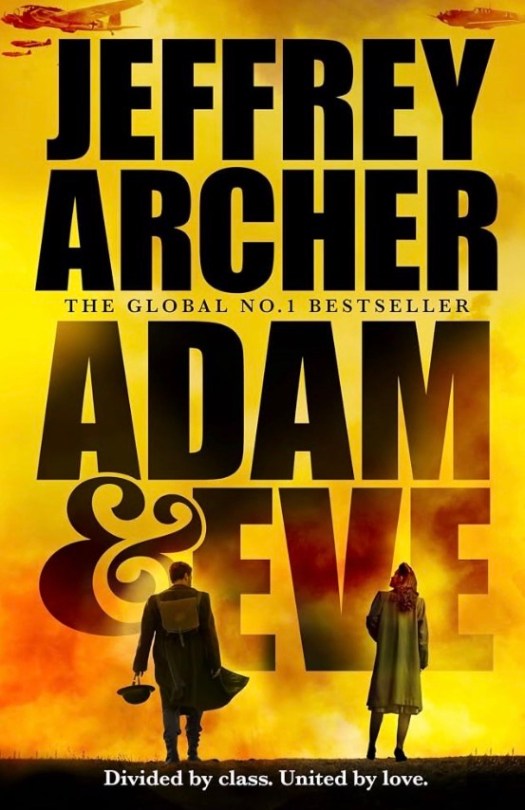
Adam and Eve by Jeffrey Archer

I would like to thank Jeffrey Archer, HarperCollins UK, and NetGalley for my advanced copy of Adam and Eve to review. As always, my review is entirely honest & there are no spoilers.

Screenshot

Book Blurb:

THE FINAL NOVEL FROM THE MASTER STORYTELLER

November 11th, 1918. As the guns of the Great War fall silent, two babies draw their first breath.

Eve is the daughter of an Earl. Adam, a shepherd’s son. Yet from their first meeting they form an extraordinary bond that neither privilege nor prejudice can break.

Then on a single September night in 1940, as Hitler prepares to invade the British Isles, their actions will change his mind. Determining not just their own futures but the fate of a nation.

They will show extraordinary courage. They will make unimaginable sacrifices. And the story of what they did will stay with you long after you’ve turned the last page.

From the broads of Norfolk to the beaches of Dunkirk, Adam & Eve is a breathtaking epic of courage, sacrifice, and love forged in Britain’s darkest hour.

‘If there were a Nobel Prize for storytelling, Archer would win’ Daily Telegraph

‘Archer is a master entertainer’ Time

‘Probably the greatest storyteller of our age’ Mail on Sunday

‘Peerless master of the page turner’ Daily Mail

Jeffrey Archer’s book ‘End Game’ was a Sunday Times bestseller.

My Review:

Adam and Eve starts with all the hallmarks of Jeffrey Archer’s usual strengths: pace, clarity, and a premise that promises moral tension. For most of the book, it’s competent, readable, and engaging enough. He breaks all the rules like the master storyteller he undoubtedly is.

My problem:

The first twist is where everything collapses. Archer tries to deliver a shock reversal, but it’s so implausible, so unbelievable, and so coincidental that I found myself shaking my head in disbelief.

Then a strange swap takes place, and instead of deepening the narrative, it cheapens it. Worse still, other twists pile on top of the first one, and each one is less believable than the first.

Why it didn’t work for me:

To be fair to Archer, all the signs are there from the start of the novel that the twists are possible. However, the issue for me was that I found them utterly unbelievable and the result felt contrived rather than clever.

My overall impression:

The book is readable; Archer always is, but the ending leaves a sour aftertaste. It’s hard to recommend a novel whose twists undermine the entire structure. Readers who enjoy neat reversals may tolerate it; anyone who values believable character development will likely find it frustrating.

My verdict:

This was a solid setup undone by twists that ask too much and delivers too little. This is a two-star review because I could not finish it.

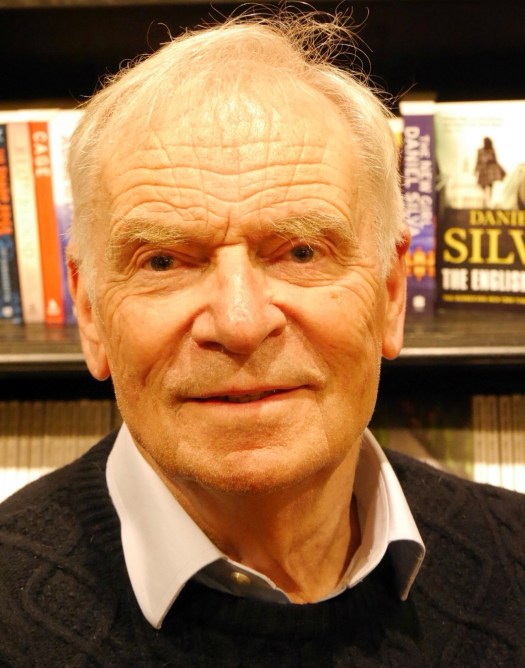
Jeffrey Archer: CC BY-SA 4.0

Jeffrey Archer is one of the world’s bestselling authors, with sales of over 275 million copies in 97 countries, and is the only author ever to have been a number one bestseller in fiction (twenty times), short stories (four times) and non-fiction (The Prison Diaries). He was born in London, and brought up in the West Country. He gained a Blue in Athletics at Oxford, was President of the University Athletics Club, and went on to run the 100 yards in 9.6 seconds for Great Britain in 1966. Jeffrey has served five years in the House of Commons as a Member of Parliament, and thirty years as a Member of the House of Lords. 

He has written 27 novels, 7 sets of short stories, 3 prison diaries, 3 plays (all of which have been performed in London’s West End) and a gospel. His first novel, Not a Penny More, Not a Penny Less was sold to 17 countries within a year. It was also made into a successful serial for BBC Radio 4, and was later televised in 1990 by the BBC. He won the Prix Relay du Roman d’Évasion, a prize that rewards a novel in which readers can ‘escape from everyday life’, for his novel Paths of Glory, and the Prix Polar International Prize for the best international thriller of the year, for his novel A Prisoner of Birth. The Clifton Chronicles, a series of seven novels published between 2011-2017, topped the bestseller lists around the world. 

Famous for his discipline as a writer who works on up to fourteen drafts of each book, Jeffrey also brings a vast amount of insider knowledge to his books. Whether it’s his own career in politics, his passionate interest in art, or the wealth of fascinating background detail – inspired by the extraordinary network of friends he has built over a lifetime at the heart of Britain’s establishment – his novels provide a fascinating glimpse into a range of closed worlds.

Jeffrey is also an amateur auctioneer, conducting up to 20 charity auctions a year. He has been married to Dame Mary Archer, Chair of the Science Museum Group, for 55 year, and they have two sons, two granddaughters and three grandsons. He splits his time between London, Cambridge and Mallorca – where he writes the first draft of each new novel. 

The fifth book In his new William Warwick novels – the first of which, Nothing Ventured, was published in 2019 – is NEXT IN LINE which was published in September 2022. 

www.jeffreyarcher.com 

This book will be published in October 2026 and is available for pre-order.

oOo

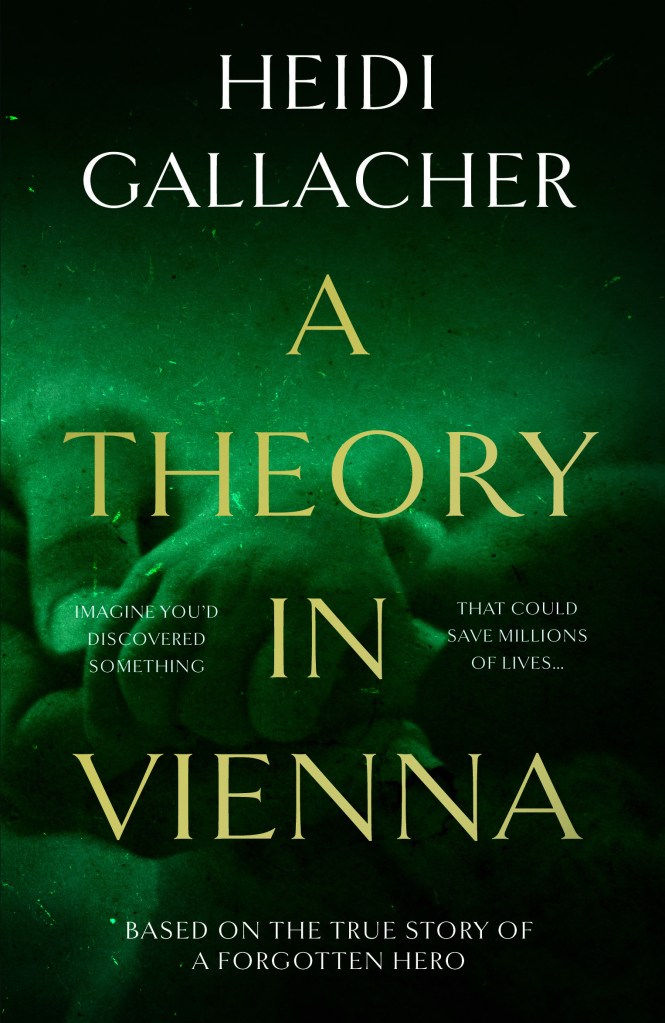
An Interview with Heidi Gallacher: A Theory In Vienna

Universal Buy Link: https://books2read.com/u/47aKa7

It’s my great pleasure to welcome Heidi Gallacher to my website to answer questions about her novel, A Theory in Vennia:

Tell us about your novel:

 The novel tells the story of Ignaz Semmelweis, a 19th-century doctor whose simple, lifesaving discovery was ignored in his own lifetime. My interest was piqued when I came across him during my research for a previous historical novel.

 So, set against the emergence of modern medicine, A Theory in Vienna follows a man who proves something undeniable, yet who lacks the language, authority and cultural awareness needed to be believed. At its heart, the book isn’t just about medical history; it’s about what happens when the truth arrives too early. It explores obsession, resistance, and the quiet loneliness of being right in a world that isn’t ready to listen. Semmelweis’s story is tragic, but it’s also urgently human – a reminder that progress often depends as much on humility and courage as it does on evidence.

 Was there a part of Semmelweis’s struggle that resonated with you on a personal level? Did that connection change the way you wrote about him?

 Yes – what resonated most with me was the experience of not being heard, even when the evidence is clear. It’s probably happened to each one of us, at some time of our lives. Semmelweis’s struggle isn’t only about science; it’s about communication, timing, and the pain of watching something urgent fail to land. That connection shaped the way I wrote about him. I became less interested in presenting him as a flawless hero and more focused on his inner world – his frustration, his rigidity, and the ways his certainty both sustained and damaged him.

Semmelweis is often portrayed as a tragic figure. How did you approach writing a man whose brilliance and frustration shaped both his legacy and his downfall?

 I tried to resist the temptation to turn Semmelweis into either a martyr or a warning. His tragedy lies in the fact that his brilliance and his frustration were inseparable; the same intensity that allowed him to see what others missed also made it difficult for him to persuade them. He isn’t undone by ignorance alone, but by the way repeated resistance hardens him and isolates him. His discovery endures, but the human price he paid gives the story its emotional weight.

 Semmelweis fought for a truth no one wanted to hear. Have you ever had a moment in life where you’ve had to hold your ground in the face of doubt or resistance?

 Yes – though on a far smaller scale. What I recognised in Semmelweis was the quiet determination it takes to stay with an idea when external validation doesn’t arrive. There were moments while writing this book when I had to trust the story despite uncertainty and resist the urge to soften it to make it more palatable.

Three centuries passed from the first epidemic of childbed fever until the early 1900s. More lives were lost across the world from this fever than lives were lost in all of the wars during that time.

 If you could sit with Semmelweis for five minutes, as a woman and a writer, what would you want to ask him or tell him?

 I would want to tell him that the women he fought for are no longer invisible – that their tragic lives are now understood as the true measure of his work. As a writer, I’d ask whether he ever sensed the cost of being right, and whether he would still have chosen that path knowing where it led.

 What do you hope modern readers will take away from A Theory in Vienna, especially in a world that still debates science, evidence and public health?

 I hope readers come away with a renewed sense of attentiveness – to small actions, to overlooked voices, and to the quiet ways care can save lives. Semmelweis’s insistence on something as simple as handwashing reminds us that progress often arrives through everyday acts of responsibility and compassion. More than anything, I hope the book leaves readers feeling that change is possible – and that listening, humility, and care still matter.    

Blurb: Imagine you’d discovered something. Something that could save hundreds of thousands of lives. But they wouldn’t let you tell anyone. Wouldn’t it drive you mad?

 Young Hungarian doctor Ignaz Semmelweis uncovers the real reason thousands of young women are dying after childbirth. Yet, in mid-19th-century Europe, his simple methods are ridiculed. Semmelweis faces the battle of his life to convince others that the cause is simple…

Based on the true story of a forgotten hero, A Theory in Vienna brings the remarkable story of this man to life.

‘I bring to light a truth, which was unknown for many centuries with direful results for the human race.’ – Ignaz Philipp Semmelweis.

Heidi Gallacher 

Author Bio:

Heidi was born in London in the Sixties. She grew up in South Wales, UK and moved to Paris as a young adult where she taught English for two years. She currently lives in Switzerland and recently completed an MA in Creative Writing.

 Her first short story was published in Prima magazine (UK) in 2018. Heidi now writes historical fiction. Her first novel, Rebecca’s Choice is set in Tredelerch â€“ an old house in Wales that belonged to her family generations ago. This novel won an award from The Coffee Pot Book Club in 2020, Debut Novel Bronze Medal.

 Her second novel, A Theory in Vienna, is set in 19th century Vienna and Budapest. It tells the incredible story of unsung hero Ignaz Semmelweis, whose life-saving discovery was ridiculed at the time.

 Heidi enjoys travelling (the further North the better!), singing and writing songs, and spending time reading and writing at her Swiss chalet where the views are amazing.  

 Author Links:

 Author Page on Publisher’s Website: https://bookguild.co.uk/our-authors/heidi-gallacher

Twitter / X: https://x.com/heidigallacher

Facebook:  https://www.facebook.com/Deejotix

Instagram:  https://www.instagram.com/gallacherauthor

Threads: https://www.threads.com/@gallacherauthor

Pinterest: https://pin.it/6KRlgRXOb

Amazon Author Page: https://www.amazon.co.uk/stores/Heidi-Gallacher/author/B08192R91P

Goodreads:  https://www.goodreads.com/user/show/86827681

Buy Links:

Universal Buy Link: https://books2read.com/u/47aKa7

The Book Guild Buy Link: https://bookguild.co.uk/bookshop/historical/a-theory-in-vienna  

oOo