
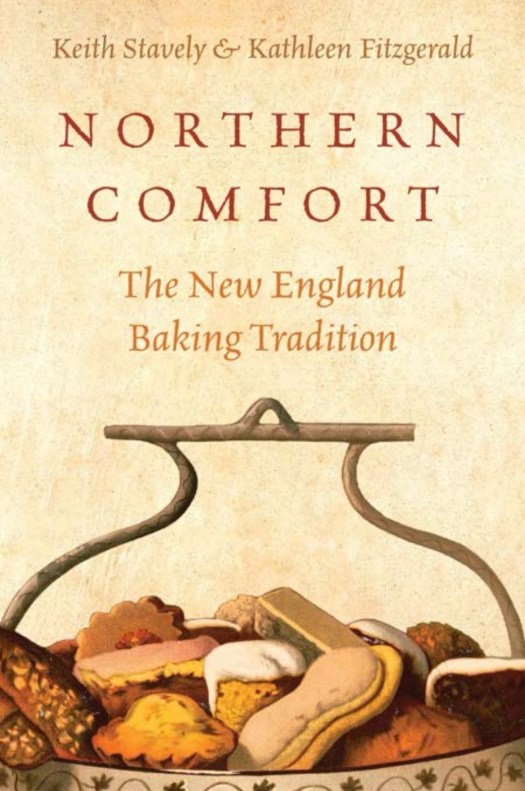
I would like to thank Keith Stavely and Kathleen Fitzgerald, and NYU Press, for sending a copy of Northern Comfort to review. As always, my thoughts are entirely honest. This title will be released on November 3rd, 2026, and is available to preorder on Amazon.
I have lived in the United States and can honestly say that some of the best food I have ever tasted came from this part of the US. I am a history lover too, so I thoroughly enjoyed this read.
Northern Comfort is a thoughtful and well researched exploration of early New England foodways, written with the quiet authority that comes from deep archival work. It is not simply a cookbook but a walk through the lives of early settlers, and a study of food in its full cultural, social, and historical context. For anyone interested in American history, this perspective is essential.
Stavely and Fitzgerald trace how ordinary meals shaped identity, community, and belief in a region often defined by restraint and practicality. Their focus is not on recipes alone but on the cultural meaning behind them: the influence of Puritan values, the tension between Old World habits and New World realities, and the way domestic labour created the rhythm of everyday life.
The authors write with clarity and care, weaving social history, material culture, and culinary tradition into a narrative that feels both scholarly and accessible. They show how food reflected class, religion, and aspiration, and how the simplest dishes carried the weight of a community’s ideals. It is a book for readers who enjoy understanding the past through the details of daily living, and for anyone interested in how identity is shaped not only by grand events but by the quiet rituals of the table.
The recipes are given in both weights and cups, but here are a few tips for readers unfamiliar with American measurements. American recipes often call for butter sticks: one stick is 113 g of butter. All‑purpose flour is the American name for British plain flour, with no raising agents added. Our self‑raising flour is plain flour with baking powder already mixed in, so use this when the recipe is for cakes, scones, muffins, and other bakes that rely on chemical leavening. Molasses is simply black treacle.
It is worth noting that the book is light on photographs, and those included are in black and white. This does not diminish the quality of the research, but readers expecting extensive visual material should be aware.
A solid, intelligent piece of historical nonfiction. Four stars.
oOo
 Nicola Harris