Avoiding Indie Author Scams – What to watch out for:

Scammers are getting smarter, but indie authors can stay one step ahead by spotting the red flags early. Let’s talk about how to keep your inbox—and your creative energy—safe from people who want to rip you off.

Photo by Mikhail Nilov on Pexels.com

 Why Indie Authors Are Targeted:

Indie authors like us are often juggling writing, marketing, social media and publishing all on our own. That makes us prime targets for scammers who know we’re hungry for visibility, reviews, and opportunities. They swoop in with offers that sound too good to take up, and it’s easy to be fooled if you are overworked and busy.

 Here are Common Scams to Watch Out For:

Over-the-top flattery: “Your book is perfect for our award!” or “We hand-selected your novel for our club.” If you never applied or submitted, it’s a scam. 

Fake famous author outreach: A “big name” author emails you saying they love your book. Spoiler: they don’t. Real authors don’t cold-email strangers.

Pay-to-play podcasts or interviews: Invitations to appear, but only if you pay a hefty fee.

Bogus review packages: Offers to flood your book with glowing reviews. Amazon and Goodreads don’t allow this, and you’ll risk your account.

High-priced event invites: “Exclusive industry conference” tickets that cost hundreds. Often, these events don’t exist.

Metadata audits and visibility reports: Scammers send confusing “diagnostics” claiming your book is at risk unless you pay for fixes.

Photo by Ku00fcbra Arslaner on Pexels.com

 Emotional Tricks They Use:

Scammers know authors are emotionally invested in their work. They exploit that by:

Hope: Promising awards, recognition, or significant exposure.

Urgency: “Act now or lose readers!”

•  Fear: “Your account is at risk.”

Confusion: Overloading you with jargon-filled reports.

If you feel your emotions spiking while reading an email, pause. That’s often the scammer’s hook.

Photo by http://www.kaboompics.com on Pexels.com

 How to Protect Yourself

•  Check credentials: Google the company or person. If they don’t exist online, that’s your answer.

•  Be sceptical of unsolicited offers: Real opportunities usually come through channels you’ve applied to and are trusted.

•  Don’t pay upfront: Legitimate services are transparent about costs and contracts.

•  Lean on trusted communities: Groups like the Society of Authors or the Authors Guild regularly post scam alerts.

Remember the golden rule: If it feels too good to be true, it probably is.

Photo by Pixabay on Pexels.com

 Final Thoughts:

Being indie means wearing many hats, but it doesn’t mean you have to face scammers alone. Stay sharp, trust your instincts, and keep your focus on what really matters—your writing. The best defence is a mix of scepticism, community support and blocking. 

Community Support:

https://writerbeware.blog This is a website that lists the latest author scams and shows screenshots of the messages and approaches that scammers are using and how to avoid them. I have found this site extremely useful.

STOP PRESS! One of the latest scams is where someone contacts you to request a PDF of your book, which they then post on a pirate book site. Thanks to historical fiction author Elizabeth Kelly for this warning. 

Sources:

oOo

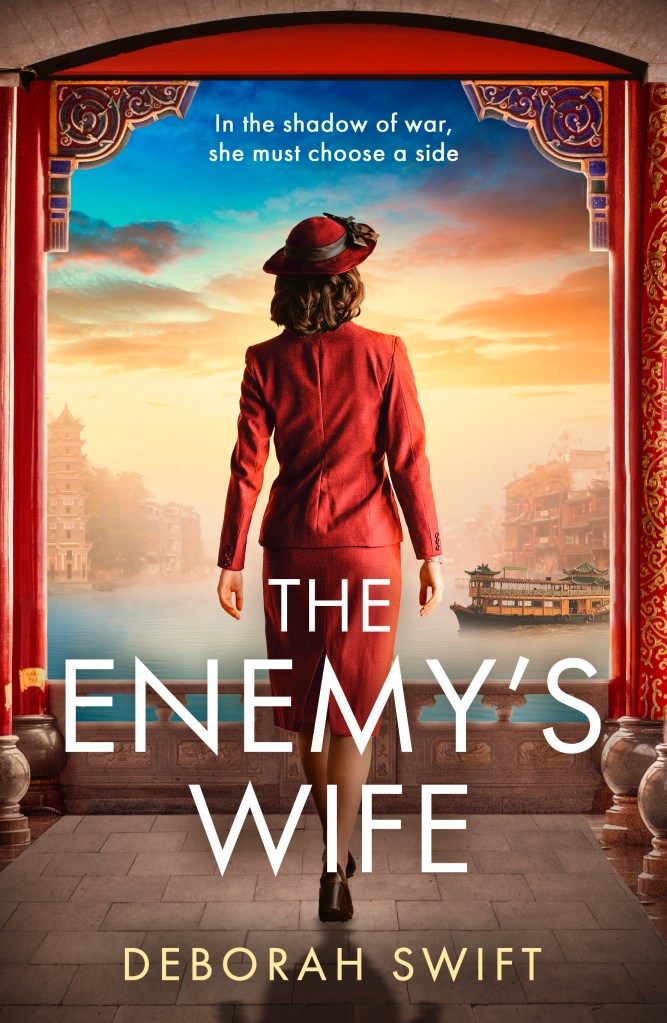
The Enemy’s Wife – An Interview with Deborah Swift

Universal Buy Link: mybook.to/EnemysWife

I’m pleased to host Deborah Swift on the Historical Ink Pot today for a discussion about her new novel, The Enemy’s Wife.
‘A fast-paced, beautifully written, and moving story. Refreshing to read a book set in a different theatre of war. Wartime Shanghai jumped off the page’ CLARE FLYNN

 A poignant story of the impossible choices we make in the shadow of war, for fans of Daisy Wood and Marius Gabriel.

 1941. When Zofia’s beloved husband Haru is conscripted into the Imperial Japanese Army, she is left to navigate Japanese-occupied Shanghai alone.

 Far from home and surrounded by a country at war, Zofia finds unexpected comfort in a bond with Hilly, a spirited young refugee escaping Nazi-occupied Austria.

 As violence tightens its grip on the city, they seek shelter with Theo, Zofia’s American employer. But with every passing day, the horrors of war and Haru’s absence begin to reshape Zofia’s world – and her heart.

 Can she still love someone who has become the enemy?

Readers love The Enemy’s Wife:

‘A gorgeous novel that will truly pull at your heartstrings‘ CARLY SCHABOWSKI

 ‘I loved The Enemy’s Wife – a gripping, fast-paced and evocative story about the Japanese occupation of Shanghai during WW2 – and really rooted for the brave and selfless central character, Zofia. Highly recommended’ ANN BENNETT

 ‘Such an emotional and moving read, grounded in immaculate research that never overshadows the heart of the story’ SUZANNE FORTIN

Welcome Deborah, tell me what first drew you to this particular historical moment and the real events that underpin the story?

In my previous book, Jewish refugees who arrived from Eastern Europe, ended up in Japan. But what happened to them then?  The research told me that they were moved again after the events of Pearl Harbor, to Shanghai. The more I read about wartime Shanghai, the more interesting it got – it was such a melting pot of cultures and loyalties.

I remembered wartime Shanghai from the film, Empire of the Sun, and decided to set the book in the International Settlement which featured in the film. This was the Western city within a city, an island dominated by the British and American businessmen and ruled by an Anglo-American council. Shanghai was known as the ‘Pearl of the Orient’ for its wealth, its bustling port, its Hollywood-esque film industry, and luxurious lifestyle. South of the settlement was the French Concession, where many wealthy ‘Shanghailanders’ lived in palatial houses waited on hand and foot by the much poorer Chinese population. In the book, one of my characters, Theo, lives here.

Surrounding the settlement was the Chinese nation controlled by the Chinese central government in Nanking, but there were many anti-government rebels too, and a lot of corruption. I wanted to tell the story of what happened when China and the settlement was invaded by the Japanese. Zofia married her Japanese husband before the war, and suddenly finds she has become the wife of the enemy.
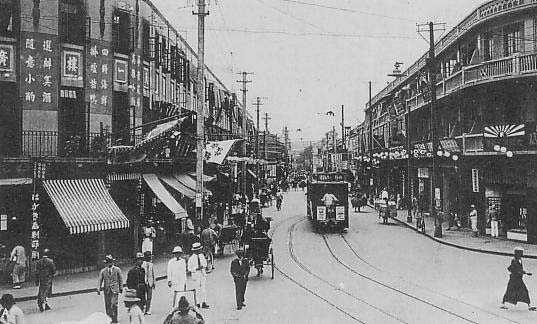
Your books involve complex cultural and political settings. How do you approach research to ensure authenticity without overwhelming the narrative?

The story is king, and all the research I do is to support the story. It is never just ‘background.’  For example, I needed a hub where poor people and rebels against the government in Shanghai might meet and exchange news, so I initially thought of a doctor’s waiting room. However, doctors had been culled by the communist regime, so it had to be a pharmacy. This led me to research and write scenes set in a Chinese traditional pharmacy – something I would never have thought of doing without the research. But the scenes were driven by the plot needing some place people could meet to exchange views on politics and the changing regime. I researched what that might be, and ended up with a pharmacy, which was in fact much more interesting as a setting. 

For broader political background, I read widely around the subject, and hope that the reading gives me ‘authority’ in the voice, even if all the facts I’ve discovered don’t end up on the page.

War and displacement put enormous pressure on relationships. What interests you most about writing characters whose loyalties are tested by circumstance?

I suppose it is that they could be us. I am of a culture and a generation that has not had to deal with war, and yet by writing the books I am constantly asking ‘in that situation, what would I do?’ Perhaps I am practising for the event – I hope not. 

People who have different ideologies can think they have nothing in common until those ideologies are tested – and the reverse. You can think someone is not like you at all, until you stand in their shoes. Or you can think you are ‘on the same page’ until they do something you would never conceive of doing. Stress affects everyone in different ways, and if war is one thing, it is stress. These situations bring about enormous amounts of tension and that’s exactly what you need to keep a novel rolling along, and to keep the reader interested.
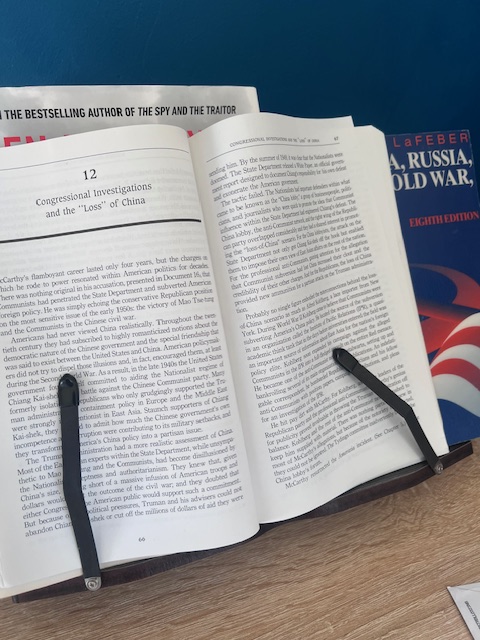
What was the best money you ever spent as a writer?

There are several things I can’t do without. First up – my bookstand! This allows me to prop open my research books on my desk as I’m typing. It really is one of the most useful things for a historical novelist, and costs peanuts. Second, the index tab stickers that you use to mark pages in books. Again, cost is negligeable, but I use them all the time to mark bits of research I need to keep. Third – a week away with writer friends. This is definitely the most expensive – but invaluable for keeping up with what’s happening in other parts of the publishing world, sharing experiences good and bad, and getting moral support from other writers who understand. Before going back to your lonely desk!
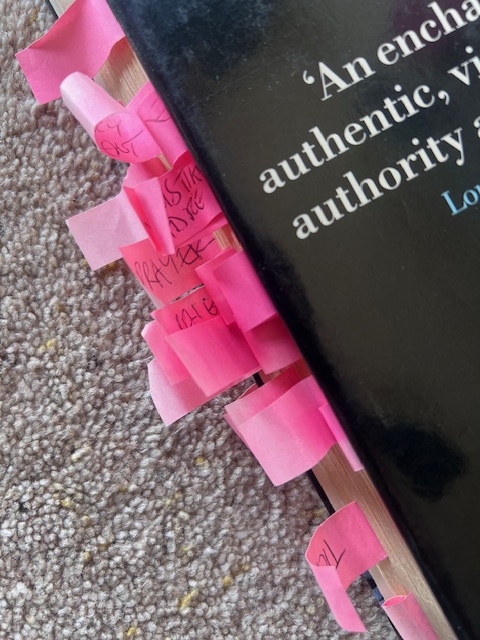
Looking ahead, what do you feel your next project might be?

I’m working on a sequel in which my two main characters, Theo and Zofia, think they are safe and happy in America. But even within a safe society, tensions can arise – particularly if you have come through Russia and China, during the Red Scare.

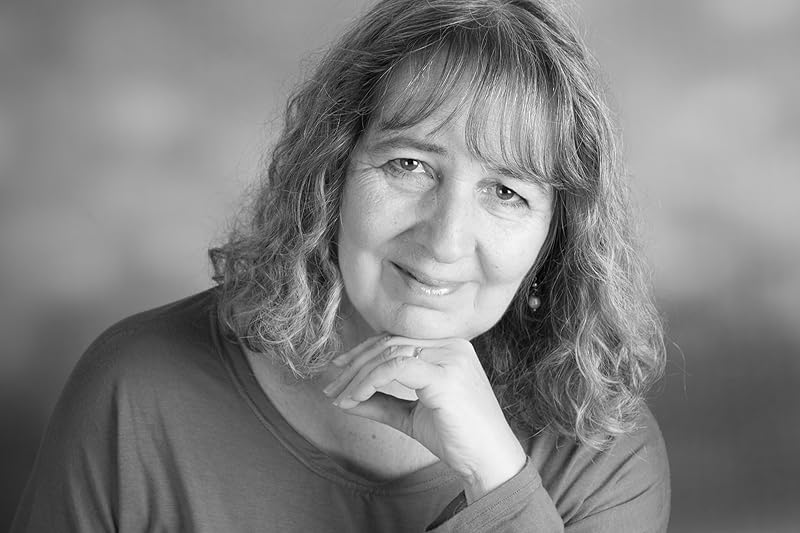
Deborah Swift

Author Bio:

Deborah used to be a costume designer for the BBC, before becoming a writer. Now she lives in an old English school house in a village full of 17th Century houses, near the glorious Lake District. Deborah has an award-winning historical fiction blog at her website www.deborahswift.com.

 Deborah loves to write about how extraordinary events in history have transformed the lives of ordinary people, and how the events of the past can live on in her books and still resonate today.

 Her WW2 novel Past Encounters was a BookViral Award winner, and The Poison Keeper was a winner of the Wishing Shelf Book of the Decade.

Author Links:

 Website: www.deborahswift.com

Amazon Author Page: http://author.to/DeborahSwift

Twitter / X: https://twitter.com/swiftstory

Facebook: https://www.facebook.com/authordeborahswift/

Pinterest: https://www.pinterest.co.uk/deborahswift1/

Bookbub: https://www.bookbub.com/authors/deborah-swift

TikTok: http://www.tiktok.com/@deborahswiftauthor

Trigger warnings: Murder and violence in keeping with the era.

Buy Links:

 Universal Buy Link: mybook.to/EnemysWife

 Amazon UK:  https://www.amazon.co.uk/Enemys-Wife-brand-new-historical-Survivors-ebook/dp/B0FB6HV6R6

 Amazon US: https://www.amazon.com/Enemys-Wife-brand-new-historical-Survivors-ebook/dp/B0FB6HV6R6

 Amazon CA: https://www.amazon.ca/Enemys-Wife-brand-new-historical-Survivors-ebook/dp/B0FB6HV6R6

 Amazon AU:  https://www.amazon.com.au/Enemys-Wife-brand-new-historical-Survivors-ebook/dp/B0FB6HV6R6

 Kobo: https://www.kobo.com/ww/en/ebook/the-enemy-s-wife

 Audio: https://www.audible.co.uk/pd/The-Enemys-Wife-Book-2-Audiobook/B0FWS1TN94
oOo

Why It’s So Hard to Edit Your Own Work? And the Tricks That Actually Help.

Photo by Connor Scott McManus on Pexels.com

When I hired an actress to record the audiobook of my first novel, For Now I Die, she spotted a couple of typos. I can’t tell you how many times I’d edited that book. That’s the point: I can be intimately so familiar with a text and still so completely blind to what’s actually on the page.

Writers like me don’t struggle to edit their own work because they’re careless.

They struggle because their brain is doing exactly what it’s designed to do to predict, fill in gaps, and conserve effort. And let’s face it, writing a novel is a huge undertaking.

By the time you reach the editing stage, your brain has already built a complete internal version of the piece: the meaning, the intention and the emotional logic. When you read your own writing, you’re not reading the words on the page. You’re reading the version in your head.

That’s why we can easily miss typos, clumsy phrasing, repeated words, and missing steps in our argument.

Your brain is “helping” you, but just not in the way you need.

So the real challenge isn’t editing. It’s breaking your own familiarity.

Here are the techniques that actually do work, the ones that force your brain to see the text as if it’s new:

Change the Colour of the Text:

This sounds trivial, but it’s one of the most effective tricks you can use.

When you change the colour, black to blue, blue to green, anything, your brain stops recognising the text as the same piece you drafted. It disrupts the visual pattern your mind has memorised.

Suddenly, the sentences look different, the spacing looks different, the rhythm feels different, and hopefully, the errors stand out.

It’s the closest you’ll get to reading your own work with fresh eyes.

Writers who do this swear by it, and for good reason.

It works because it forces your brain out of autopilot.

Photo by Florenz Mendoza on Pexels.com

Change the Font (Dramatically).

Not a polite shift from Times New Roman to Garamond.

A dramatic shift.

Try a heavy serif, a thin sans‑serif, a typewriter font or something slightly ugly.

The uglier the font, the more your brain pays attention.

Your mind can’t rely on its internal map when the text looks unfamiliar.

It has to read what’s actually there.

Print It Out

Paper breaks the spell.

On a screen, your brain knows the terrain too well.

On paper, the text becomes an object, something external, something you can mark, fold and scribble on.

Writers consistently catch more errors on paper than on a screen.

Photo by Natalia S on Pexels.com

Read It Out Loud.

When you read aloud, your brain is forced to process every word in sequence.

You’ll hear any awkward rhythms, missing words and any repetitions you didn’t notice

If you stumble, the sentence is wrong.

If you run out of breath, the sentence is too long.

Your voice will reveal what your eyes ignore.

Change the Layout, shift the margins, increase the spacing, turn paragraphs into single lines and put the whole thing into a narrow column.

Anything that changes the shape of the text forces your brain to stop predicting and start noticing.

Photo by Jessica Lewis ud83eudd8b thepaintedsquare on Pexels.com

Leave It Alone Long Enough to Forget It.

Distance is the closest thing you’ll ever get to objectivity.

A day helps, a week is better, and a month is ideal.

The longer the gap, the more the internal version fades and the more you can see the actual words.

Read It on a Different Device

Your brain associates each device with a different reading mode.

·         Laptop = drafting

·         Phone = scanning

·         Tablet = reading

·         Paper = editing

Use that to your advantage.

A piece you’ve stared at for days on a laptop will look and feel completely different on your phone.

Ask a Different Question.

Instead of asking, “Is this good?”

 Ask:

·         “Where does this drag?”

·         “Where am I feeling bored?”

·         “Where would my reader get lost?”

·         “What sentence is doing nothing?”

·         “What am I assuming the reader knows?”

The Truth about editing:

It’s difficult when you are managing such a huge body of work to sometimes see the woods for the trees, but there are programmes such as Scrivener that can help authors move chapters around. I am not affiliated with Scrivener in any way, but my point is that there are tools for authors that can help you jump between chapters and easily move them around without the fear of accidentally deleting some of your hard work.

Editing your own work is hard because your brain is doing its job of protecting meaning, filling gaps, and smoothing over imperfections. It is the part of my writing life that I personally dislike the most. I tend to write a chapter, then edit it as much as I can, but something always slips through. 

Every writer has a trick for seeing their work with fresh eyes. What’s yours? Mine is all of the above, and a teacher friend.

oOo

Free Resources Every Writer Should Know About 

Most writers are overwhelmed by ‘free’ advice and tools online. There is far too much advertising that claims to offer ‘free’ services that are, at best, just trials in disguise.

 I have found a few reliable, reputable resources that are safe, respected, and genuinely free. They are suitable for writers anywhere in the world and do not impose any regional conventions on spelling or punctuation.


OneLook Reverse Dictionary:

Every writer has moments when the right word refuses to appear. You know the meaning, you can feel the shape of the word, but your brain will not deliver it. OneLook Reverse Dictionary solves that problem.

You type a concept, a description, or even a vague idea, and it produces a list of words that match what you are trying to express. It is fast, accurate, and used by editors, journalists, and academics. It is one of the few writing tools that is both simple and genuinely helpful.

Reedsy Free Courses:

Reedsy offers a library of short, focused courses on writing, editing, publishing, and marketing. They are written by professionals, and they are genuinely free. No trial, no credit card, and no hidden upgrade.

The courses cover topics such as character development, plotting, worldbuilding, revision, and the realities of publishing. Each lesson is concise and practical. For new writers who want structure without being overwhelmed, this is one of the best free resources available. Anyone with an email address can sign up and receive the full course material. They work the same whether you are in the UK, Europe, Australia, or anywhere else. Reedsy’s courses are designed for a global audience.

They are one of the few writing‑education resources that are genuinely international and genuinely free.

British Library Digitised Manuscripts:

For writers who work with history, this is a treasure chest. The British Library has digitised a vast collection of manuscripts, letters, maps, and early printed books. All of it is free to view.

This resource allows writers to see primary sources directly rather than relying on secondhand summaries or low-quality images. Whether you write historical fiction, nonfiction, or simply want to understand how people wrote and thought in earlier centuries, this collection is invaluable.

The British Library’s Digitised Manuscripts site is full of amazing material, but it is not laid out like a modern browsing platform. It works best if you know how to approach it.

The search bar needs specific terms. It will not respond well to broad searches, so it helps to look up the name of a manuscript, a historical figure, or a date before you begin. Once you find an item, the catalogue page gives you a short description and a link to the images.

The real value is in the image viewer. You can zoom in very closely, move through the pages, and use thumbnails to jump around quickly. The quality is excellent and lets you see details you would never get from a printed reproduction.

It takes a little getting used to, but once you understand how the search and viewer work, the site becomes easy to handle and incredibly useful for anyone writing about the past.

 Final Thoughts

You do not need a complicated toolkit to become a better writer. You need clarity, practice, structure, and access to trustworthy information. These resources provide exactly that. They are safe, reputable, and genuinely free.

oOo

When to Stop Researching and Start Drafting Your Novel.

Photo by Yeu015fim u00c7olak on Pexels.com

My process:

I find that I have to totally immerse myself in my research when I write historical fiction. I like to read history books about the characters, and I study primary sources such as the letters and papers of Henry VIII. I find that I often fall asleep listening to history books on Audible as I try to see and understand the shape of my story.

I think about who the people are who changed the protagonist’s life and how they might see those people. Is this a thriller? Is this a tragedy? These are the sort of choices I like to think about in the early stages. How much do I tell my reader, and how much could I hide in plain sight? For me, this part is all about uncovering the bones of the story. I used to be a total pantster but the more I write, the easier I have found structure. I have ADHD, and so I can become pretty obsessive and hyperfocused. I have to set timers to make sure that I am eating and drinking properly and to rest my eyes.

The next stage is writing down each year and the important events that took place. I make so many messy notes, charts, and I travel to sites that inspire me to write. I take lots of photos to remind me of the atmosphere.

As much as I love to research, I know when it’s done. For me, it’s when I understand what happened, know where the best place to begin, and when I know what the characters mean to each other. Then I write about each character and what their motivation might be. At the moment, I am deep into the research of Catherine Howard, and for so long, I just could not see her motivation, let alone Lady Rochford’s. Then one day, it just came to me.

The next stage is rest. I just have a break and think about other things. It’s really important to be lazy because my unconscious mind is working hard behind the scenes. I go to my craft club and walk my dog on my mobility scooter. I will have sudden epiphanies out of nowhere. Such as the time I realised a character could have all the signs and symptoms of a clinical narcissist, and my reader might not recognise them, but they would know having such a cold husband did not make a happy marriage. I find that everyday events and conversations give me ideas, and I write them all down. Then, when I feel fired up to work off, I go to my writing/craft room.

For me, writing is for pleasure. I have no intention of wanting to be on TV or appear in my local newspaper. I am an introvert, and I really dislike social media too. I am too much of a private person for all of that nonsense. Only a select few friends even know that I write. Historical fiction is not a very profitable genre, but it’s where my heart has always been. Although I did write two cosy mysteries back in the days of NaNoWriMo. (National writing month).

How to know when to stop researching and start writing.

Writers who work use history, psychology, or write in any field that demands intellectual rigour know that research is not optional. It’s the foundation of their work. But there is a point at which researching stops serving the work and begins to smother it. It’s so easy to end up with immaculate notes and no book.

Many writers don’t recognise that moment when the drafting must begin because research can feel virtuous. It feels like diligence. It feels like “doing the job properly.” And if they are anything like me, they love to read about a particular era, visit all the sights, and if I’m not careful, it could be the moment my real work quietly dies.

The question is not how much research is enough. The real question is: when does research stop being research and start being avoidance?

Research is the opening argument, not the final word:

 Wayne C. Booth’s ‘The Craft of Research’ makes a point many writers conveniently ignore: research is meant to sharpen your questions, not deliver a perfect, airtight understanding before you begin.

Umberto Eco, in ‘How to Write a Thesis’, is even more direct by saying that writing must begin before you feel ready, because writing is part of the thinking process. I have to agree with him. It took years of absorbing Spanish culture before I even thought about writing Infidel, which is set in Spain. I certainly would not feel as comfortable writing a cowboy novel despite having lived in the United States because I know I have not absorbed the culture enough to understand all the nuances.

 If your research has given you a working grasp of the landscape, the tensions, the contradictions and the unanswered questions, then you have enough to begin shaping a narrative.

 Writers who wait for total mastery and perfection often never start.

 Repetition of research means that youve reached saturation:

Historians and researchers use the term saturation to describe the moment when new sources stop adding new insight. 

If you’re encountering the same facts, the same anecdotes, the same interpretations, you’re not deepening your understanding, you’re circling it.

At that point, it’s time to start drafting.

When research becomes avoidance:

 It can become so easy to choose a task that feels productive to avoid the one that actually matters. For writers, research is the most socially acceptable form of avoidance. It looks serious. It looks intellectual. It looks like work. But if you feel a quiet relief when you decide to “research a bit more,” that’s not diligence. That’s fear wearing a scholarly coat.

The blank page is a writer’s real work.

Research is only useful if it leads you back to it.

If you can explain it, you can write it:

 If you can explain something clearly, you understand it well enough to work with it. You don’t need encyclopaedic knowledge to begin drafting. You just need functional clarity. If you can talk through your premise, your historical moment, your character’s situation, or your thematic argument without checking your notes, you have crossed the threshold.

The gaps that remain will reveal themselves naturally in the writing.

And you will research those gaps with far more precision than you can from the outside.

Drafting is part of the research process:

I have found that writing clarifies what research actually matters to my work.

If you’re still trying to “finish” your research before you begin, you’re working against the grain of how serious nonfiction and historically grounded fiction are made.

The energy is telling you to move into drafting.

Writers who ignore that signal often end up with immaculate notes and no book. I know this from experience.