
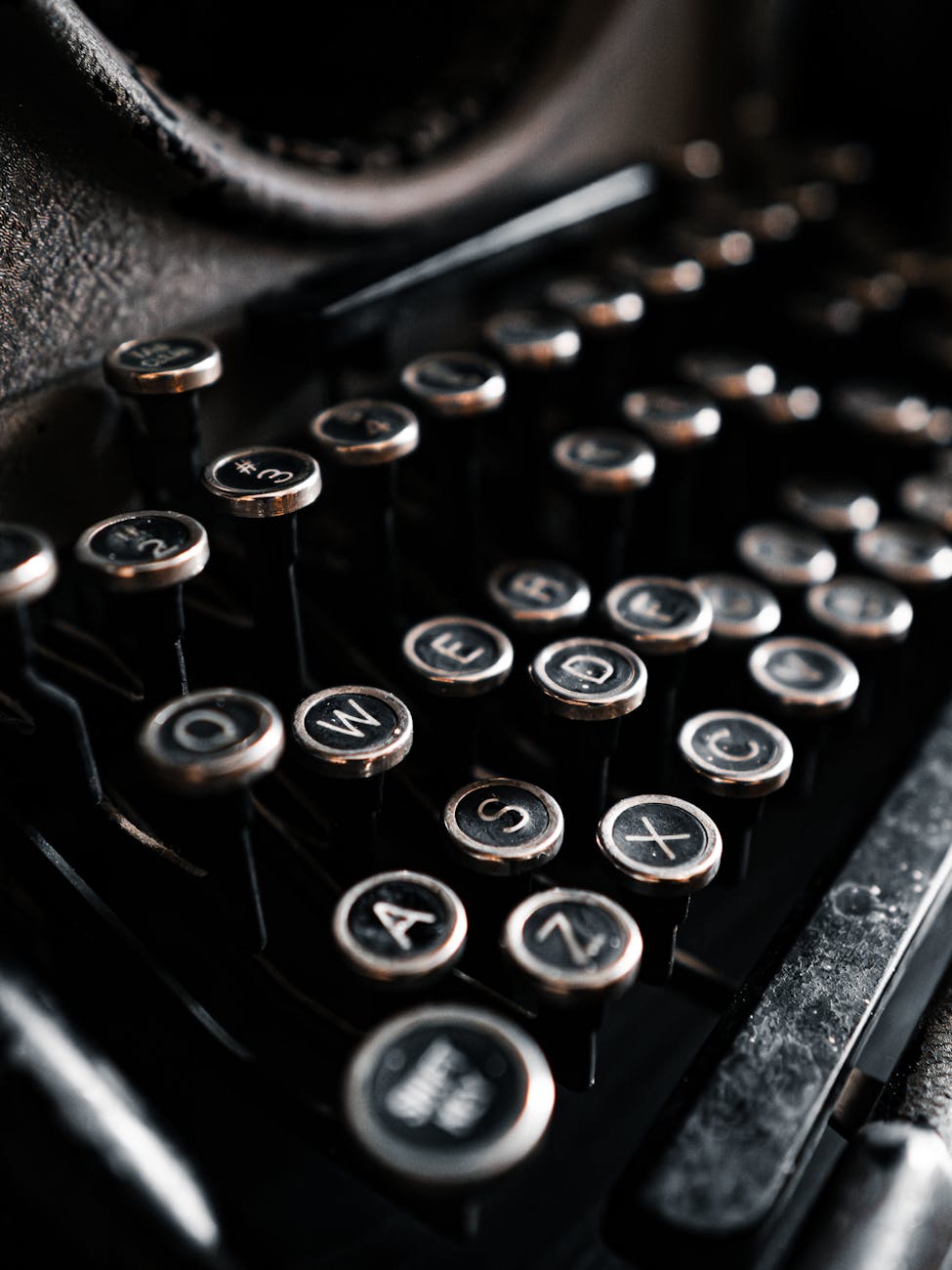
When I hired an actress to record the audiobook of my first novel, For Now I Die, she spotted a couple of typos. I can’t tell you how many times I’d edited that book. That’s the point: I can be intimately so familiar with a text and still so completely blind to what’s actually on the page.
Writers like me don’t struggle to edit their own work because they’re careless.
They struggle because their brain is doing exactly what it’s designed to do to predict, fill in gaps, and conserve effort. And let’s face it, writing a novel is a huge undertaking.
By the time you reach the editing stage, your brain has already built a complete internal version of the piece: the meaning, the intention and the emotional logic. When you read your own writing, you’re not reading the words on the page. You’re reading the version in your head.
That’s why we can easily miss typos, clumsy phrasing, repeated words, and missing steps in our argument.
Your brain is “helping” you, but just not in the way you need.
So the real challenge isn’t editing. It’s breaking your own familiarity.
Here are the techniques that actually do work, the ones that force your brain to see the text as if it’s new:
Change the Colour of the Text:
This sounds trivial, but it’s one of the most effective tricks you can use.
When you change the colour, black to blue, blue to green, anything, your brain stops recognising the text as the same piece you drafted. It disrupts the visual pattern your mind has memorised.
Suddenly, the sentences look different, the spacing looks different, the rhythm feels different, and hopefully, the errors stand out.
It’s the closest you’ll get to reading your own work with fresh eyes.
Writers who do this swear by it, and for good reason.
It works because it forces your brain out of autopilot.

Change the Font (Dramatically).
Not a polite shift from Times New Roman to Garamond.
A dramatic shift.
Try a heavy serif, a thin sans‑serif, a typewriter font or something slightly ugly.
The uglier the font, the more your brain pays attention.
Your mind can’t rely on its internal map when the text looks unfamiliar.
It has to read what’s actually there.
Paper breaks the spell.
On a screen, your brain knows the terrain too well.
On paper, the text becomes an object, something external, something you can mark, fold and scribble on.
Writers consistently catch more errors on paper than on a screen.

When you read aloud, your brain is forced to process every word in sequence.
You’ll hear any awkward rhythms, missing words and any repetitions you didn’t notice
If you stumble, the sentence is wrong.
If you run out of breath, the sentence is too long.
Your voice will reveal what your eyes ignore.
Change the Layout, shift the margins, increase the spacing, turn paragraphs into single lines and put the whole thing into a narrow column.
Anything that changes the shape of the text forces your brain to stop predicting and start noticing.

Leave It Alone Long Enough to Forget It.
Distance is the closest thing you’ll ever get to objectivity.
A day helps, a week is better, and a month is ideal.
The longer the gap, the more the internal version fades and the more you can see the actual words.
Your brain associates each device with a different reading mode.
· Laptop = drafting
· Phone = scanning
· Tablet = reading
· Paper = editing
Use that to your advantage.
A piece you’ve stared at for days on a laptop will look and feel completely different on your phone.
Instead of asking, “Is this good?”
Ask:
· “Where does this drag?”
· “Where am I feeling bored?”
· “Where would my reader get lost?”
· “What sentence is doing nothing?”
· “What am I assuming the reader knows?”
The Truth about editing:
It’s difficult when you are managing such a huge body of work to sometimes see the woods for the trees, but there are programmes such as Scrivener that can help authors move chapters around. I am not affiliated with Scrivener in any way, but my point is that there are tools for authors that can help you jump between chapters and easily move them around without the fear of accidentally deleting some of your hard work.
Editing your own work is hard because your brain is doing its job of protecting meaning, filling gaps, and smoothing over imperfections. It is the part of my writing life that I personally dislike the most. I tend to write a chapter, then edit it as much as I can, but something always slips through.
Every writer has a trick for seeing their work with fresh eyes. What’s yours? Mine is all of the above, and a teacher friend.
oOo
 Nicola Harris