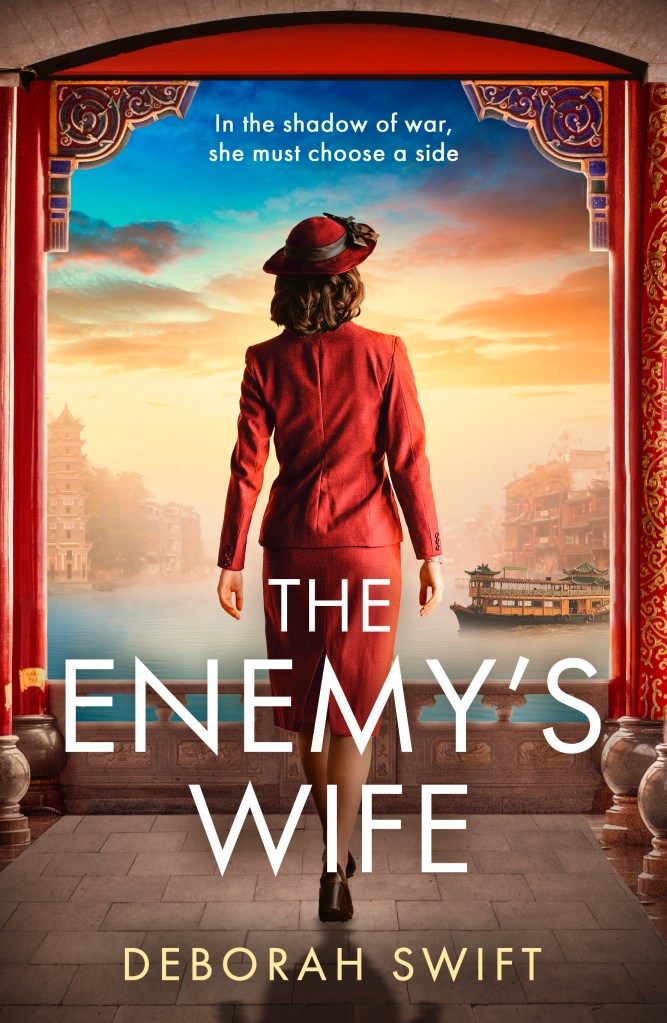
The Enemy’s Wife – An Interview with Deborah Swift

Universal Buy Link: mybook.to/EnemysWife

I’m pleased to host Deborah Swift today for a discussion about her new novel, The Enemy’s Wife.

Welcome Deborah, tell me what first drew you to this particular historical moment and the real events that underpin the story?

In my previous book, Jewish refugees who arrived from Eastern Europe, ended up in Japan. But what happened to them then?  The research told me that they were moved again after the events of Pearl Harbor, to Shanghai. The more I read about wartime Shanghai, the more interesting it got – it was such a melting pot of cultures and loyalties.

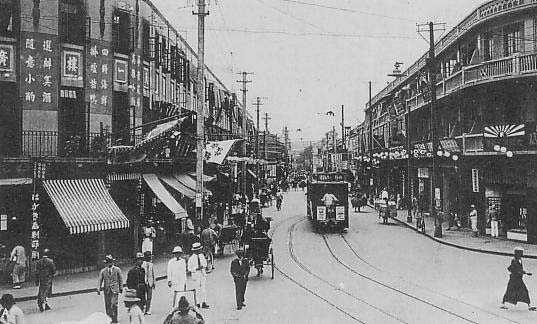
I remembered wartime Shanghai from the film, Empire of the Sun, and decided to set the book in the International Settlement which featured in the film. This was the Western city within a city, an island dominated by the British and American businessmen and ruled by an Anglo-American council. Shanghai was known as the ‘Pearl of the Orient’ for its wealth, its bustling port, its Hollywood-esque film industry, and luxurious lifestyle. South of the settlement was the French Concession, where many wealthy ‘Shanghailanders’ lived in palatial houses waited on hand and foot by the much poorer Chinese population. In the book, one of my characters, Theo, lives here.

Surrounding the settlement was the Chinese nation controlled by the Chinese central government in Nanking, but there were many anti-government rebels too, and a lot of corruption. I wanted to tell the story of what happened when China and the settlement was invaded by the Japanese. Zofia married her Japanese husband before the war, and suddenly finds she has become the wife of the enemy.
Your books involve complex cultural and political settings. How do you approach research to ensure authenticity without overwhelming the narrative?

The story is king, and all the research I do is to support the story. It is never just ‘background.’  For example, I needed a hub where poor people and rebels against the government in Shanghai might meet and exchange news, so I initially thought of a doctor’s waiting room. However, doctors had been culled by the communist regime, so it had to be a pharmacy. This led me to research and write scenes set in a Chinese traditional pharmacy – something I would never have thought of doing without the research. But the scenes were driven by the plot needing some place people could meet to exchange views on politics and the changing regime. I researched what that might be, and ended up with a pharmacy, which was in fact much more interesting as a setting. 

For broader political background, I read widely around the subject, and hope that the reading gives me ‘authority’ in the voice, even if all the facts I’ve discovered don’t end up on the page.

War and displacement put enormous pressure on relationships. What interests you most about writing characters whose loyalties are tested by circumstance?

I suppose it is that they could be us. I am of a culture and a generation that has not had to deal with war, and yet by writing the books I am constantly asking ‘in that situation, what would I do?’ Perhaps I am practising for the event – I hope not. 

People who have different ideologies can think they have nothing in common until those ideologies are tested – and the reverse. You can think someone is not like you at all, until you stand in their shoes. Or you can think you are ‘on the same page’ until they do something you would never conceive of doing. Stress affects everyone in different ways, and if war is one thing, it is stress. These situations bring about enormous amounts of tension and that’s exactly what you need to keep a novel rolling along, and to keep the reader interested.
What was the best money you ever spent as a writer?

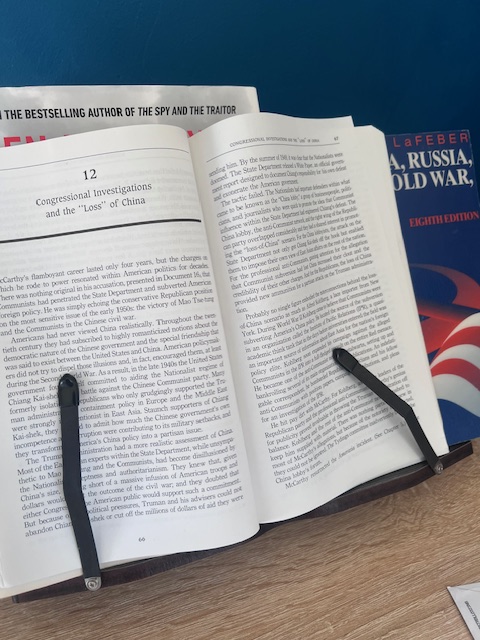
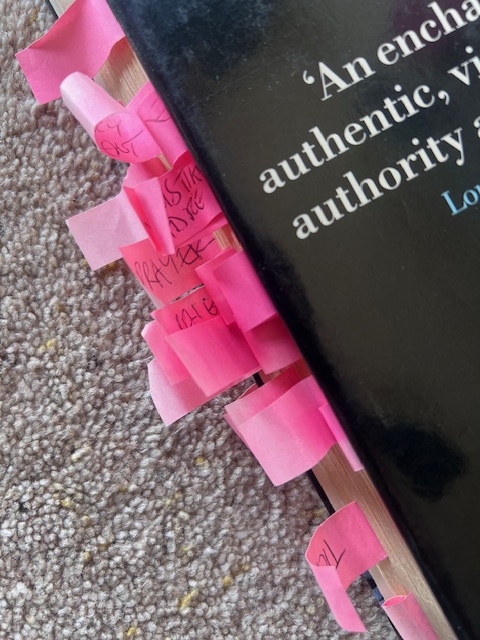
There are several things I can’t do without. First up – my bookstand! This allows me to prop open my research books on my desk as I’m typing. It really is one of the most useful things for a historical novelist, and costs peanuts. Second, the index tab stickers that you use to mark pages in books. Again, cost is negligeable, but I use them all the time to mark bits of research I need to keep. Third – a week away with writer friends. This is definitely the most expensive – but invaluable for keeping up with what’s happening in other parts of the publishing world, sharing experiences good and bad, and getting moral support from other writers who understand. Before going back to your lonely desk!
Looking ahead, what do you feel your next project might be?

I’m working on a sequel in which my two main characters, Theo and Zofia, think they are safe and happy in America. But even within a safe society, tensions can arise – particularly if you have come through Russia and China, during the Red Scare.

Praise and blurb:

‘A fast-paced, beautifully written, and moving story. Refreshing to read a book set in a different theatre of war. Wartime Shanghai jumped off the page’ CLARE FLYNN

 A poignant story of the impossible choices we make in the shadow of war, for fans of Daisy Wood and Marius Gabriel.

 1941. When Zofia’s beloved husband Haru is conscripted into the Imperial Japanese Army, she is left to navigate Japanese-occupied Shanghai alone.

 Far from home and surrounded by a country at war, Zofia finds unexpected comfort in a bond with Hilly, a spirited young refugee escaping Nazi-occupied Austria.

 As violence tightens its grip on the city, they seek shelter with Theo, Zofia’s American employer. But with every passing day, the horrors of war and Haru’s absence begin to reshape Zofia’s world – and her heart.

 Can she still love someone who has become the enemy?

Readers love The Enemy’s Wife:

‘A gorgeous novel that will truly pull at your heartstrings‘ CARLY SCHABOWSKI

 ‘I loved The Enemy’s Wife â€“ a gripping, fast-paced and evocative story about the Japanese occupation of Shanghai during WW2 – and really rooted for the brave and selfless central character, Zofia. Highly recommended’ ANN BENNETT

 ‘Such an emotional and moving read, grounded in immaculate research that never overshadows the heart of the story’ SUZANNE FORTIN
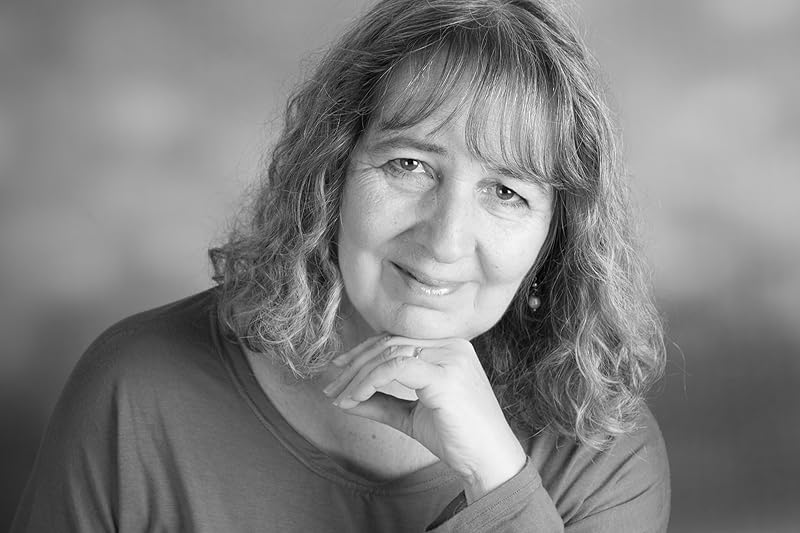
Deborah Swift

Author Bio:

Deborah used to be a costume designer for the BBC, before becoming a writer. Now she lives in an old English school house in a village full of 17th Century houses, near the glorious Lake District. Deborah has an award-winning historical fiction blog at her website www.deborahswift.com.

 Deborah loves to write about how extraordinary events in history have transformed the lives of ordinary people, and how the events of the past can live on in her books and still resonate today.

 Her WW2 novel Past Encounters was a BookViral Award winner, and The Poison Keeper was a winner of the Wishing Shelf Book of the Decade.

Author Links:

 Website: www.deborahswift.com

Amazon Author Page: http://author.to/DeborahSwift

Twitter / X: https://twitter.com/swiftstory

Facebook: https://www.facebook.com/authordeborahswift/

Pinterest: https://www.pinterest.co.uk/deborahswift1/

Bookbub: https://www.bookbub.com/authors/deborah-swift

TikTok: http://www.tiktok.com/@deborahswiftauthor

Trigger warnings: Murder and violence in keeping with the era.

Buy Links:

 Universal Buy Link: mybook.to/EnemysWife

 Amazon UK:  https://www.amazon.co.uk/Enemys-Wife-brand-new-historical-Survivors-ebook/dp/B0FB6HV6R6

 Amazon US: https://www.amazon.com/Enemys-Wife-brand-new-historical-Survivors-ebook/dp/B0FB6HV6R6

 Amazon CA: https://www.amazon.ca/Enemys-Wife-brand-new-historical-Survivors-ebook/dp/B0FB6HV6R6

 Amazon AU:  https://www.amazon.com.au/Enemys-Wife-brand-new-historical-Survivors-ebook/dp/B0FB6HV6R6

 Kobo: https://www.kobo.com/ww/en/ebook/the-enemy-s-wife

 Audio: https://www.audible.co.uk/pd/The-Enemys-Wife-Book-2-Audiobook/B0FWS1TN94
oOo
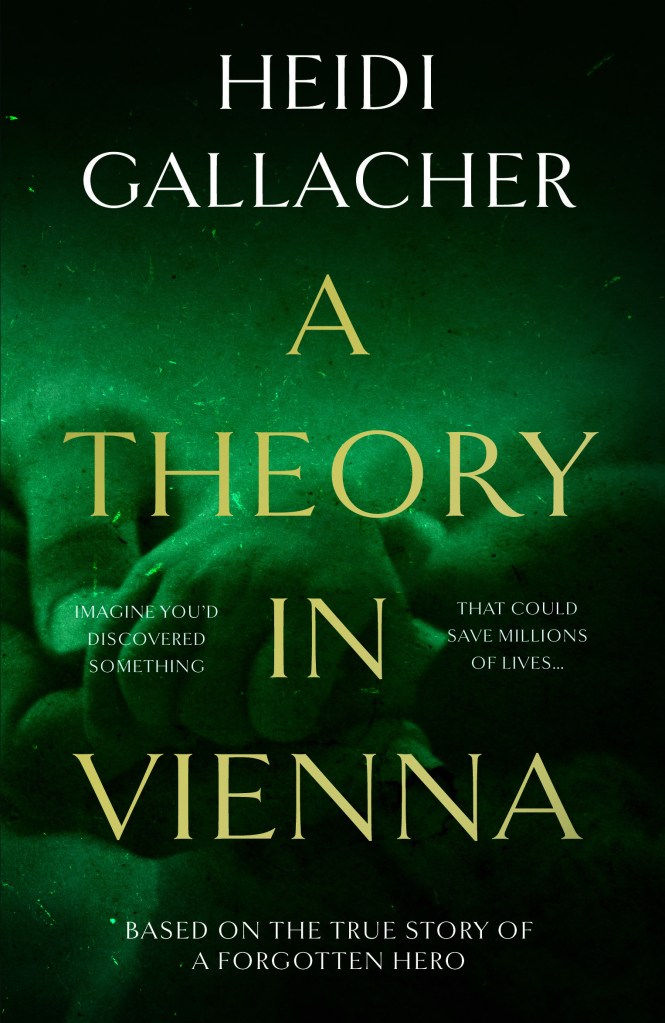
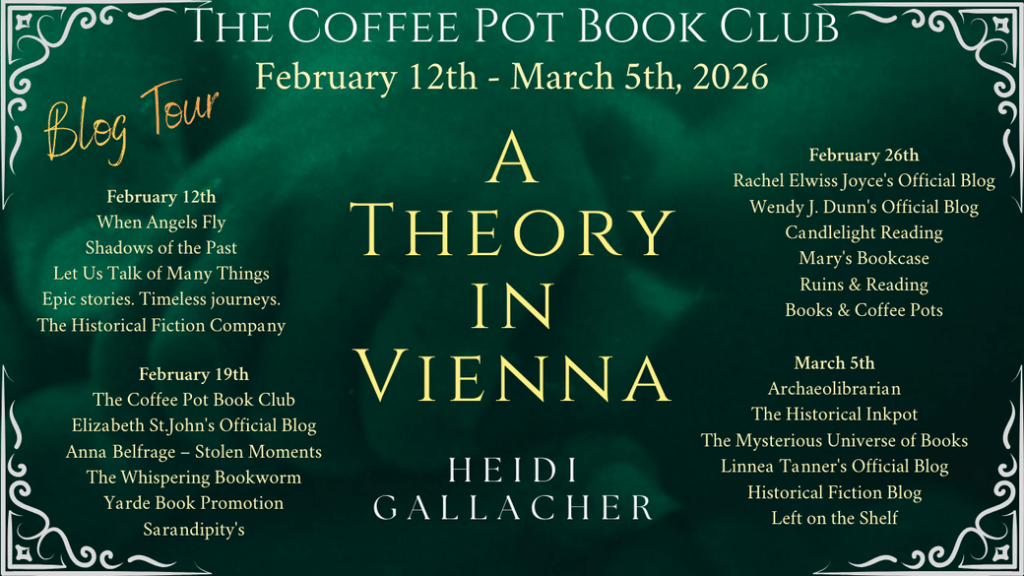
An Interview with Heidi Gallacher: A Theory In Vienna

Universal Buy Link: https://books2read.com/u/47aKa7

It’s my great pleasure to welcome Heidi Gallacher to my website to answer questions about her novel, A Theory in Vennia:

Tell us about your novel:

 The novel tells the story of Ignaz Semmelweis, a 19th-century doctor whose simple, lifesaving discovery was ignored in his own lifetime. My interest was piqued when I came across him during my research for a previous historical novel.

 So, set against the emergence of modern medicine, A Theory in Vienna follows a man who proves something undeniable, yet who lacks the language, authority and cultural awareness needed to be believed. At its heart, the book isn’t just about medical history; it’s about what happens when the truth arrives too early. It explores obsession, resistance, and the quiet loneliness of being right in a world that isn’t ready to listen. Semmelweis’s story is tragic, but it’s also urgently human – a reminder that progress often depends as much on humility and courage as it does on evidence.

 Was there a part of Semmelweis’s struggle that resonated with you on a personal level? Did that connection change the way you wrote about him?

 Yes – what resonated most with me was the experience of not being heard, even when the evidence is clear. It’s probably happened to each one of us, at some time of our lives. Semmelweis’s struggle isn’t only about science; it’s about communication, timing, and the pain of watching something urgent fail to land. That connection shaped the way I wrote about him. I became less interested in presenting him as a flawless hero and more focused on his inner world – his frustration, his rigidity, and the ways his certainty both sustained and damaged him.

Semmelweis is often portrayed as a tragic figure. How did you approach writing a man whose brilliance and frustration shaped both his legacy and his downfall?

 I tried to resist the temptation to turn Semmelweis into either a martyr or a warning. His tragedy lies in the fact that his brilliance and his frustration were inseparable; the same intensity that allowed him to see what others missed also made it difficult for him to persuade them. He isn’t undone by ignorance alone, but by the way repeated resistance hardens him and isolates him. His discovery endures, but the human price he paid gives the story its emotional weight.

 Semmelweis fought for a truth no one wanted to hear. Have you ever had a moment in life where you’ve had to hold your ground in the face of doubt or resistance?

 Yes – though on a far smaller scale. What I recognised in Semmelweis was the quiet determination it takes to stay with an idea when external validation doesn’t arrive. There were moments while writing this book when I had to trust the story despite uncertainty and resist the urge to soften it to make it more palatable.

Three centuries passed from the first epidemic of childbed fever until the early 1900s. More lives were lost across the world from this fever than lives were lost in all of the wars during that time.

 If you could sit with Semmelweis for five minutes, as a woman and a writer, what would you want to ask him or tell him?

 I would want to tell him that the women he fought for are no longer invisible – that their tragic lives are now understood as the true measure of his work. As a writer, I’d ask whether he ever sensed the cost of being right, and whether he would still have chosen that path knowing where it led.

 What do you hope modern readers will take away from A Theory in Vienna, especially in a world that still debates science, evidence and public health?

 I hope readers come away with a renewed sense of attentiveness – to small actions, to overlooked voices, and to the quiet ways care can save lives. Semmelweis’s insistence on something as simple as handwashing reminds us that progress often arrives through everyday acts of responsibility and compassion. More than anything, I hope the book leaves readers feeling that change is possible – and that listening, humility, and care still matter.    

Blurb: Imagine you’d discovered something. Something that could save hundreds of thousands of lives. But they wouldn’t let you tell anyone. Wouldn’t it drive you mad?

 Young Hungarian doctor Ignaz Semmelweis uncovers the real reason thousands of young women are dying after childbirth. Yet, in mid-19th-century Europe, his simple methods are ridiculed. Semmelweis faces the battle of his life to convince others that the cause is simple…

Based on the true story of a forgotten hero, A Theory in Vienna brings the remarkable story of this man to life.

‘I bring to light a truth, which was unknown for many centuries with direful results for the human race.’ – Ignaz Philipp Semmelweis.

Heidi Gallacher 

Author Bio:

Heidi was born in London in the Sixties. She grew up in South Wales, UK and moved to Paris as a young adult where she taught English for two years. She currently lives in Switzerland and recently completed an MA in Creative Writing.

 Her first short story was published in Prima magazine (UK) in 2018. Heidi now writes historical fiction. Her first novel, Rebecca’s Choice is set in Tredelerch â€“ an old house in Wales that belonged to her family generations ago. This novel won an award from The Coffee Pot Book Club in 2020, Debut Novel Bronze Medal.

 Her second novel, A Theory in Vienna, is set in 19th century Vienna and Budapest. It tells the incredible story of unsung hero Ignaz Semmelweis, whose life-saving discovery was ridiculed at the time.

 Heidi enjoys travelling (the further North the better!), singing and writing songs, and spending time reading and writing at her Swiss chalet where the views are amazing.  

 Author Links:

 Author Page on Publisher’s Website: https://bookguild.co.uk/our-authors/heidi-gallacher

Twitter / X: https://x.com/heidigallacher

Facebook:  https://www.facebook.com/Deejotix

Instagram:  https://www.instagram.com/gallacherauthor

Threads: https://www.threads.com/@gallacherauthor

Pinterest: https://pin.it/6KRlgRXOb

Amazon Author Page: https://www.amazon.co.uk/stores/Heidi-Gallacher/author/B08192R91P

Goodreads:  https://www.goodreads.com/user/show/86827681

Buy Links:

Universal Buy Link: https://books2read.com/u/47aKa7

The Book Guild Buy Link: https://bookguild.co.uk/bookshop/historical/a-theory-in-vienna  

oOo

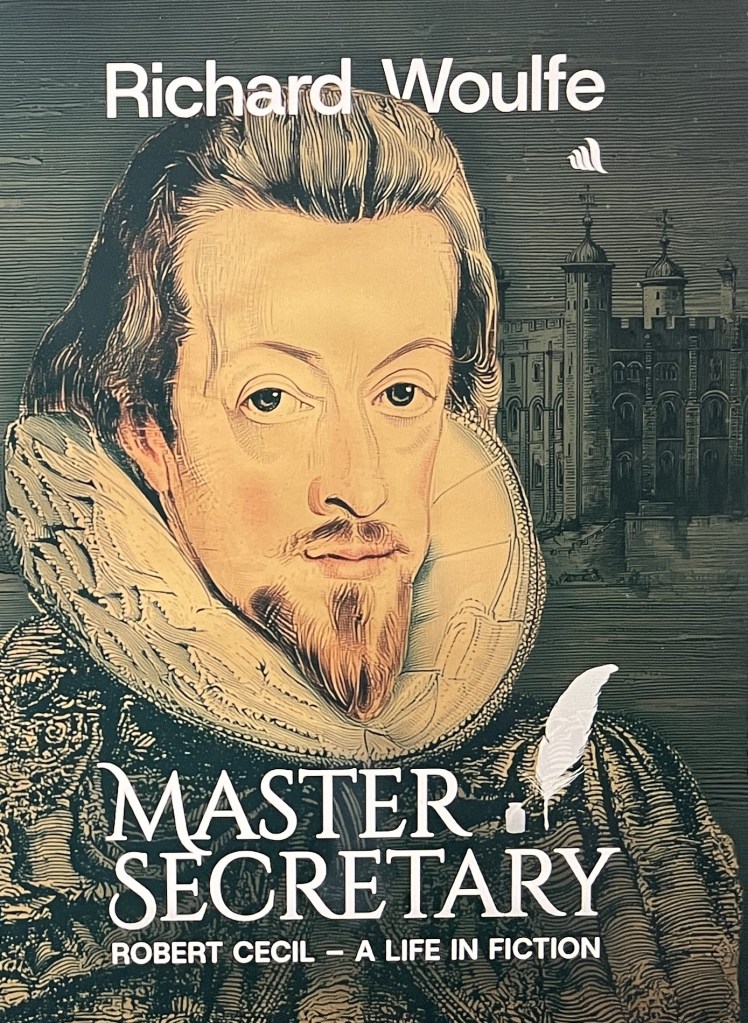
A new book launch: Master Secretary: Robert Cecil, A Life in Fiction, by Richard Woulfe.

Buy link: https://chiselbury.co.uk/shop/

Richard Woulfe has just published Master Secretary: Robert Cecil, A Life in Fiction, a new collection of stories centred on one of England’s most intriguing historical figures. It’s an exciting release, and I’m delighted to share the news with you.

“Statesman, strategist, survivor: Robert Cecil stood at the very heart of England’s transition from Tudor to Stuart rule. Hunched-backed and underestimated in an age hostile to disability, he rose to become Master Secretary to Elizabeth I and James I, suppressing the Essex Rebellion, foiling the Gunpowder Plot, and negotiating peace with Spain.

In this richly imagined sequence of eighteen interlinked stories, Cecil’s voice is joined by those of his family, allies, and adversaries—Elizabeth I, Anthony and Francis Bacon, Walter Raleigh, Ben Jonson, Arbella Stuart, and nameless spies and commoners whose lives brushed against his. From court intrigue to tavern gossip, from the grandeur of the Somerset House Peace Conference to a humble Limerick shop, these tales weave fact and fiction into a vivid portrait of one of history’s most remarkable political survivors.

Spanning his birth to his final conversation with the sculptor designing his tomb, Master Secretary opens a window onto the world Shakespeare inhabited—a world of politics and diplomacy, comedy and tragedy, faith and betrayal. Grounded in historical record yet alive with imagination, this is a compelling re-telling of the life of Robert Cecil: underestimated by many, unforgotten by all.”

Tell us about your book:

This is a cradle to almost-grave collection of stories relating to Robert Cecil, Secretary of State from 1586 to 1612, a role his father William Cecil had previously occupied. It begins on the day he was born, when William Cecil is trying to get home for news of the birth but is delayed by Queen Elizabeth and others, and ends with Robert discussing the design of his tomb with its sculptor. It covers the Lopez execution, the Essex Rebellion, the transfer of power from the Tudors (Elizabeth 1st) to the Stuarts (James 1st) and the Gunpowder Plot. Also included are Francis Bacon (Cecil’s first cousin), Ben Jonson, Walter Raleigh, Arabella Stuart. Other female voices include Cecil’s wife, Anne Bacon, Elizabeth Ist on her deathbed, an intelligencer, as well as the wife of a Limerick shop owner who had only vaguely heard of Robert Cecil.

Tell us about your research for this book. Did you discover anything unexpected?

The Lopez conspiracy was always baffling to me, as it seemed so obvious the man was innocent. Why had the Earl Of Essex persued it so doggedly? Now I realise that a motive was to discredit the Cecils and their intelligence network.

Something unexpected also related to the Earl of Essex, specifically his rebellion. The play Richard II was performed by supporters of Essex as a way of bolstering support, but when the rebellion failed Shakespeare’s company had to explain to the Privy Council why they allowed the play to be staged in the first place. I had always assumed Shakespeare himself needed to be at his imaginative best with his excuses but then found out he wasn’t actually there. No, it was an actor/manager who convinced Cecil of their innocence in that matter. Shakespeare was present though when Elizabeth ordered that a production of the play be performed one day before Essex’s execution.

What made you choose Robert Cecil, 1st Earl of Salisbury, as a subject?

I come from a drama background and knew Cecil to be Master Secretary when Marlowe, Shakespeare and Ben Jonson were writing. But there is a lot more; for example, Cecil was chiefly responsible for Walter Raleigh’s incarceration in the Tower, but visited Raleigh there just before his own death. What did they say to each other? This is where historical fiction excels; nobody knows what was said but I imagine Cecil not apologising but accusing Raleigh of being responsible for his own misfortune.
And what was Elizabeth I thinking on her deathbed – all those whom she was convivial with dead, the succession already being orchestrated by her Master Secretary?

Or Francis Bacon, two years his senior. Francis Bacon went to Cambridge at 12, and it is reasonable to assume they two met when Francis was home. Two highly ambitious children, what did they talk about? And who get the better of who? Francis Bacon also sought the Queen’s patronage, but did their rivalry start from a younger age?

I have an admiration for Cecil – though his father helped him to rise in government, he still had to overcome so many difficulties, not least that his back was hunched. He was Secretary of State for 16 years (Thomas Cromwell by contrast only lasted 6), managed the transfer to the Stuarts despite his own father being instrumental in the death of James I’s mother (Mary Queen of Scots).

I also feel that telling his life via linked stories allows room for his defenders and critics to make their case. Cecil divided opinion in his own time, and still does.


What advice would you give new writers?

Persevere. Writing and rewriting takes a hell of a lot of time, but you’ll get there if you’re confident there’s a story worth telling. Oh, and that writing is also enjoyable (most of the time).

What are you planning to write next?

The life of King Richard II, specifically from his coronation at the age of 10 to his deposition and death 22 years later. Now, there is somebody with no shortage of detractors.

“Statesman, strategist, survivor: Robert Cecil stood at the very heart of England’s transition from Tudor to Stuart rule. Hunched-backed and underestimated in an age hostile to disability, he rose to become Master Secretary to Elizabeth I and James I, suppressing the Essex Rebellion, foiling the Gunpowder Plot, and negotiating peace with Spain.

In this richly imagined sequence of eighteen interlinked stories, Cecil’s voice is joined by those of his family, allies, and adversaries—Elizabeth I, Anthony and Francis Bacon, Walter Raleigh, Ben Jonson, Arbella Stuart, and nameless spies and commoners whose lives brushed against his. From court intrigue to tavern gossip, from the grandeur of the Somerset House Peace Conference to a humble Limerick shop, these tales weave fact and fiction into a vivid portrait of one of history’s most remarkable political survivors.

Spanning his birth to his final conversation with the sculptor designing his tomb, Master Secretary opens a window onto the world Shakespeare inhabited—a world of politics and diplomacy, comedy and tragedy, faith and betrayal. Grounded in historical record yet alive with imagination, this is a compelling re-telling of the life of Robert Cecil: underestimated by many, unforgotten by all.

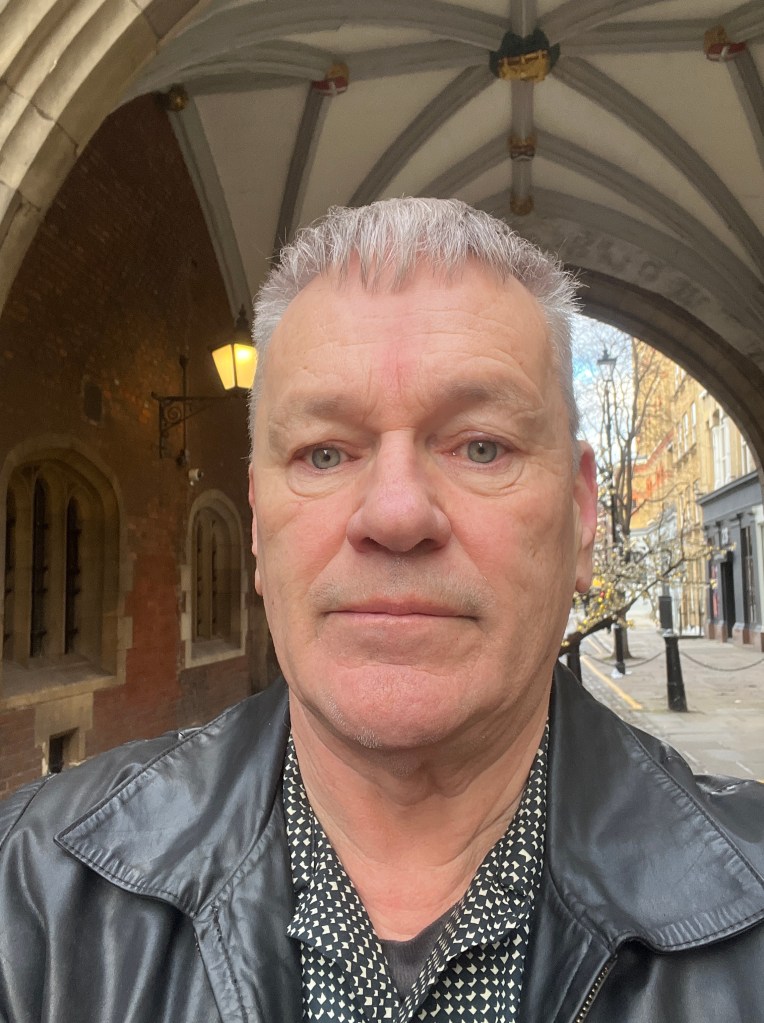
Author Richard Woulfe

Richard has had two radio plays produced: one by RTE Radio based on James Joyce’s/Nora Barnacle’s time in Trieste, the other a Victorian drama by the Wireless Theatre Company. Stage plays of his have also been performed, and short stories published. Richard is from Limerick, and now lives in London.

oOo